By Dr. Asnat Raziel, bariatric surgeon specializing in obesity treatment, metabolic health and healthy longevity; Director of the Multidisciplinary Center for Obesity Treatment, Assia Medical, Assuta Ramat HaChayal, Tel Aviv
Loneliness in older adults during wartime
Loneliness in older adults becomes much more intense during war and uncertainty. Air-raid sirens, nonstop news and a disrupted routine heighten fear, tension and a sense of disconnection. For many older people, especially those who hardly leave the house, these feelings are particularly strong.
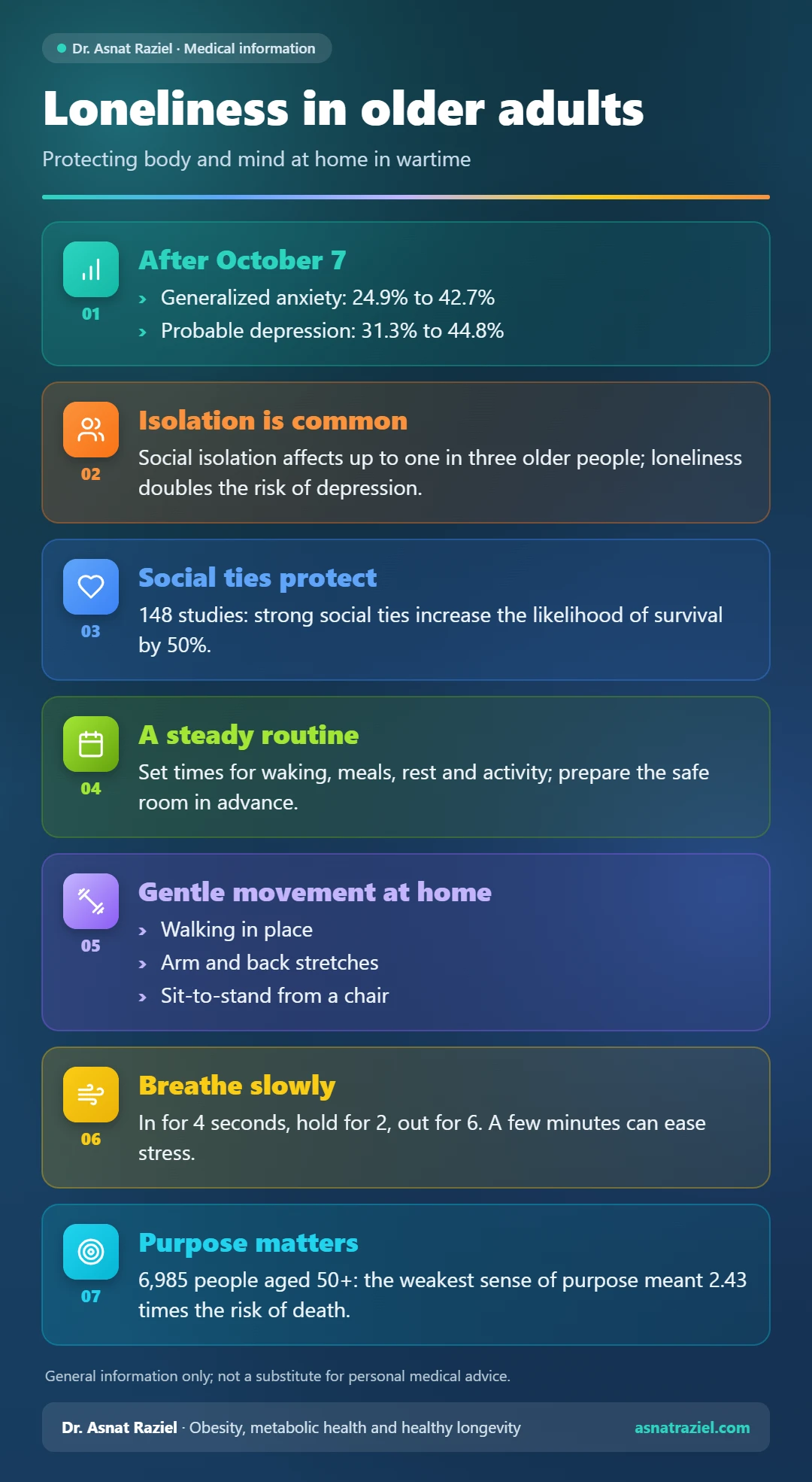
Data from Israel illustrate the burden. A nationwide study followed 710 adults aged 18 to 85, before and after the October 7, 2023 attack on Israel. The rate of probable generalized anxiety rose from 24.9% to 42.7%. The rate of probable depression also rose, from 31.3% to 44.8%.
Why loneliness in older adults is a health risk
Prolonged loneliness is not only an emotional experience. It affects the body as well. According to the World Health Organization, social isolation affects up to one in three older people. The organization also links loneliness to stroke, heart disease, diabetes and cognitive decline. And lonely people have twice the risk of developing depression.
Moreover, a review of 148 studies showed that strong social ties increase the likelihood of survival by 50%. That is why, in wartime, it is especially important to create a supportive environment at home. Such an environment preserves a sense of safety, a routine and a connection to the world.
Keeping a steady daily routine
A routine provides stability even when the reality outside keeps changing. It helps to set regular times for waking up, meals, rest and activity. Even simple actions create a clear framework for the day. For example, making breakfast, watering the plants or reading the newspaper. When the day has structure, the sense of control grows and anxiety tends to ease.
Preparing in advance for sirens is also part of the routine. It is worth setting up a comfortable chair, a bottle of water, glasses, a charged phone and regular medications in the safe room (the reinforced shelter room found in many Israeli homes). This turns the rush to the shelter into a familiar, simple action. Preparation also reduces panic in the moment, especially for people who have trouble walking.
Gentle physical activity at home
Movement is one of the most effective tools for reducing stress. Physical activity improves blood flow to the brain, lifts mood and reduces anxiety. A large review in the BMJ showed that walking, yoga and strength training ease depression. Even at home, you can do moderate activity:
- Walking in place for a few minutes.
- Arm and back stretches.
- Sitting down and standing up from a chair several times in a row.
- Deep breathing exercises.
Short bouts of activity several times a day make a noticeable difference in how you feel. In addition, regular movement helps preserve muscle mass, which is especially important in older age. You can read more about this in my article on building muscle after 60.
Staying socially connected
Loneliness in older adults is one of the main challenges when people are confined to their homes. That is why it is important to stay in touch with family and friends, even without meeting in person. You can schedule a daily phone call with children or grandchildren. You can also use video calls on a phone or tablet, or send voice messages. A short conversation changes your mood and brings a sense of connection and meaning.
Family members have a role to play too. Ideally, they should call at a set time, ask how the night went and offer help with shopping. That way, the older person knows that someone is thinking of them, even on a hard day. I wrote more about why these ties matter in my article on social connections and longevity.
Limiting news exposure
Constantly following war news increases anxiety. A study of reactions to the Boston Marathon bombing reached a surprising conclusion. Six or more hours a day of bombing-related media coverage were linked to stronger acute stress than that of people who were actually at the scene.
Stress in wartime affects other groups too. An Israeli study looked at pregnancy during war, optimism and anxiety.
So it is best to check the news only once or twice a day, from a reliable source. Instead of watching news channels nonstop, you can spend time on calming activities. For example, reading, favorite music, a good movie or crossword puzzles.
Breathing and relaxation exercises
When anxiety appears, simple breathing exercises can help. Slow, deep breathing activates the body’s calming nervous system. Here is a sample exercise:
- Breathe in slowly through your nose for four seconds.
- Hold your breath for two seconds.
- Breathe out slowly through your mouth for six seconds.
Practicing like this for a few minutes may reduce the feeling of stress. In a controlled study, five minutes a day of breathing with a long exhale improved mood. You will find more practical methods in my guide to stress relief techniques.
Good nutrition and enough sleep
Even when you spend a lot of time at home, it is important to eat balanced meals. Include protein, vegetables, fruit and whole grains. Drinking enough water is especially important in older age, because the sense of thirst weakens over the years.
It also helps to keep regular sleep hours. Good sleep helps the brain cope with tension and anxiety. If you wake up at night and head for the fridge, you will find tips in my article on tiredness and appetite.
Loneliness in older adults and a sense of meaning
Activities that give meaning lift the mood. Some people enjoy reading, writing, online learning, prayer or crafts. Others love sharing life stories with their grandchildren. A sense of value and meaning is a key source of mental fitness.
Meaning has physical value as well. An American study followed 6,985 people aged 50 and over. Among those with the weakest sense of purpose, the risk of death was 2.43 times higher than among those with the strongest sense of purpose.
When to seek help
Sometimes the difficult feelings do not pass. For example, anxiety that lasts a long time, trouble sleeping, loss of appetite or persistent sadness. In these situations, it is important to tell a family member or see your family doctor. Sometimes a conversation with a professional brings great relief.
The system is built to help in such times, as I explain in my article on Israel’s wartime health system.
The bottom line on loneliness in older adults
Times of war are challenging, but they are temporary. Loneliness in older adults is not inevitable, and it can be managed even at home. Routine, social ties, movement and good nutrition protect both physical and mental health. In the end, even when you stay at home, you can create a supportive environment that offers security, calm and hope.
The information in this article is general and does not replace personal medical advice.
References
Social connection linked to improved health and reduced risk of early death
Social relationships and mortality risk: a meta-analytic review
Media’s role in broadcasting acute stress following the Boston Marathon bombings
Brief structured respiration practices enhance mood and reduce physiological arousal
Association Between Life Purpose and Mortality Among US Adults Older Than 50 Years