By Dr. Asnat Raziel, bariatric surgeon specializing in obesity treatment, metabolic health and healthy longevity; Director of the Multidisciplinary Center for Obesity Treatment, Assia Medical, Assuta Ramat HaChayal, Tel Aviv
Building muscle after 60: it’s never too late
Building muscle after 60 is possible, and it pays off. Muscle keeps you steady, supports your metabolism and protects your everyday independence. True, the body responds more slowly than it did when you were young. Still, the combination of enough protein and progressive resistance training works at an older age too. In this article, I’ll explain how much protein you need, which workouts to choose and what we know about supplements.
What happens to muscle as we age
Over the years, muscle mass and strength decline gradually. When the decline is significant, it’s called sarcopenia, a muscle disease that develops over the course of life. According to the revised European definition of sarcopenia, the key sign is low muscle strength. Only after that do doctors look at muscle quantity and quality, and poor physical function points to a severe condition.
In other words, strength matters even more than appearance. For example, having trouble getting up from a chair or opening a jar is a warning sign. I’ve written about grip strength, a simple measure of this, as well as about the biology of muscle aging. In addition, when sarcopenia comes together with excess weight, the risk is doubled, as I’ve explained in my writing on sarcopenia and obesity.
How much protein do you need for building muscle after 60?
At an older age, muscle responds weakly to dietary protein. That’s why the recommendations for older adults are higher than the general recommendation for adults. The European expert group PROT-AGE published recommendations for protein intake in older people, which apply to people aged 65 and over:
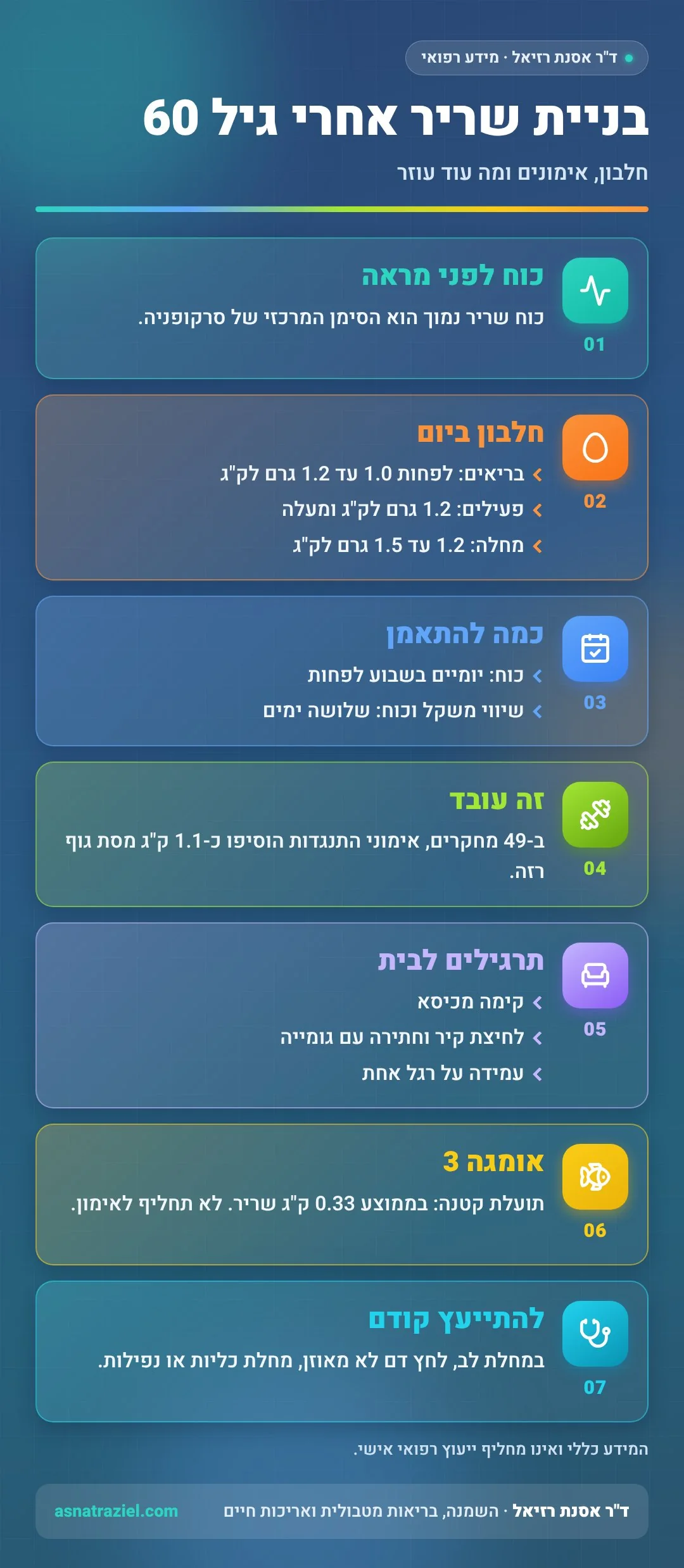
- Healthy older adults: at least 1.0 to 1.2 grams of protein per kilogram of body weight per day.
- Active older adults who exercise: 1.2 grams per kilogram per day or more.
- Older adults with an acute or chronic illness: usually 1.2 to 1.5 grams per kilogram per day.
- Severe kidney disease: an important exception. People who are not on dialysis and have very low kidney function may actually need to limit protein.
The European Society for Clinical Nutrition and Metabolism (ESPEN) reached similar conclusions. According to ESPEN, healthy older adults need at least 1.0 to 1.2 grams per kilogram per day. By contrast, older adults who are malnourished or at risk of malnutrition need 1.2 to 1.5 grams per kilogram per day. For example, a person who weighs 70 kg would need 70 to 84 grams of protein a day under the basic recommendation.
How to spread protein across the day
Many people get most of their protein at dinner alone. It’s better to spread it across your meals, so that every meal includes a protein source. Eggs, yogurt, cheese, fish, chicken, tofu and legumes are all good options. If you eat little, you can add a small high-protein snack between meals.
When protein powder helps
Protein powder is a convenient tool when your appetite is low or when it’s hard to get enough from food. However, it doesn’t build muscle on its own, and it doesn’t replace exercise. Also, if you have kidney disease, coordinate any added protein with your doctor.
Which workouts are best for building muscle after 60?
The World Health Organization recommends that people aged 65 and over do strength training for all major muscle groups at least two days a week. It also recommends combined balance and strength activity on at least three days a week. The goal is to improve function and prevent falls.
Does it really work at an older age? A meta-analysis of 49 studies, with 1,328 participants aged 50 and over, looked at this question. On average, resistance training added about 1.1 kg of lean body mass. Moreover, programs with a higher training volume produced better results. On the other hand, the gain was more modest at a very old age, so it’s worth starting as early as possible.
How to start safely
First, choose a light weight and learn the correct technique. Then increase the load gradually, once the exercise feels easy. You can use dumbbells, machines, resistance bands or your own body weight. It’s a good idea to learn your first exercises with a certified trainer or a physical therapist.
Simple exercises for home
- Chair stands: stand up and sit down slowly, without using your hands.
- Stair climbing: at a comfortable pace, with a hand on the railing.
- Wall push-ups: push-ups against a wall, to strengthen your arms and chest.
- Band rows: to strengthen your back and improve posture.
- Standing on one leg: next to a stable surface, to practice balance.
To track your progress, don’t look only at the scale. For example, notice whether it’s easier to get up from a chair, carry shopping bags or climb a flight of stairs.
Omega-3 and building muscle after 60
Omega-3 draws a lot of interest in this context. A meta-analysis of ten controlled studies looked at how the supplement affects muscle in older adults. Overall, it added an average of 0.33 kg of muscle mass, which the researchers described as a small benefit. In a subgroup that took more than 2 grams a day, the gain reached 0.67 kg.
So the supplement is not a substitute for exercise and protein. In addition, high-dose omega-3 can affect blood clotting. That’s why anyone taking blood thinners should talk to their doctor before starting. Oily fish, such as salmon, sardines and mackerel, are a good food source.
Building muscle after 60 while losing weight
When older adults lose weight, part of the loss also comes from muscle. That’s true with dieting, and also with medications such as Wegovy or Mounjaro. So at this age, it’s especially important to combine protein and strength training throughout treatment. You can read more in my articles on lean body mass on GLP-1 drugs and on preserving muscle mass during weight loss.
Safety: when to check with your doctor first
Most older adults can safely start light strength training. Still, it’s best to consult a doctor first if you have heart disease, uncontrolled blood pressure, chest pain or dizziness during exertion, recent surgery or repeated falls. Also, sharp pain during an exercise is a sign to stop.
A dietitian works in our clinic. In addition, when needed, I refer patients to a multidisciplinary mind-body team: dietitians, psychologists, holistic coaches, naturopaths and complementary medicine practitioners, as well as Pilates and yoga instructors and experts in stress-reduction techniques.
Bottom line
Building muscle after 60 rests on two foundations: enough protein and regular resistance training. According to the recommendations, healthy older adults need at least 1.0 to 1.2 grams of protein per kilogram per day, plus strength training at least two days a week. Supplements can sometimes help, but they are not a substitute. Finally, consistency matters more than any perfect program.
The information in this article is general and does not replace personal medical advice.
Questions and answers
Is building muscle after 60 really possible?
Yes. Studies show that resistance training adds lean body mass and strength at an older age too, especially when combined with enough protein.
How many times a week should I train?
The World Health Organization recommends strength training at least two days a week, and balance and strength practice on at least three days a week.
What about protein and kidney disease?
The recommendation of 1.0 to 1.2 grams per kilogram is for healthy older adults. In severe kidney disease, by contrast, the amount should be set only with your doctor.
Do I need a gym?
No. Resistance bands, light dumbbells and your own body weight are enough to get started. The key is to increase the load gradually.
Sources
Sarcopenia: revised European consensus on definition and diagnosis
World Health Organization 2020 guidelines on physical activity and sedentary behaviour
Influence of resistance exercise on lean body mass in aging adults: a meta-analysis




