By Dr. Asnat Raziel, bariatric surgeon specializing in obesity treatment, metabolic health and healthy longevity; Director of the Multidisciplinary Center for Obesity Treatment, Assia Medical, Assuta Ramat HaChayal, Tel Aviv
Preserving muscle mass: why it matters when you lose weight
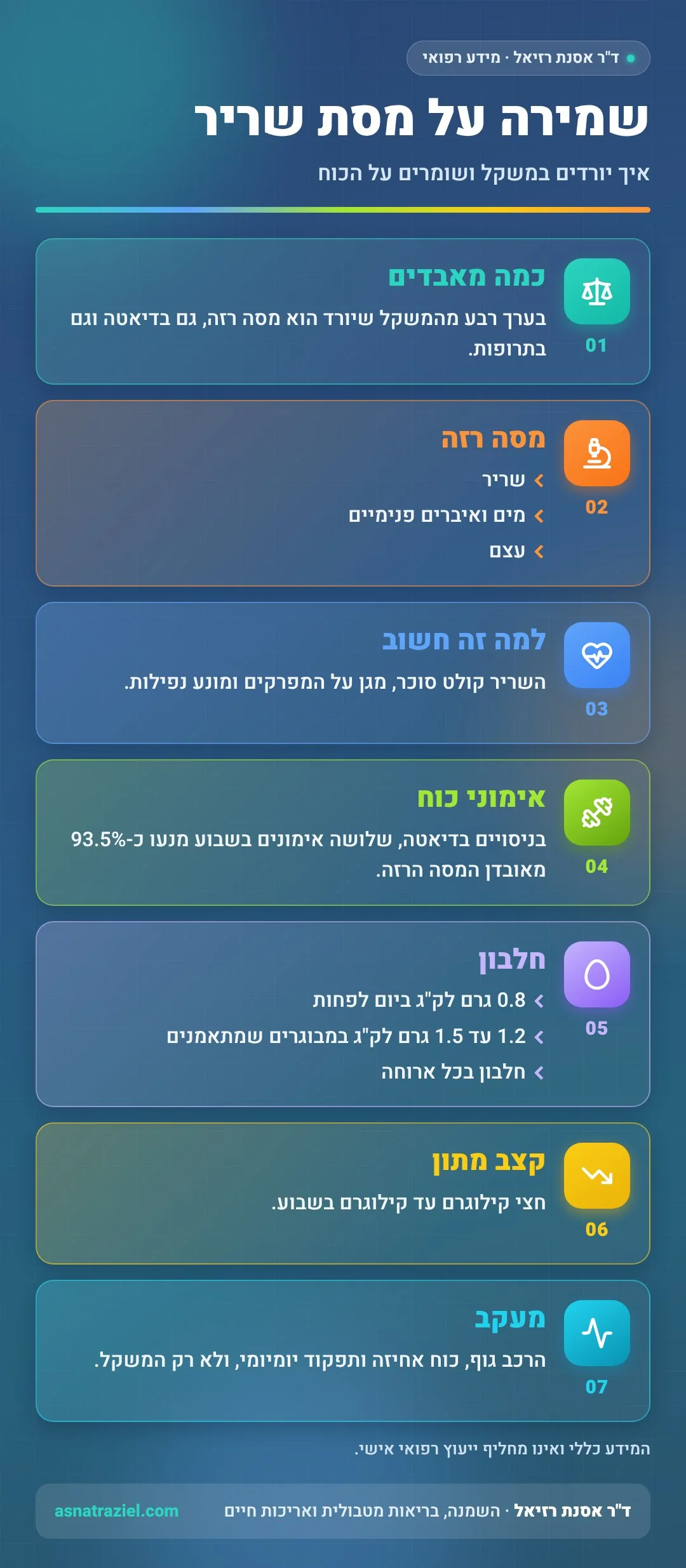
Preserving muscle mass is one of the most important goals of any weight loss journey. When you lose weight, your body sheds mostly fat, but some muscle goes too. Muscle keeps you strong and steady, and it supports your metabolism. The good news is that you can greatly limit that loss with strength training, enough protein and the right pace of weight loss.
This article is a general overview of the topic. I have also written a practical, step-by-step guide to preventing muscle loss, and a separate article focused on muscle mass during medical treatment.
What happens to muscle when you lose weight
When you eat less than your body needs, it draws energy from its reserves. Most of that energy comes from fat. However, some comes from other tissues, including muscle. According to Harvard University, roughly a quarter of the weight you lose is non-fat mass.
The same figure shows up in medication studies. A substudy of the SURMOUNT-1 trial measured body composition in 160 participants. After 72 weeks of treatment with tirzepatide, body weight fell by 21.3%, fat mass by 33.9% and lean body mass by 10.9%. In other words, about 75% of the weight lost was fat and about 25% was lean mass. The ratio was similar in the placebo group, which lost a little weight.
Lean mass and muscle mass: not the same thing
It helps to get the terms straight. Lean body mass includes everything that isn’t fat: muscle, water, internal organs and bone. So not every drop in lean mass is muscle loss. Part of it is fluid, and part reflects the fact that a lighter body needs less muscle to carry it.
Even so, the exact number matters less than function. The key question is whether the patient keeps their strength, their walking speed and their ability to climb stairs.
Why preserving muscle mass matters for your health
Muscle is much more than the machinery of movement. It absorbs most of the sugar after a meal, so it directly affects insulin sensitivity. Muscle also protects the joints and helps prevent falls. Your resting metabolic rate depends partly on your muscle mass, too.
That’s why losing too much muscle can make it harder to keep the weight off over time. Beyond that, it can erode independence later in life. Healthy muscle is also a central part of a healthy lifestyle that lowers the risk of heart disease.
Sarcopenia and obesity
Sarcopenia is the loss of muscle mass and strength that accompanies aging. When it occurs together with obesity, it is called sarcopenic obesity. In this situation, a person can be heavy yet weak. The combination raises the risk of falls, hospitalization and complications. For example, before bariatric surgery we now also assess frailty.
Weight loss medications and preserving muscle mass
GLP-1 medications lead to rapid, substantial weight loss. As a result, the absolute loss of lean mass is also larger, even though the ratio is similar to dieting. In addition, appetite drops sharply, and many patients eat too little protein without noticing.
The answer is not to give up on treatment, but to build a plan around it. Older adults need special attention, as I explained in my article on semaglutide in older age. Interestingly, animal studies are also looking at how these medications affect the aging process, as I described in my article on semaglutide and aging.
Strength training: the key tool for preserving muscle mass
Strength training is the most effective tool we have. A meta-analysis of six trials looked at older adults with obesity who were dieting. When the diet was combined with strength training three times a week, the training prevented about 93.5% of the lean mass loss. Fat loss was similar in both groups.
- At least two strength sessions a week, covering all the major muscle groups.
- A gradual increase in weight or repetitions over time.
- In addition, 150 minutes a week of moderate aerobic activity, such as brisk walking.
- Professional guidance at the start, especially at an older age or with a medical limitation.
Protein and nutrition
Muscle needs protein to rebuild. The basic recommendation for adults is 0.8 grams of protein per kg of body weight per day. For adults aged 65 and over who exercise, however, studies point to a need of 1.2 to 1.5 grams per kg. It’s best to spread protein throughout the day, at every meal.
Good sources include eggs, dairy products, fish, chicken, legumes and tofu. When your appetite is low, start the meal with the protein. In some cases, a dietitian may also recommend a protein supplement.
Pace of weight loss, sleep and monitoring
A moderate pace of about half a kilogram to one kilogram a week gives your muscles time to adapt. Good sleep also matters for muscle recovery. It’s worth measuring more than just your weight: body composition, grip strength and everyday function. A body composition scan, for example with a DXA machine, shows how much fat and how much lean mass you have lost.
Professional support helps catch problems early. On the medical follow-up page you’ll find the options for treatment and monitoring. I have written about further research on healthy aging in my article on epigenetic rejuvenation.
Who needs extra attention to preserving muscle mass
- People over 60.
- People taking weight loss medications or who have had bariatric surgery.
- People who are losing weight very quickly.
- Women after menopause.
- People with chronic illnesses or limited mobility.
At our clinic, we bring together doctors, dietitians and exercise professionals. Together we build a personal plan that reduces fat while protecting muscle. You can read about my approach on the page about Dr. Asnat Raziel.
The bottom line
Preserving muscle mass is an integral part of healthy weight loss. Roughly a quarter of the weight you lose is lean mass, whether through dieting or medication. Strength training, enough protein and a moderate pace of weight loss limit that loss. The goal is a strong, healthy body, not just a lower number on the scale.
The information in this article is general and does not replace personal medical advice.
Frequently asked questions
How much muscle do you lose when you lose weight?
On average, about a quarter of the weight lost is lean mass. Part of it is muscle, and part is fluid and other tissues.
Can I succeed in preserving muscle mass while on weight loss injections?
Yes. Regular strength training and protein at every meal greatly reduce the loss, even during medical treatment.
How much protein do I need?
At least 0.8 grams per kg per day. Older adults who exercise usually need 1.2 to 1.5 grams per kg.
How can I tell if I’ve lost muscle?
A body composition scan and a grip strength test give a good picture. Losing strength in everyday life is a warning sign.




