By Dr. Asnat Raziel, bariatric surgeon specializing in obesity treatment, metabolic health and healthy longevity; Director of the Multidisciplinary Center for Obesity Treatment, Assia Medical, Assuta Ramat HaChayal, Tel Aviv
Stress relief techniques: why we need them at all
Stress relief techniques are simple tools that calm the nervous system in real time. They don’t make the source of stress disappear, but they change how your body responds to it. Some take only five minutes. That is why it pays to learn them in advance, and not only in a moment of crisis.
As a physician who treats obesity, I see every day how chronic stress affects the body. It disrupts sleep, increases hunger and encourages emotional eating. I wrote about this connection at length in my article on stress and obesity. In other words, managing stress is also part of metabolic health.
What happens in the body during stress
When we sense danger, the body switches on its “fight or flight” system. The heart rate rises, breathing speeds up and the muscles tense. In addition, the hormones adrenaline and cortisol release sugar into the bloodstream. In the short term, this response can save your life. But when the pressure never lets up, the system stays switched on. I discussed the genetic side of this in my article on epigenetics and stress.
Each of us has a range in which we cope well with emotions and stress. This range is called the window of tolerance. Above it, we feel overwhelmed; below it, we shut down. The goal of these techniques is to bring us back inside that window. For a general overview of the field, see the Wikipedia entry on stress management.
Stress relief techniques using your breath
Breathing is the fastest way to influence the nervous system. This is because it works automatically, yet it is also under our control.
Cyclic sighing
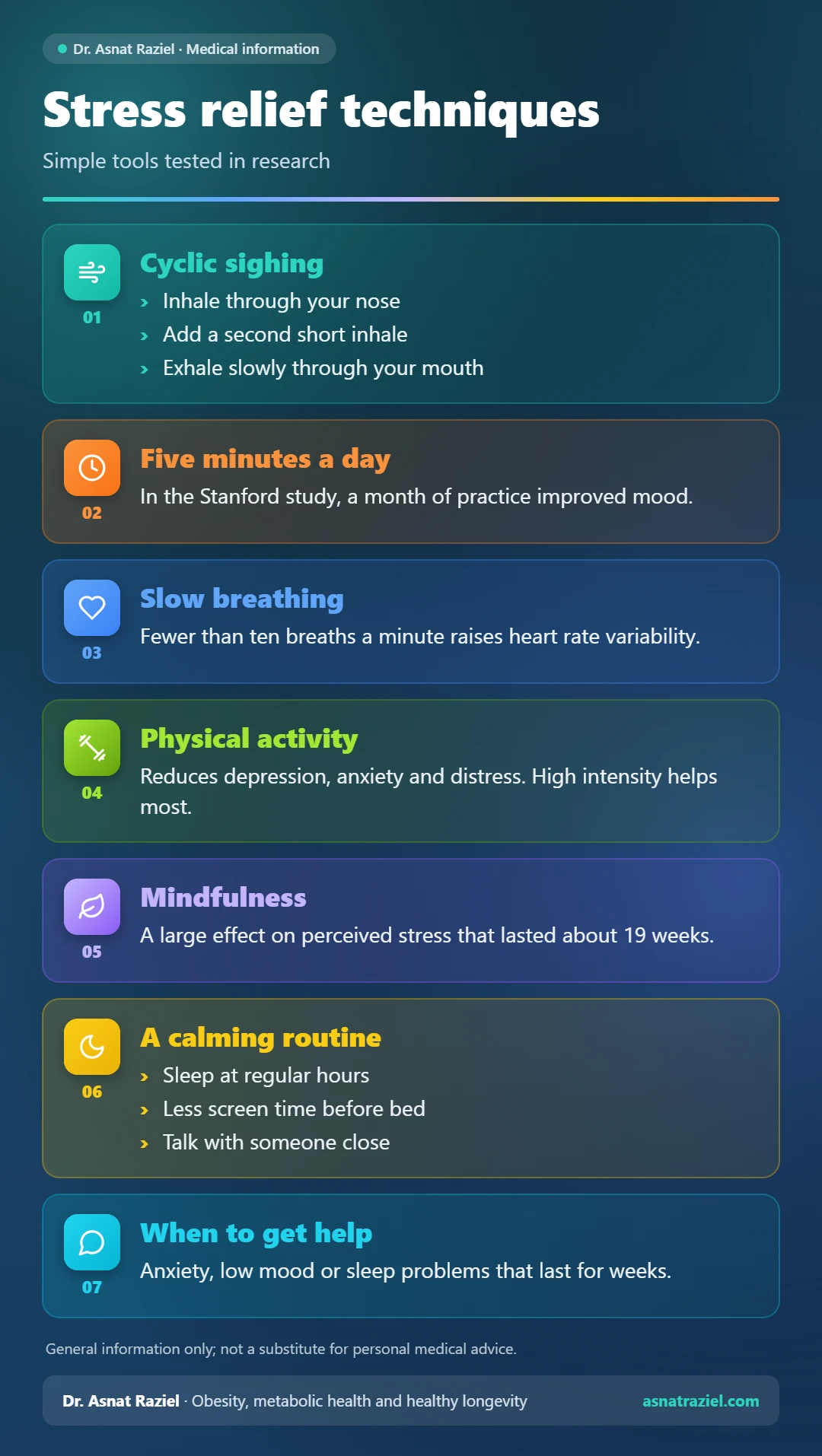
A controlled study from Stanford University compared several five-minute daily breathing exercises with mindfulness meditation over one month. The researchers call the exercise that stood out “cyclic sighing.” You inhale through your nose, add a second short inhale, and then exhale slowly and fully through your mouth. The researchers found that this exercise improved mood and slowed the breathing rate more than meditation did.
Slow breathing
A systematic review of slow breathing examined practices of fewer than ten breaths per minute. The researchers found an increase in heart rate variability (HRV, a measure of how flexible the nervous system is), along with feelings of calm and alertness. In addition, participants reported less anxiety, anger and confusion. For example, you can inhale to a count of four and exhale to a count of six.
Stress relief techniques through the body
Stress lives in the body, so the solution also runs through it.
Physical activity
A large umbrella review included 97 reviews, covering 1,039 trials and 128,119 participants. Physical activity reduced symptoms of depression, anxiety and psychological distress, with a moderate effect. Moreover, high-intensity activity led to especially large improvements. In other words, even brisk walking or strength training is a genuine therapeutic tool.
Body awareness, tapping and release
Interoception is the ability to sense what is happening inside your body, and it lies at the heart of body awareness. In addition, some people find help in the tapping technique, gentle tapping on points of the body, and in intentional tremor exercises to release tension after trauma. Some people also choose complementary bodywork, such as acupuncture for back pain. If you go this route, see a licensed practitioner and keep your doctor informed.
Mindfulness and meditation as stress relief techniques
Mindfulness is the practice of paying attention to the present moment without judgment. A meta-analysis of 29 studies with 2,668 healthy participants examined MBSR, a mindfulness-based stress reduction program. The researchers found a large effect on perceived stress and a moderate effect on anxiety, depression and quality of life. On average, the effect held for 19 weeks after the program ended.
Getting started is simple: ten minutes a day, sitting quietly and paying attention to your breath. Later, you can add self-compassion, that is, treating yourself kindly in difficult moments. For a full explanation of how meditation affects the body, see my article on meditation and stress relief.
Stress relief techniques in your daily routine
These exercises work best when they are part of your day, not just an emergency fix. Here are a few habits that help:
- Regular sleep: get up and go to bed at fixed times, even on weekends.
- Short breaks: two minutes of slow breathing between tasks.
- Daily movement: a 20- to 30-minute walk, preferably in daylight.
- Screen limits: less news and social media before bed.
- Human connection: talking with someone close to you lowers the intensity of stress.
It is best to start small. For example, in the first week, choose one breathing exercise and practice it for five minutes every morning. In the second week, add a daily walk. This way, the habits build up gradually, without adding to your load.
Relationships are also a major source of stress. Sometimes we need to stop and ask whether a relationship strengthens us or wears us down. On the question of when to repair a relationship and when to let go, see, for example, the writing of Tracy Kimberg. Furthermore, good sleep is one of the most powerful tools of all, as I explained in my article on how to improve sleep naturally.
When to seek professional help
Sometimes the stress is too great to handle alone. It is worth seeking help when you have ongoing sleep problems, panic attacks, low mood lasting weeks, or when you use food or alcohol to calm down. In these situations, psychological or psychiatric treatment is the right step, not a sign of weakness. Today there are also clinics that offer remote care, such as New Age Psychiatry in the US. In any case of thoughts of self-harm, seek help immediately.
The bottom line
Stress relief techniques are simple, inexpensive and backed by research. Slow breathing, cyclic sighing, physical activity and mindfulness lower the intensity of stress and improve mood. Ultimately, consistency matters more than the technique itself: a few minutes every day beats a long session once a month.
The information in this article is general and does not replace personal medical advice.
Questions and answers
Which stress relief techniques work fastest?
Breathing exercises. Cyclic sighing or a long exhale calms the body within a few minutes.
How much time a day should I practice?
In the Stanford study, five minutes a day for a month was already enough to improve mood.
Does stress affect weight?
Yes. Chronic stress disrupts sleep, increases hunger and encourages emotional eating.
When is mindfulness not enough?
When there is severe anxiety, depression or trauma. In those cases, it is wise to add professional treatment.
References
Brief structured respiration practices enhance mood and reduce physiological arousal
Mindfulness-based stress reduction for healthy individuals: A meta-analysis




