By Dr. Asnat Raziel, bariatric surgeon specializing in obesity treatment, metabolic health and healthy longevity; Director of the Multidisciplinary Center for Obesity Treatment, Assia Medical, Assuta Ramat HaChayal, Tel Aviv
Adapting to war: does the body really get used to it?
Adapting to war is a question many of us have asked over the past year. After months of conflict with Iran, sirens, ceasefires and tension that keeps coming back, it can seem that life goes on as usual. We work, raise children, go out and plan the future. But have our bodies and minds really gotten used to it? The answer is far more surprising than it seems.
The body’s survival mechanism
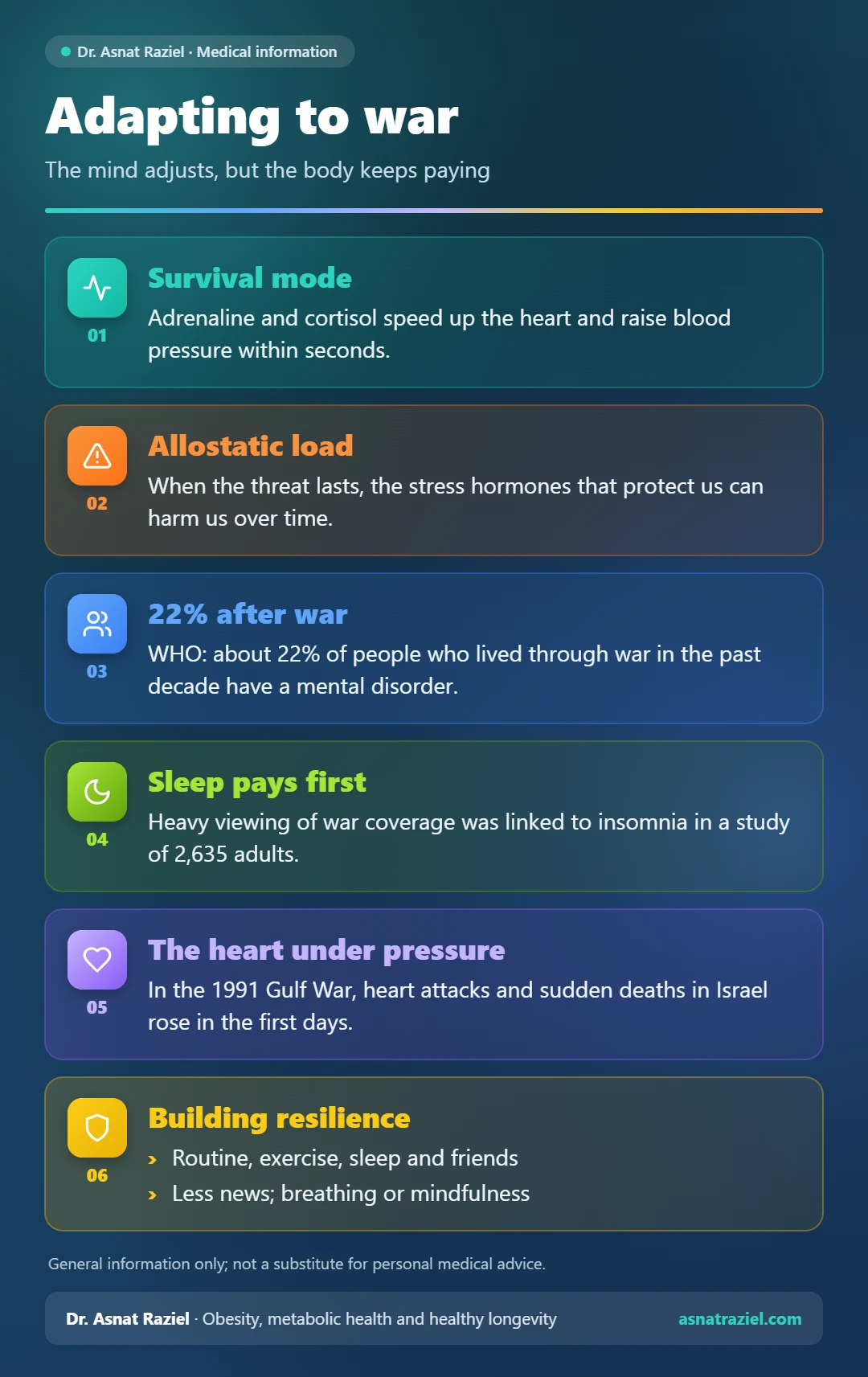
When a person faces danger, the brain switches on its survival mechanism within seconds. The body releases the stress hormones adrenaline and cortisol into the blood. The heart beats faster, blood pressure rises and the muscles get ready for action. This is a natural and vital mechanism that protects us in emergencies.
The problem begins when the emergency doesn’t pass. When the threat lasts for weeks, months or even years, the body stays on almost constant alert. The researcher Bruce McEwen described this price as allostatic load, the accumulated burden on the body from ongoing adaptation to stress. In a review in the NEJM, he described how the same hormones that protect us in the short term can harm us over time.
Adapting to war on an emotional level
In the psychological sense, to some extent, yes, we do adapt. Humans have an impressive ability to adjust. After a long period of threats, many people feel that their emotional reactions soften. The sirens surprise us less, the news shakes us less and the fear feels less real. The World Health Organization also notes that almost everyone who goes through an emergency feels distress, and that for most people it improves over time.
Many people also draw strength from tradition. I wrote about this in the Book of Esther in a time of missiles.
However, emotional adjustment does not necessarily mean physical adjustment. Even when we feel calm, the body may keep releasing stress hormones. In other words, the mind may have gotten used to it, but the body is still paying the price. In addition, according to the same organization, about 22% of people who have lived through war in the past decade have a mental disorder. These include depression, anxiety and PTSD, post-traumatic stress disorder.
One physical cost is often seen on the scale, and I explain why in war and weight gain.
Sleep pays first
One of the most common effects of ongoing stress is poor sleep. Many people report trouble falling asleep, frequent waking at night, disturbing dreams and shallow sleep. When sleep quality drops, concentration, memory and decision-making suffer too. Chronic fatigue also affects mood, increases anxiety and weakens the immune system.
Exposure to the news matters as well. A study of 2,635 adults in five Arab countries found that heavy viewing of war coverage was linked to insomnia, through higher depression and stress. You can read more about the effects of too little sleep in my article on the effects of sleep deprivation.
The heart and blood vessels under pressure
The heart and blood vessels are especially sensitive to prolonged stress. When the body stays on alert for a long time, the heart rate and blood pressure tend to rise. The load on the heart grows, and existing heart disease may get worse.
An Israeli study from the Gulf War shows this well. The study, published in The Lancet, found a sharp rise in heart attacks and sudden deaths in the first days of the missile attacks. Yet even though the threat continued, the rate returned to normal after this first phase. In other words, the body partly adapts to ongoing danger, but moments of acute shock put a special strain on the heart. So people with heart risk factors should continue their treatment and follow-up during such periods too.
Stress, hunger and weight gain
Not everyone reacts to stress in the same way. Some people lose their appetite, but many actually feel hungry and crave sweet and fatty foods. Cortisol, the main stress hormone, affects the mechanisms of hunger and fullness. In a lab study of 59 women, those who responded to stress with a sharp rise in cortisol ate far more calories on the stress day. They also preferred sweet food.
When less physical activity, long hours of sitting and too little sleep are added, weight may rise and metabolic health may get worse. I wrote about emotional eating during such times in my article on emotional eating in wartime.
The immune system pays a price
The link between chronic stress and the immune system is well known in medicine. A meta-analysis of more than 300 studies found that short-term stress may actually activate parts of the immune system. In contrast, chronic stress suppressed both cellular immunity and antibody production.
As a result, some people get frequent infections. Others report flare-ups of inflammatory diseases, skin conditions, chronic pain or autoimmune diseases. In many cases, the feeling is that the body is simply less resilient than it used to be.
Children feel everything
Even when children don’t watch the news, they pick up the atmosphere around them very well. They sense the tension at home, hear the sirens and notice their parents’ worry. In children, anxiety does not always come out in words. Sometimes it shows up as stomachaches or headaches, sleep problems, irritability, poor concentration or a change in behavior.
That is why it is important not only to explain reality to them, but also to listen to their feelings. At the same time, a predictable routine and the presence of a calm adult give them a sense of safety. I wrote more about how families cope in my article on stress at home during wartime.
Adapting to war without burnout: building resilience
We have no control over the security situation, but we have a lot of influence over how our bodies and minds cope with it. Keeping a routine, regular physical activity, balanced nutrition, enough sleep and supportive social ties all reduce the effects of stress.
In addition, it helps to limit exposure to the news and to make time for family and hobbies. Breathing exercises, meditation or mindfulness help the nervous system return to balance. You will find practical tools in my article on stress relief techniques. And if the distress does not pass, it is worth seeking professional help.
Between adapting to war and immunity
The ability to adapt is one of the most impressive human traits. It lets us keep functioning even in hard times. Still, it is important to remember: adapting to war is not immunity. Even when it seems we have gotten used to it, the body keeps reacting and coping with the load. Recognizing this should not frighten us. Instead, it should remind us how important it is to listen to the body. In the end, caring for physical and mental health, rest, support and hope are all part of our resilience. You can read more about the broader effects in my article on how war affects body and mind.
This article is general information and does not replace personal medical advice.
References
Protective and damaging effects of stress mediators
Psychological stress and the human immune system: a meta-analytic study of 30 years of inquiry