By Dr. Asnat Raziel, bariatric surgeon specializing in obesity treatment, metabolic health and healthy longevity; Director of the Multidisciplinary Center for Obesity Treatment, Assia Medical, Assuta Ramat HaChayal, Tel Aviv
Sleep deprivation effects: why a short night is no small matter
Sleep deprivation effects reach almost every system in the body, sometimes after just one night. In the modern world, sleep often loses out. Long working hours, late-night screens and ongoing stress all eat into it. Emergencies and war take their toll as well. Biologically, however, sleep is not a luxury. It is a basic need.
During sleep, the body and brain repair, regulate and rebalance. When sleep is cut short or interrupted over time, a chain of changes begins. In this article, we will look at the brain, hormones, the heart, the immune system and mood.
The brain needs sleep to think, remember and focus
The brain is the first to respond to lack of sleep. After even one short night, it becomes hard to concentrate and think clearly. The brain processes new information slowly, memory weakens, and reaction time gets longer. That is why fatigue is a major factor in road accidents and workplace accidents.
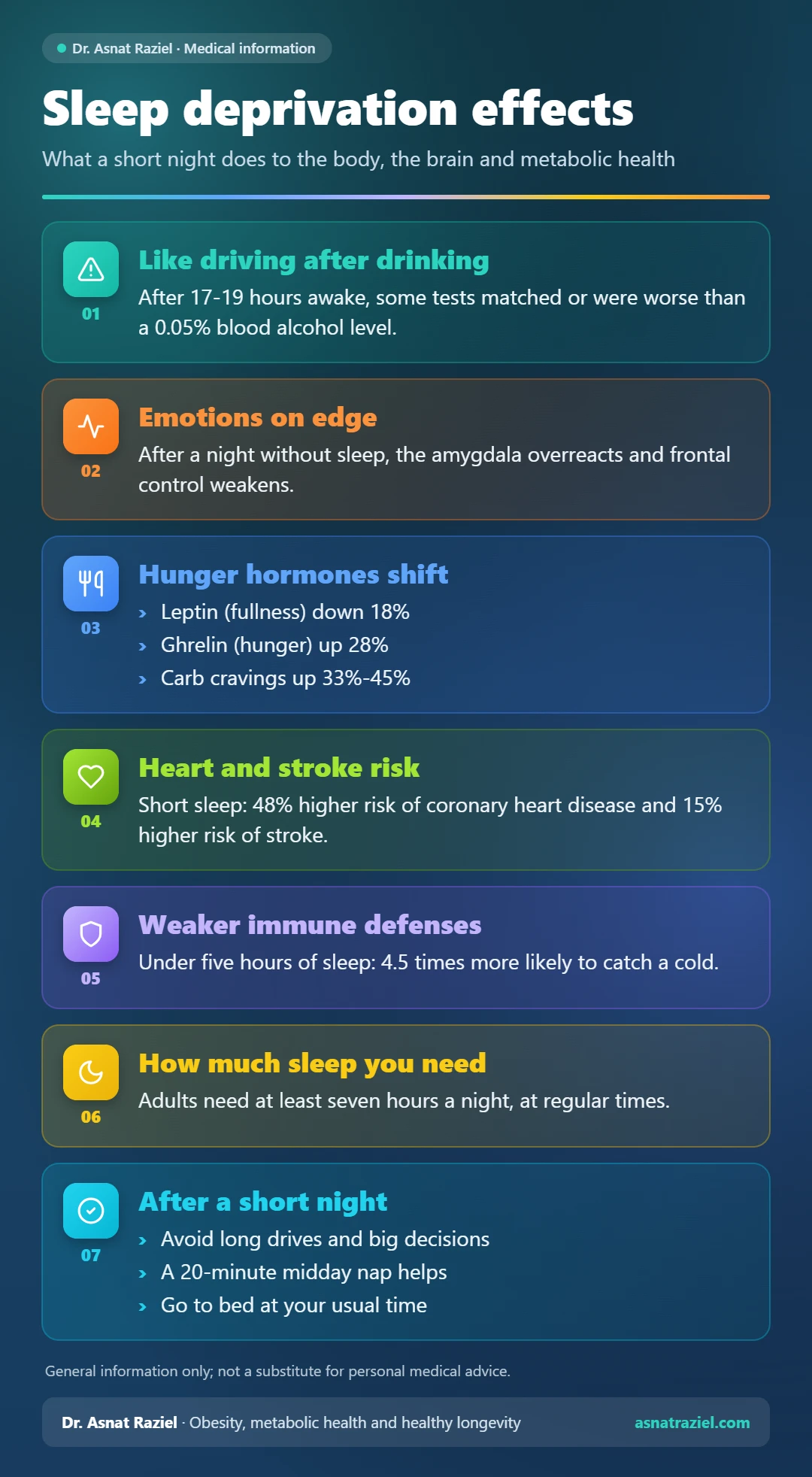
The data here are striking. An Australian study compared fatigue with alcohol in the same participants. After 17-19 hours awake, performance on some tests was equal to, or worse than, a blood alcohol level of 0.05%. In addition, reaction time was up to 50% slower on certain tests. In other words, driving after a sleepless night is like driving after drinking.
Emotions on edge
Lack of sleep also changes activity in the emotional areas of the brain. In a brain imaging study, the amygdala, the center of fear and emotion, reacted unusually strongly after a night without sleep. At the same time, its connection with the frontal cortex, which keeps reactions in check, weakened.
As a result, tired people tend to be irritable and impatient. Sometimes they also feel stressed or anxious. In my experience, many patients describe exactly this feeling after difficult nights.
Sleep deprivation effects on hunger and fullness hormones
One of the deepest sleep deprivation effects occurs in the hormonal system. In a controlled trial at the University of Chicago, 12 healthy young men cut their sleep short for two nights. Levels of leptin, the fullness hormone, fell by 18%. Meanwhile, levels of ghrelin, the hunger hormone, rose by 28%. Hunger rose by 24%, and appetite for carbohydrate-rich foods rose by 33%-45%.
In addition, short sleep impairs insulin sensitivity. The result is strong hunger, especially in the evening and at night. This is why lack of sleep tends to go along with weight gain. I described this link in detail in my articles on obesity and sleep and on sleep and late-night eating.
The heart and metabolism
Years of short sleep also harm the heart. Short sleep goes hand in hand with higher blood pressure, higher markers of inflammation and poorer blood sugar control. A meta-analysis of 15 studies included 474,684 participants. Short sleep carried a 48% higher risk of coronary heart disease and a 15% higher risk of stroke.
Following evidence like this, the American Heart Association added sleep to its Life’s Essential 8 score. This is a measure of eight habits for heart health. In other words, sleep now stands alongside diet, physical activity and smoking. Over time, lack of sleep raises the risk of type 2 diabetes, heart disease and stroke. It is also worth remembering sleep apnea, which harms both sleep quality and the heart.
Sleep deprivation effects on the immune system
During sleep, the body repairs tissues and regulates the immune system. When sleep is lacking, it struggles to fight infections. In a well-known experiment, researchers measured the sleep of 164 healthy adults with a wrist device. They then exposed them to the common cold virus. Those who slept less than five hours were 4.5 times more likely to get sick. Those who slept five to six hours were 4.24 times more likely.
Moreover, short sleep weakens the response to vaccines. A 2023 meta-analysis found that short sleep, measured objectively, was linked to a clear drop in antibody levels after vaccination. So it is worth making a point of sleeping well in the days around a vaccine.
Sleep and mental health
Sleep also plays a role in processing emotions and experiences. During the night, the brain organizes memories, processes emotional information and eases tension. When sleep is lacking over time, the risk of anxiety, depression and burnout rises.
During periods of ongoing stress, this effect is especially strong. In emergencies and wartime, sleep is short and broken, and the body stays on high alert. Stress of this kind also affects metabolism and weight.
How much sleep does the body really need?
According to the consensus statement of the American Academy of Sleep Medicine, adults need at least seven hours of sleep a night on a regular basis. However, it is not only the amount of sleep that matters. Regularity matters too. Snoring and breathing pauses also need attention, as I explain in my article on sleep apnea dangers.
Consistent sleep and wake times keep the biological clock on track. This is an internal mechanism that aligns day and night with the activity of the body’s systems. In addition, morning daylight, a light dinner a few hours before bed and limited screen time before sleep all help you fall asleep. You will find more practical tips in my article on improving sleep for metabolic health.
What to do after a short night
Everyone has a bad night now and then. The body knows how to recover, as long as the shortfall doesn’t become a habit. First, skip long drives and important decisions when you are very tired. Second, a short 20-minute nap at midday helps many people. Also, getting out into daylight and some light movement wake the body up. On the other hand, large amounts of coffee in the afternoon hurt the next night’s sleep. Finally, try to go to bed at your usual time rather than making up for it by sleeping late. If the fatigue lasts for weeks, or if there is snoring and pauses in breathing, it is worth getting checked. Waking up with a stiff, sore back is a separate issue, which I cover in my article on morning back pain and sleep.
The bottom line: sleep deprivation effects add up
Today it is clearer than ever that good sleep is a pillar of health, just like nutrition and physical activity. Sleep deprivation effects start with concentration and mood, and then extend to the heart, metabolism and the immune system. When we sleep well, the mind is clear, metabolism is balanced and the immune system works efficiently. In this sense, sleep is not wasted time. It is a small daily investment that protects your health for years.
The information in this article is general and does not replace personal medical advice.
References
The human emotional brain without sleep – a prefrontal amygdala disconnect
Behaviorally Assessed Sleep and Susceptibility to the Common Cold




