By Dr. Asnat Raziel, bariatric surgeon specializing in obesity treatment, metabolic health and healthy longevity; Director of the Multidisciplinary Center for Obesity Treatment, Assia Medical, Assuta Ramat HaChayal, Tel Aviv
Plant-based diet and pain: beyond the joints
When we think about a plant-based diet and pain, most of us picture joints, backs or migraines. I have already written about foods tested against pain, food and migraine attacks, knee osteoarthritis and lower back pain. However, Dr. Michael Greger widens the picture.
In an interview with Healio at the American College of Lifestyle Medicine (ACLM) meeting in Orlando, he mentioned other kinds of pain. For example, chest pain, leg pain while walking, heartburn and abdominal pain from inflammatory bowel disease. I went back to the original studies behind each finding. Some are controlled trials, and some are single cases. So I will note each time how strong the evidence is.
Chest pain: 24 days that cut angina attacks
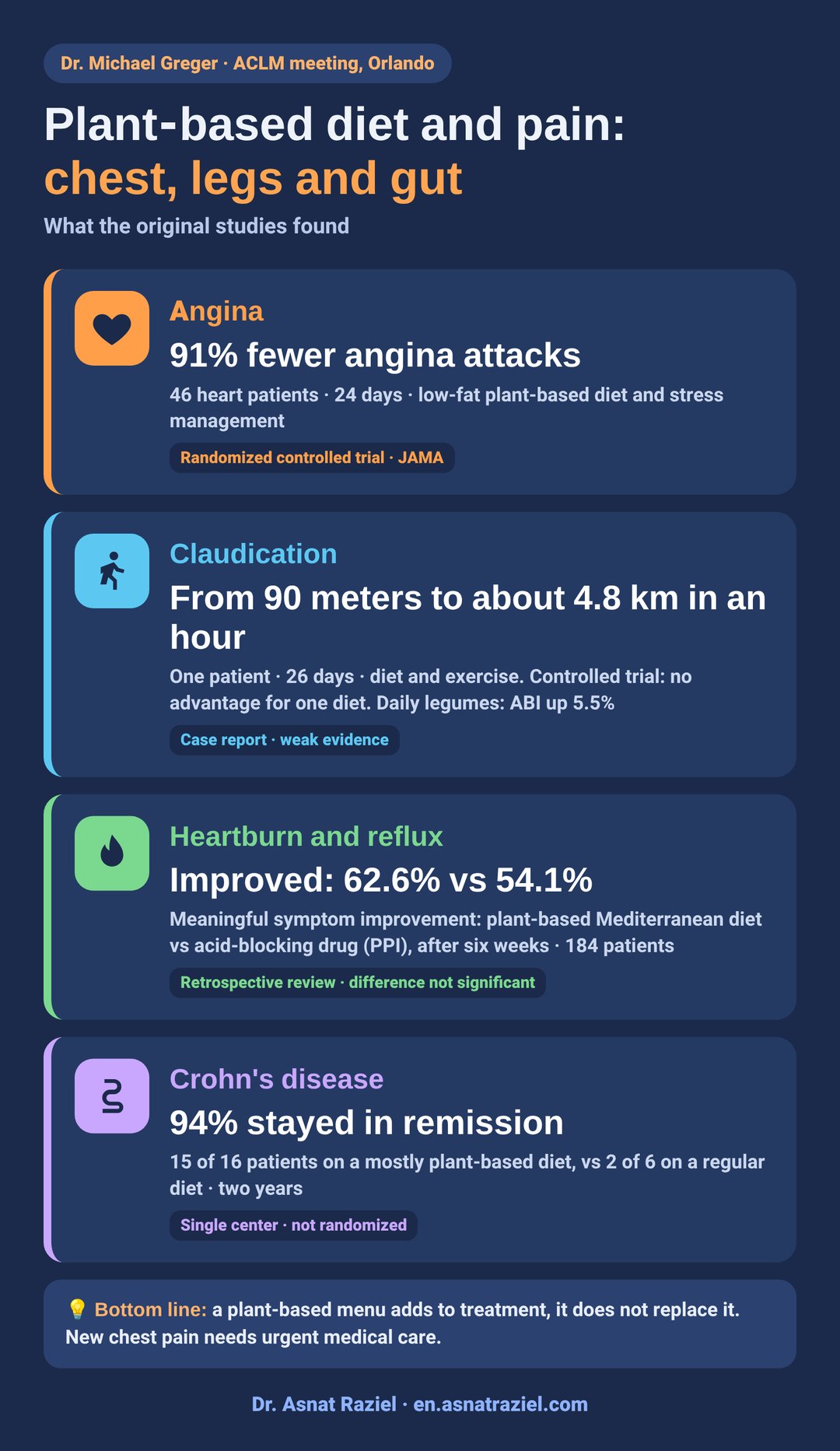
Angina is chest pain or pressure that appears when the heart muscle does not get enough blood. In a randomized trial published in JAMA, researchers divided 46 heart patients into two groups. One group followed a program of stress management and a low-fat plant-based diet, while the other continued usual care.
After only 24 days, the frequency of angina episodes fell by an average of 91% in the program group. In addition, exercise duration rose by 44%, and blood cholesterol dropped by 20.5%. This was a small, short trial, but it was randomized and controlled. That makes it the strongest evidence in this article.
Leg pain when walking: what we know about claudication
Claudication is pain or cramping in the calves during walking that eases with rest. It comes from narrowed leg arteries, a condition called peripheral artery disease (PAD). In fact, it is the same atherosclerosis process that affects the heart.
The figure Greger mentioned, pain disappearing within 26 days, comes from a 1982 case report. A 46-year-old man with complete blockage of both femoral arteries joined an intensive diet and exercise program. At first he could walk only about 90 meters. By the end of the program he walked about 4.8 km in an hour, with little leg pain.
Still, this is a single patient. In a year-long controlled trial of 45 patients, researchers compared a low-fat, high-fiber diet with the standard diet for people with high blood lipids. Walking distance improved in both groups, with no difference between them. In other words, evidence that one specific diet works better for claudication is still weak.
On the other hand, in a small Canadian study, 26 patients ate half a cup of cooked legumes daily for eight weeks. The ankle-brachial index (ABI), which compares blood pressure in the leg and the arm, rose by 5.5%. In addition, LDL cholesterol fell by 8.7%, with no change in body weight. The study had no control group, but it points to a simple step worth trying.
Plant-based diet and pain from heartburn
Heartburn is a burning pain behind the breastbone, caused by stomach acid rising into the esophagus. According to Greger, switching from a high-fat animal meal to a low-fat plant meal reduces acid exposure within hours.
The studies paint a more complex picture. In a 1989 trial, 10 healthy people and 10 reflux patients ate a high-fat meal and a low-fat meal with similar calories. In healthy people, the fatty meal raised upright acid exposure time from 1.5% to 6.2%. By contrast, in reflux patients the researchers found no difference between the meals. In a 2018 study from China, however, high-fat meals did raise acid exposure in reflux patients.
A plant-based menu versus acid-blocking medication
The most practical data come from a study published in JAMA Otolaryngology. It looked at laryngopharyngeal reflux (LPR), in which acid reaches the throat and causes hoarseness, throat clearing and a lump-in-the-throat feeling. Researchers compared 85 patients treated with a proton pump inhibitor (PPI) with 99 patients who switched to a 90% plant-based Mediterranean diet with alkaline water.
After six weeks, 62.6% of the diet group achieved a meaningful improvement in symptoms, compared with 54.1% of the medication group. This difference was not statistically significant. However, the average reduction in symptoms was larger in the diet group: 39.8% versus 27.2%. Keep in mind that this was a review of medical records, not a randomized trial.
Plant-based diet and pain in the abdomen: inflammatory bowel disease
Inflammatory bowel diseases, such as Crohn’s disease and ulcerative colitis, cause abdominal pain, diarrhea and chronic inflammation of the gut. A Japanese physician, Dr. Mitsuro Chiba, has treated these patients for many years with a mostly plant-based diet. His menu includes vegetables, grains, legumes, dairy and eggs, with very little fish and meat.
In his 2010 study, 16 Crohn’s patients stayed on this diet after reaching remission. Over two years, 15 of them (94%) remained in remission. By contrast, only 2 of 6 patients who returned to a regular diet (33%) stayed in remission.
In a 2023 review, Chiba summarizes his experience. Combining a plant-based diet with the biologic drug infliximab, 96% of Crohn’s patients (44 of 46) reached remission. In addition, about half of the patients (52%) remained relapse-free even after ten years, without biologics or immunosuppressants. However, all the data come from a single center, without a randomized control group.
What do these types of pain have in common?
According to Greger, a plant-based diet and pain are linked through several mechanisms: better blood flow, less saturated fat and less inflammation. In angina and claudication, pain comes from a lack of blood in the muscle. With heartburn, a fatty meal relaxes the valve between the stomach and the esophagus. In inflammatory bowel disease, diet affects gut bacteria and inflammation. These explanations are plausible, but some have not yet been tested directly.
Plant-based diet and pain: practical steps
Build your plate on plants: vegetables, fruits, legumes and whole grains, in the spirit of the Mediterranean diet.
Add legumes every day: half a cup of lentils, chickpeas or beans is a good start.
Keep dinner light: a small, low-fat meal a few hours before bed may reduce heartburn.
Move every day: walking is part of the treatment for claudication and heart disease. You may also want to read about healthy sleep and the link between stress and obesity.
Do not stop medications on your own: especially in heart disease and inflammatory bowel disease. Make every change together with your treating physician.
When not to wait
New chest pain, chest pain at rest, or chest pain with shortness of breath, sweating or nausea requires immediate emergency care. In addition, blood in the stool, unexplained weight loss, or leg pain even at rest needs prompt medical evaluation. In these situations, changing your diet is not the answer.
Watch: Dr. Greger on his book How Not to Hurt
The bottom line
The findings Greger presented extend the discussion of a plant-based diet and pain beyond the joints. The strongest evidence concerns angina, from a small controlled trial. For heartburn and inflammatory bowel disease the findings are encouraging, but they come from non-randomized studies. For claudication, the striking figure comes from a single patient. So I see a plant-based menu as an important addition to treatment, not a replacement for it. Beyond that, the same menu also supports metabolic health, blood pressure and weight.
The information in this article is general and does not constitute personal medical advice. Do not stop or change any medication without consulting your treating physician.
References
Q&A: Can nutrition reduce chronic pain?
Effects of stress management training and dietary changes in treating ischemic heart disease
Daily non-soy legume consumption reverses vascular impairment due to peripheral artery disease
Effects of Diet and Exercise on Peripheral Vascular Disease
A comparison of high and low fat meals on postprandial esophageal acid exposure
Effects of dietary manipulation on vascular status of patients with peripheral vascular disease
Lifestyle-related disease in Crohn’s disease: relapse prevention by a semi-vegetarian diet
Therapeutic advancement in inflammatory bowel disease by incorporating plant-based diet