By Dr. Asnat Raziel, bariatric surgeon specializing in obesity treatment, metabolic health and healthy longevity; Director of the Multidisciplinary Center for Obesity Treatment, Assia Medical, Assuta Ramat HaChayal, Tel Aviv
Overweight and obesity: a turning point in treating a chronic disease
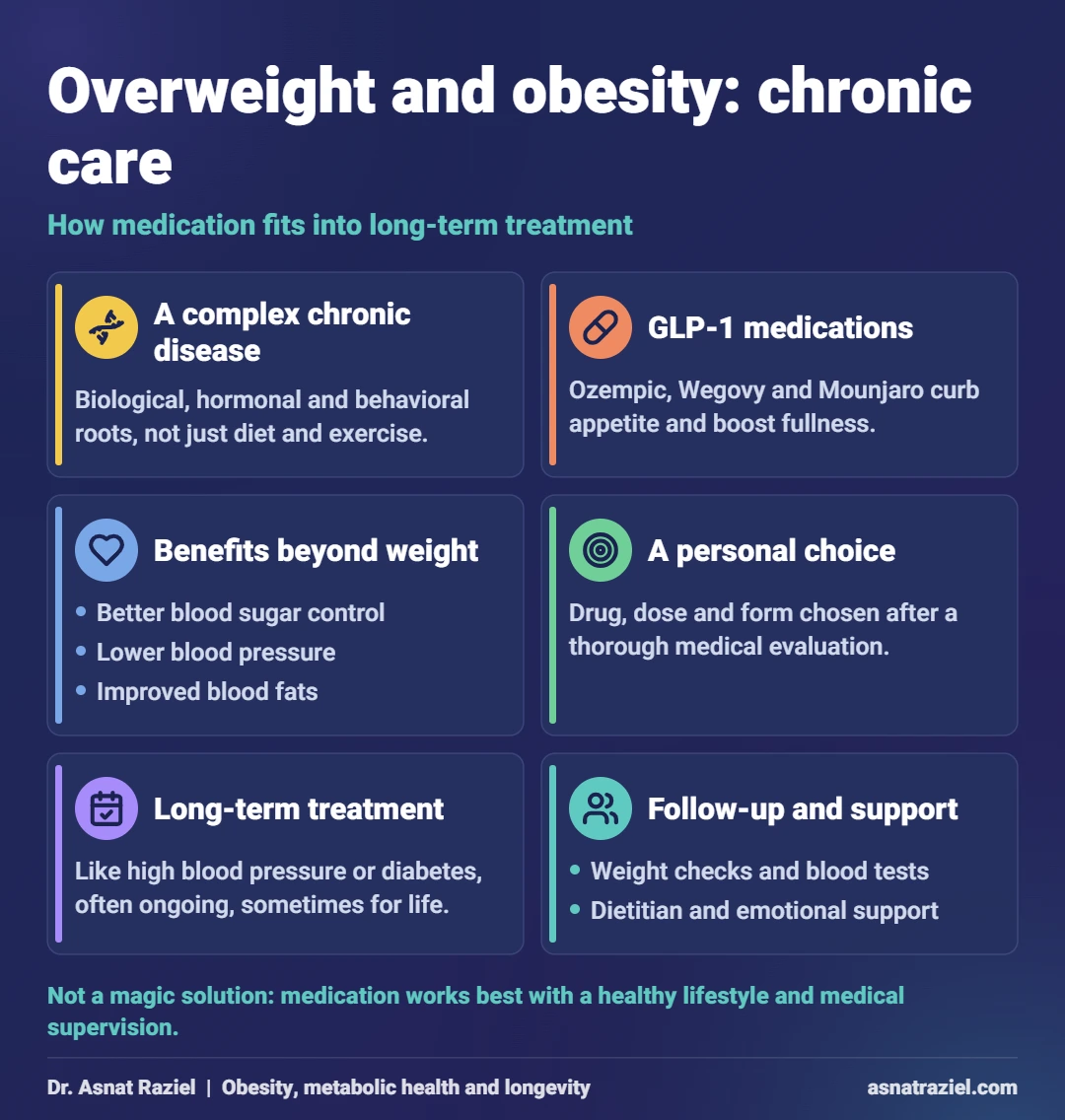
Over the past decade, there has been a real turning point in how medicine approaches overweight and obesity. In the past, treatment relied almost exclusively on diet and exercise. Today, however, the recognition that obesity is a complex chronic disease is stronger than ever. It has biological, hormonal and behavioral roots.
Out of this understanding, medication for obesity has grown. It is now a central, science-based part of comprehensive medical care, especially when excess weight is significant. It is also meant for people with related conditions, such as type 2 diabetes, high blood fats and high blood pressure.
Its goal is not only weight loss. Rather, it aims for better metabolic health overall, a lower risk of heart and blood vessel disease, and a better quality of life. It is important to stress that this treatment is not a magic solution. Instead, it is a significant aid that requires personal tailoring and careful medical supervision.
GLP-1 drugs: the quiet revolution in obesity treatment
The big news of recent years comes from drugs that act on the GLP-1 hormone pathway, including Ozempic and Wegovy (GLP-1 agonists) and Mounjaro (a dual GIP/GLP-1 agonist). These drugs mimic natural hormones released in the digestive system. They reduce appetite, increase the feeling of fullness and slow the emptying of the stomach. Beyond that, they have become a significant solution for excess weight.
Apart from their effect on weight, these drugs have important medical benefits. Many studies have shown better blood sugar control, lower blood pressure and an improved blood fat profile. This makes them especially attractive for patients at high cardiometabolic risk. In addition, they work in harmony with the body’s natural biological mechanisms. Therefore, doctors see them as an effective treatment with a relatively good safety profile for those who need obesity medication.
Personalized care for overweight and obesity: the key to success
The choice of medication is not the same for everyone. It comes after a thorough medical evaluation. Your doctor considers your overall health and your weight-loss goals. They also look at your past experience with medications and how prone you are to side effects.
Close cooperation between patient and doctor is essential. This process lets us choose the drug, dose and form of treatment that suit your personal needs. Even when side effects appear, they are usually mild. Typical examples are nausea or passing discomfort.
Ongoing treatment for overweight and obesity: a long-term change
Obesity is usually a chronic condition, much like high blood pressure or diabetes. Therefore, in many cases, patients need ongoing medication for obesity. Sometimes treatment even continues for life. The drugs correct faulty fullness mechanisms. In this way, they help you maintain a healthy weight over time. The condition is that you combine them with a healthy lifestyle.
According to the NIDDK page on obesity medications, people who stop these drugs will probably regain some weight, so healthy habits may be needed for years.
Israeli experts make the same point. In a Ynetnews report on the new weight-loss pills, physicians stressed that medication must be combined with nutrition, strength training and ongoing medical supervision.
Regular medical follow-up includes weight checks, blood tests and multidisciplinary support from a dietitian, along with emotional support. It is not just a way to monitor progress. It is also a key tool for keeping up motivation, coping with challenges and preventing weight regain. As a result, obesity medication becomes an integral part of a new and healthier way of life.
Looking ahead: taking charge of your health
Medication for obesity is about much more than taking a drug. It is a real opportunity for deep change in your quality of life, for adopting healthy habits and for building a future of health, energy and vitality. The decision to start such treatment is a step of personal responsibility. It rests on advanced medical knowledge and on the understanding that real change is built over time, with the right support and an optimistic outlook. Remember that every successful change includes coping with overweight and obesity as part of the whole process.
For the scientific background on why obesity is classified as a disease, see my article on obesity as a chronic disease. If you are thinking about starting treatment, my guide to obesity medication explains the options in more detail.