By Dr. Asnat Raziel, bariatric surgeon specializing in obesity treatment, metabolic health and healthy longevity; Director of the Multidisciplinary Center for Obesity Treatment, Assia Medical, Assuta Ramat HaChayal, Tel Aviv
Obesity-related diseases: why this is not a cosmetic problem
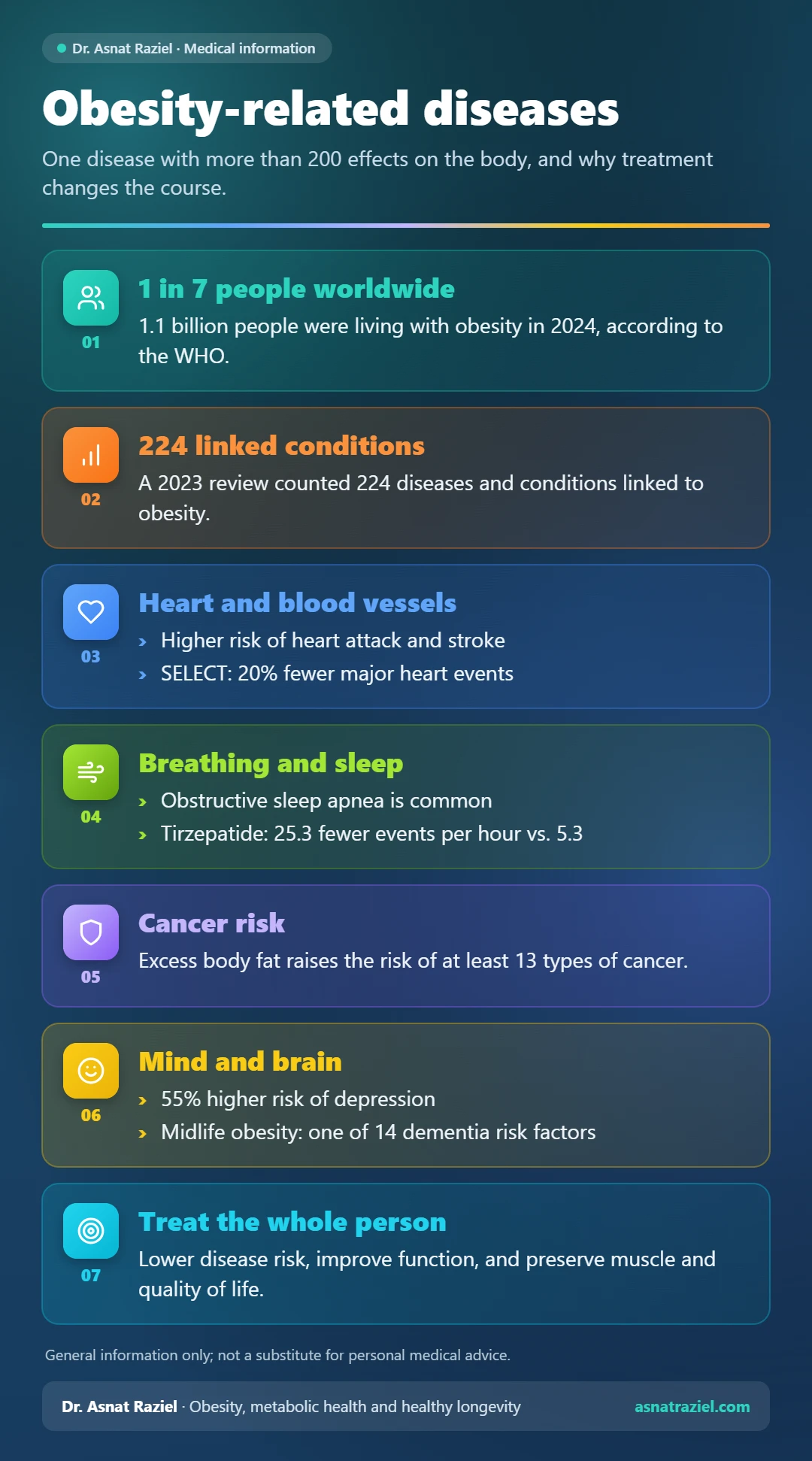
Obesity-related diseases are the reason obesity is now recognized as a true disease. In recent decades, it has become one of the most common diseases in the world. According to the World Health Organization, 1.1 billion people worldwide were living with obesity in 2024, or one in seven. Even so, many people still see it as a personal failing. In reality, it is a chronic, multisystem disease that affects almost every organ in the body.
A 2023 scientific review counted 224 diseases and conditions linked to obesity. The review explained each condition through a biological mechanism: chronic inflammation, insulin resistance, mechanical strain and hormonal changes. That is why treating obesity is not a luxury, but a genuine medical need.
What makes obesity a systemic disease
Fat tissue is not a passive storage depot. Instead, it acts like an active hormonal organ, releasing inflammatory substances and hormones. As a result, these substances affect the blood vessels, the liver, the brain and the immune system. In 2025, an international commission of The Lancet published a new definition: clinical obesity. This is a state in which excess fat already impairs organ function or daily functioning. You can read more in my article on the new definition of clinical obesity.
The heart and blood vessels: a constant burden
Obesity raises the risk of high blood pressure, atherosclerosis, heart attack and stroke. Furthermore, inflammatory substances from fat tissue damage the walls of blood vessels and increase blood clotting. Over the years, this burden speeds up the hardening of the arteries and shortens life expectancy.
The good news is that treatment changes the picture. The SELECT trial enrolled 17,604 people with heart disease and excess weight, without diabetes. Semaglutide at a dose of 2.4 mg reduced major cardiovascular events by 20% compared with placebo.
Obesity-related diseases of the metabolic system
Type 2 diabetes is one of the conditions most closely tied to obesity. Alongside it come insulin resistance, metabolic syndrome and abnormal blood lipids. These are not just “numbers on a lab report.” In fact, they raise the risk of heart events, kidney damage and nerve complications.
It is also important to understand the order of events. Insulin resistance begins years before blood sugar rises on tests. At this stage, the body still compensates, so there are no symptoms. As a result, many people reach a diabetes diagnosis when the damage is already underway. Regular checkups and treating the obesity itself can stop the process in time.
Breathing and sleep
Excess weight around the abdomen and neck makes it harder for the diaphragm to move and narrows the airways. The result is sometimes obstructive sleep apnea: pauses in breathing at night, daytime fatigue and higher blood pressure. In severe cases, obesity hypoventilation syndrome also develops.
Here, too, treatment helps. In the SURMOUNT-OSA trials, participants received tirzepatide for one year. In the first trial, the number of breathing pauses fell by an average of 25.3 events per hour, compared with 5.3 on placebo. You will find more in my article on the dangers of sleep apnea.
Joints, muscles and physical function
Mechanical strain on the knees, hips and back leads to joint wear and chronic pain. At the same time, many people develop sarcopenic obesity, a combination of excess fat and low muscle mass. Consequently, this condition weakens the body and raises the risk of falls. In older age, it also threatens independence. You will find a full explanation in my article on sarcopenia and obesity.
The liver and digestive system
Fatty liver is one of the most common expressions of obesity. In 2023, international liver societies renamed the disease MASLD, metabolic dysfunction-associated steatotic liver disease. The disease can progress to liver inflammation (MASH), cirrhosis and even liver cancer. In addition, obesity is linked to reflux, gallstones and cancers of the digestive system. All the details are in my article on diagnosing and treating fatty liver.
Obesity-related diseases: inflammation, immunity and cancer
Fat tissue creates chronic, low-grade inflammation. This inflammation disrupts the immune system and the control of cell division. Therefore, according to the International Agency for Research on Cancer, excess body fat raises the risk of at least 13 types of cancer. These include postmenopausal breast cancer and cancers of the uterus, colon, pancreas, kidney and esophagus. I cover this in depth in my article on obesity-related cancer. I also ask whether new treatments can lower this risk in my article on weight loss drugs and cancer.
Brain, mind and quality of life
Obesity also carries an emotional cost. Depression, anxiety, poor body image and social stigma are common among people with obesity. A meta-analysis of 15 longitudinal studies showed that obesity raised the risk of depression by 55%. Moreover, in 2024 the Lancet Commission on dementia included midlife obesity among 14 modifiable risk factors.
Obesity, fertility and pregnancy
In women, obesity can disrupt ovulation and impair fertility. It is also linked to polycystic ovary syndrome. During pregnancy, it raises the risk of gestational diabetes, high blood pressure and complications in labor and for the baby. That is why planning a pregnancy is an especially good time to address weight, together with a professional team.
Treating obesity-related diseases: not just kilograms
Understanding obesity as a systemic disease changes the goal of treatment. The goal is not only to lose kilograms. Instead, we want to lower disease risk, improve function and preserve muscle mass. We also want to improve quality of life. The right treatment combines advanced medicine, tailored nutrition, physical activity and emotional support. Sometimes it also includes medication or surgery. A review of the health risks of excess weight can help you understand where to start.
The bottom line on obesity-related diseases
Obesity-related diseases explain why obesity is a real disease and not a weakness. Behind the number on the scale lie more than 200 possible effects on body and mind. Ultimately, when we take obesity seriously, we can do more than lose weight. We can change an entire health trajectory.
The information in this article is general and does not replace personal medical advice.
References
Health Complications of Obesity: 224 Obesity-Associated Comorbidities from a Mechanistic Perspective
Definition and diagnostic criteria of clinical obesity
Semaglutide and Cardiovascular Outcomes in Obesity without Diabetes
Tirzepatide for the Treatment of Obstructive Sleep Apnea and Obesity
A multisociety Delphi consensus statement on new fatty liver disease nomenclature
Body Fatness and Cancer – Viewpoint of the IARC Working Group
Overweight, obesity, and depression: a systematic review and meta-analysis of longitudinal studies
Dementia prevention, intervention, and care: 2024 report of the Lancet standing Commission




