By Dr. Asnat Raziel, bariatric surgeon specializing in obesity treatment, metabolic health and healthy longevity; Director of the Multidisciplinary Center for Obesity Treatment, Assia Medical, Assuta Ramat HaChayal, Tel Aviv
Obesity drug side effects: what you need to know
Obesity drug side effects are the main reason patients hesitate to start treatment, or stop it too early. The good news is that most side effects are mild to moderate, appear mainly at the start of treatment and fade with time. On the other hand, there are also rare side effects worth knowing, so that you can spot them in time.
In this article, I compare the main obesity medications side by side: Wegovy, Mounjaro, the new GLP-1 pills and older drugs. I also explain which effects are common, which are rare, and when to see a doctor right away. The data come from the large trials and from the official prescribing information of the drugs.
Which of these drugs you can actually get is changing quickly, as I describe in expanding access to obesity drugs.
Why obesity medications cause side effects
The leading drugs today belong to the GLP-1 family. They include semaglutide, known as Wegovy, and tirzepatide, known as Mounjaro. They mimic natural gut hormones, so they reduce appetite and slow stomach emptying. You can read more about how obesity medications work.
The same mechanism that helps you lose weight also causes most of the side effects. When the stomach empties slowly, a large meal can cause nausea, heartburn or a feeling of fullness. That is why the doctor raises the dose gradually, to give the body time to adjust. You can find an overview of the different drugs on my page about drug treatment for obesity.
Digestive obesity drug side effects: Wegovy versus Mounjaro
These are the most common side effects. According to the US prescribing information for Wegovy, nausea occurred in 44% of patients, compared with 16% in the control group. In addition, 30% reported diarrhea, 24% vomiting and 24% constipation. In the SURMOUNT-1 trial of tirzepatide, nausea occurred in 25% to 33% of patients, depending on the dose, compared with 10% in the control group.
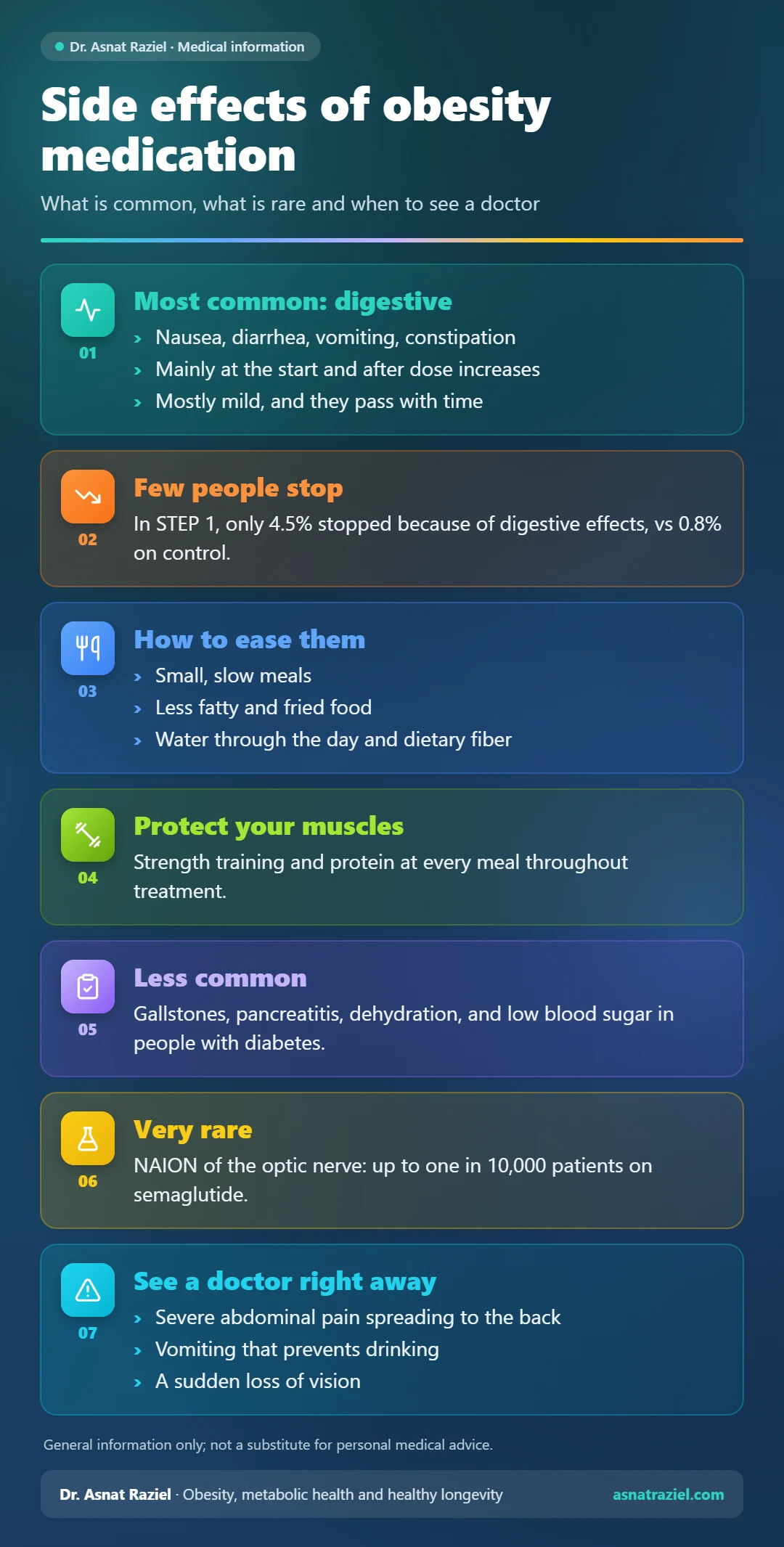
Still, most of these effects pass. In the STEP 1 trial, they were usually mild to moderate and eased over time. Only 4.5% of patients on semaglutide stopped treatment because of digestive side effects, compared with 0.8% in the control group. In other words, out of 100 patients, only about four or five have to stop for this reason.
How to ease nausea, constipation and diarrhea
- Eat small meals slowly, and stop at the first sign of fullness.
- Cut back on fatty, fried and very sweet food.
- Drink water throughout the day, in small sips.
- Add dietary fiber and daily movement to fight constipation.
- Do not rush to raise the dose while the side effects are still hard.
If you take Mounjaro, you will find focused, practical guidance in my article on easing Mounjaro nausea and other digestive symptoms.
Less common but important side effects
Gallbladder and pancreatitis
Rapid weight loss raises the risk of gallstones. In the Wegovy trials, gallstones occurred in 1.6% of patients, compared with 0.7% in the control group. Acute pancreatitis is much rarer. Even so, severe upper abdominal pain that spreads to the back requires immediate medical attention. You can read more in my article on gallstones on GLP-1 drugs.
Muscle loss, hair loss and fatigue
With any weight loss, the body also loses some muscle, not just fat. That is why I recommend strength training and protein at every meal throughout treatment. In addition, some patients notice temporary hair loss, usually a few months after rapid weight loss. I have written about this separately, in my article on hair loss on GLP-1 drugs.
Dehydration, low blood sugar and anesthesia
Prolonged vomiting and diarrhea can cause dehydration and harm the kidneys. Patients with diabetes who also take insulin or sulfonylurea drugs are at risk of low blood sugar. Moreover, before surgery, gastroscopy or any anesthesia, tell the team that you are taking the medication. The stomach empties slowly, so there is a risk of inhaling stomach contents into the lungs.
Very rare side effects of weight loss drugs
In recent years, several safety questions have come up, and some of them now have answers. First, in June 2025 the European Medicines Agency (EMA) concluded that NAION, a sudden injury to the optic nerve, is a very rare side effect of semaglutide. It may occur in up to one in 10,000 patients. A sudden loss of vision requires immediate medical attention.
Second, the labels carry a warning about thyroid tumors, based on studies in rodents. Therefore, people with a personal or family history of medullary thyroid cancer or MEN 2 syndrome will not receive these drugs. Finally, in January 2026 the FDA asked to remove the warning about suicidal thoughts from the labels of Saxenda, Wegovy and Zepbound. Its comprehensive review found no increased risk.
Lessons from the weight loss drugs of the past
This field has a complicated history. According to a review of the risks and serious side effects of weight loss drugs, drugs such as sibutramine and rimonabant were withdrawn from the market. The reasons were a higher risk of psychiatric disorders, heart attacks and stroke. By contrast, today’s drugs have gone through large, long safety trials. Wegovy even showed a lower risk of cardiac events in the SELECT trial.
Older drugs also have typical side effects. For example, orlistat (Xenical) can cause oily stools and bowel urgency. That is why the choice of drug is always personal and takes other conditions and medications into account.
New weight loss pills cause side effects too
Alongside the injections, there are now GLP-1 drugs in pill form as well. According to a review by the Association of American Medical Colleges (AAMC), the common side effects of GLP-1 drugs are similar in pills and injections: nausea, constipation, vomiting and gallbladder problems. In other words, switching to a pill does not remove the need for follow-up.
Obesity drug side effects compared at a glance
Here is a quick side-by-side summary of obesity drug side effects, based on the data in this article:
- Wegovy (semaglutide): nausea in 44% versus 16% on control; gallstones in 1.6% versus 0.7%; NAION is very rare, up to 1 in 10,000.
- Mounjaro (tirzepatide): nausea in 25% to 33%, depending on the dose, versus 10% on control.
- GLP-1 pills: a profile similar to the injections, with nausea, constipation, vomiting and gallbladder problems.
- Orlistat (Xenical): oily stools and bowel urgency.
- Sibutramine and rimonabant: withdrawn from the market because of psychiatric disorders, heart attacks and stroke.
For a broader look at overall safety, see my article on whether obesity medication is safe. For the GLP-1 family alone, read my guide to common and rare GLP-1 side effects.
The emotional side of obesity drug side effects
Prolonged nausea or a sharp drop in appetite also affect mood. Patients sometimes describe frustration, anxiety about food or a sense of losing the pleasure of meals. It is important to talk about this openly, because there are solutions. I wrote about this in my article on nausea from weight loss drugs. If your appetite disappears almost completely, tell your doctor, because this is not normal.
When to see a doctor about obesity drug side effects
See a doctor promptly, or go to the emergency room, in the following cases:
- Severe, persistent abdominal pain, especially if it spreads to the back.
- Vomiting that stops you from drinking for 24 hours.
- Pain in the upper right abdomen, fever or yellowing of the skin.
- A sudden loss of vision.
- Signs of dehydration, such as dizziness and passing little urine.
- An allergic reaction, such as facial swelling or difficulty breathing.
In our clinic, we build a personal follow-up plan for every patient. That way, we catch these effects early.
The bottom line
Obesity drug side effects are an expected part of treatment, but in most cases they are mild and temporary. Gradual dose increases, small meals, enough fluids and medical follow-up reduce them a great deal. In addition, knowing the rare warning signs lets you act in time. In the end, you and your doctor decide together on the type of drug and the dose.
The information in this article is general and does not replace personal medical advice. You can find more about my approach to treatment on the page about Dr. Asnat Raziel.
Frequently asked questions
How long do obesity drug side effects last?
Usually a few days to a few weeks after starting treatment or raising the dose. For most patients, they ease over time.
Do I need to stop the drug because of nausea?
Usually not. Sometimes it is enough to stay on the current dose a little longer, or to lower it temporarily. You and your doctor make this decision together.
Do the drugs harm muscles?
Weight loss includes a little muscle as well. Strength training and enough protein at every meal help preserve muscle mass.
Can I have anesthesia during treatment?
Yes, but you must tell the medical team about the drug in advance. The team will decide whether any special preparation is needed.
References
Once-Weekly Semaglutide in Adults with Overweight or Obesity
Tirzepatide Once Weekly for the Treatment of Obesity
How often were gastrointestinal adverse events reported in Zepbound (tirzepatide) clinical studies?
Wegovy: Package Insert / Prescribing Information
Anti-Obesity Drugs: A Review about Their Effects and Safety
GLP-1 pills for weight loss are here. How will they change obesity care?