By Dr. Asnat Raziel, bariatric surgeon specializing in obesity treatment, metabolic health and healthy longevity; Director of the Multidisciplinary Center for Obesity Treatment, Assia Medical, Assuta Ramat HaChayal, Tel Aviv
Holistic obesity treatment: seeing the whole person
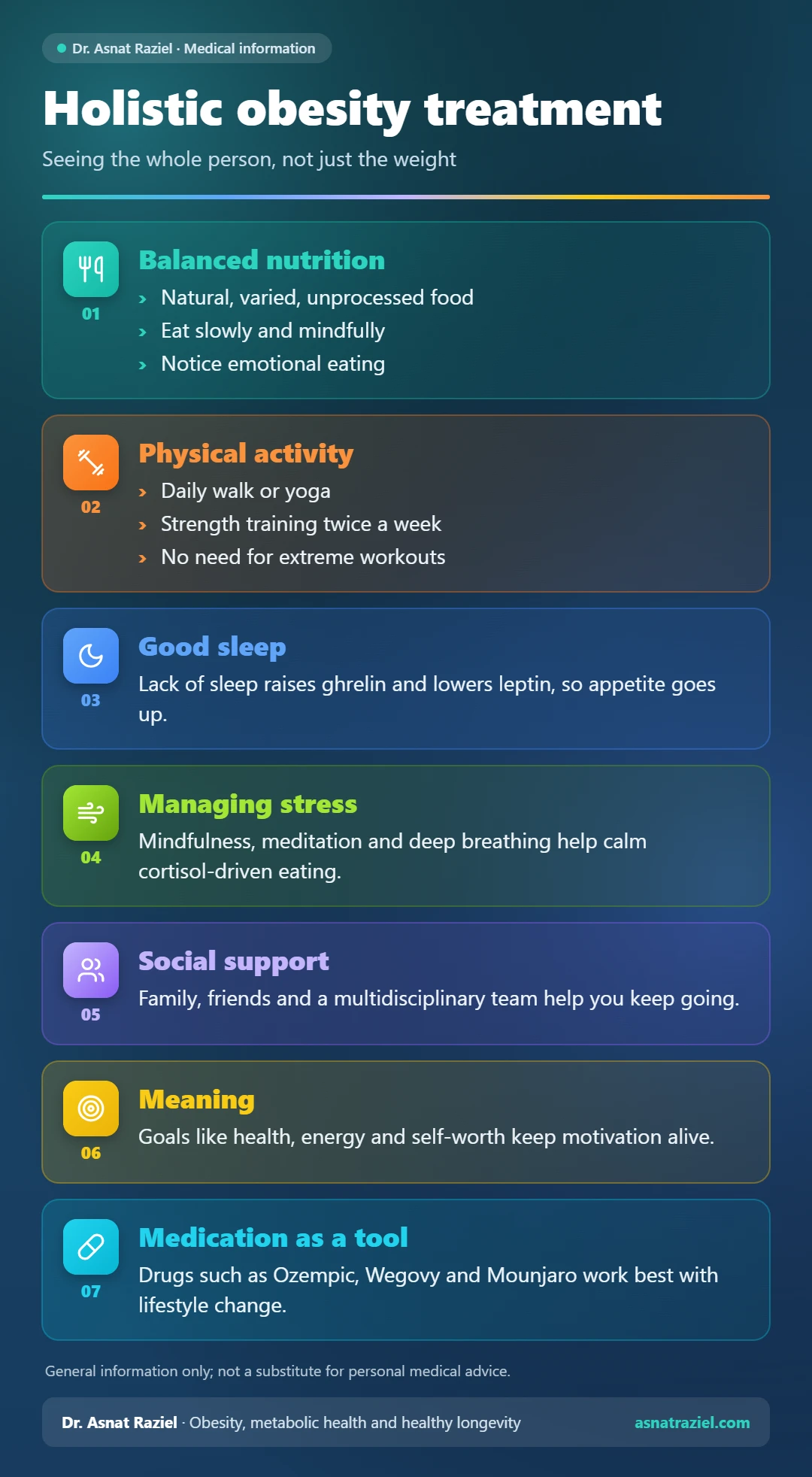
Holistic obesity treatment focuses on the whole person, not just on body weight. It sees the body, the mind and the way we live as one system that needs balance.
Obesity treatment has changed a great deal in recent years. In the past, the focus was on dieting and burning calories. Today, however, it is clear that obesity is a complex chronic disease that needs a broader and deeper approach.
The goal is not only weight loss. Rather, the goal is overall health, a stronger sense of control and a better quality of life over time. That is why combining lifestyle change with personalized medical treatment is critical to success.
Balanced nutrition: not a diet, but a way of life

In holistic obesity treatment, nutrition does not rely on strict restrictions or short-term diets. Instead, it builds a healthy, mindful and balanced relationship with food.
Similarly, the Mediterranean diet guide of Israel’s Ministry of Health (in Hebrew) recommends a varied diet based mainly on fresh, minimally processed plant foods.
The emphasis is on natural, varied and unprocessed food. Vegetables and fruits provide dietary fiber and antioxidants, which support fullness and gut health. Legumes and whole grains provide steady energy throughout the day and prevent sharp swings in blood sugar. Nuts and healthy fats add to fullness and to heart health.
Beyond the choice of food, the way we eat matters too. Eating slowly and mindfully, while listening to hunger and fullness, lets the body regulate portions naturally. In addition, it helps to recognize the link between eating and emotions. Many people turn to food in response to stress, tiredness or loneliness. Identifying these patterns is a key step in the process.
When nutrition becomes a daily habit rather than a temporary effort, real change follows, and it lasts for years.
Physical activity: far more than burning calories

Physical activity is much more than a way to burn calories. In fact, it is a central tool for improving both physical and mental health.
Physiologically, exercise improves insulin sensitivity, reduces belly fat, builds muscle mass and supports heart and blood vessel health. It also helps you maintain weight loss over time, because the body uses energy more efficiently.
On the mental side, physical activity releases endorphins, lifts mood and reduces anxiety and depression. It also builds a sense of capability and self-confidence.
The holistic approach emphasizes a personal fit. There is no need for extreme workouts. Instead, the recommendation is to combine varied activities that you can keep up over time. A daily walk, strength training twice a week or yoga practice can be enough.
Above all, movement should become part of life, not a temporary task.
Good sleep: a key part you should not neglect

Sleep is one of the most important factors in weight management, yet it is often neglected.
Lack of sleep directly affects the hormones that regulate hunger and fullness. It raises levels of ghrelin, which increases appetite, and lowers levels of leptin, which signals fullness. Moreover, tiredness lowers energy and pushes us toward foods high in sugar and fat.
Good sleep also supports metabolic balance, improves insulin sensitivity and reduces chronic inflammation in the body.
To sleep better, keep regular sleep hours, avoid screens before bed and make sure your bedroom is dark and quiet. Better sleep balances the whole hormonal system and makes the entire process easier.
Managing stress: a deep effect on weight

Chronic stress is one of the main drivers of weight gain and of difficulty losing weight. Under stress, the body releases cortisol, a hormone that promotes fat storage, especially around the belly. In addition, stress increases the tendency toward emotional eating and high-calorie comfort food.
The holistic approach offers practical tools for managing stress. Mindfulness helps you stay present and reduces automatic reactions. Meditation and deep breathing activate the body’s relaxation system. Physical activity, as I described above, is also an important tool for lowering stress.
It is important to understand that no one lives without any stress at all. However, everyone can learn to manage it in a healthy way. Lower stress levels also bring eating into balance.
Social support: you do not have to do it alone

One of the factors that most affects success is the environment. People who get support from family, friends or professionals are more successful at keeping up change over time. This is because support provides emotional reinforcement, a sense of belonging and motivation.
Multidisciplinary professional support is an essential part of the holistic approach. A team that includes a doctor, a dietitian and therapists can tailor the process to each person and respond to changing needs.
Sharing the process with others, whether in a group or with people close to you, also reduces loneliness and increases commitment. When you are not alone in the process, your chances of sticking with it rise significantly.
Personal fulfillment: connecting the process to meaning

Lifestyle change does not happen only on the physical level. It is also tied to meaning and identity. When a person connects to deeper goals, such as health, quality of life, energy or self-worth, they manage to keep going over time. By contrast, when the only goal is weight loss, motivation may fade.
That is why mental preparation matters as much as the plan itself. I wrote about it in detail in my guide to preparing mentally for lifestyle change.
Personal fulfillment can come through hobbies, professional work, relationships or personal growth. It strengthens a sense of satisfaction and reduces the need to turn to food for comfort. This is a central part of the holistic approach, because it connects the process to life itself.
Medical treatment and lifestyle change: two parts of holistic obesity treatment
Obesity treatment today also includes advanced drug options. Medications such as Ozempic, Wegovy and Mounjaro allow significant weight loss and act on the mechanisms of hunger and fullness.
But it is important to understand that medications are not a substitute for a healthy lifestyle. They are a supporting tool. When you combine drug treatment with changes in nutrition, physical activity, sleep and stress management, the result is better and more stable over time.
Holistic obesity treatment puts the emphasis on a personal fit. Every person has different needs, so the treatment plan should be tailored and should combine all of these elements.
Summary: holistic obesity treatment is a deep change that starts within
Holistic obesity treatment is not a quick fix. It is a deep process of changing habits, perceptions and lifestyle. Yet precisely because of that, it allows real and stable results.
When we treat body and mind as one whole and apply gradual, personalized change, it is possible not only to lose weight but also to improve health, energy and quality of life.