By Dr. Asnat Raziel, bariatric surgeon specializing in obesity treatment, metabolic health and healthy longevity; Director of the Multidisciplinary Center for Obesity Treatment, Assia Medical, Assuta Ramat HaChayal, Tel Aviv
Obesity and dementia: a link that starts in midlife
Obesity and dementia go together more than most people think. In midlife, excess weight raises the risk of cognitive decline. High blood pressure and type 2 diabetes raise it too. At ObesityWeek 2026 in Washington, the topic came up in a dedicated symposium. A large Israeli study was also presented. In that study, GLP-1 based drugs went hand in hand with a lower risk of dementia in people with obesity and diabetes.
In this article I have gathered what was presented at the meeting and the latest research. At the end you will find practical steps to protect your brain, starting today.
Why obesity harms the brain
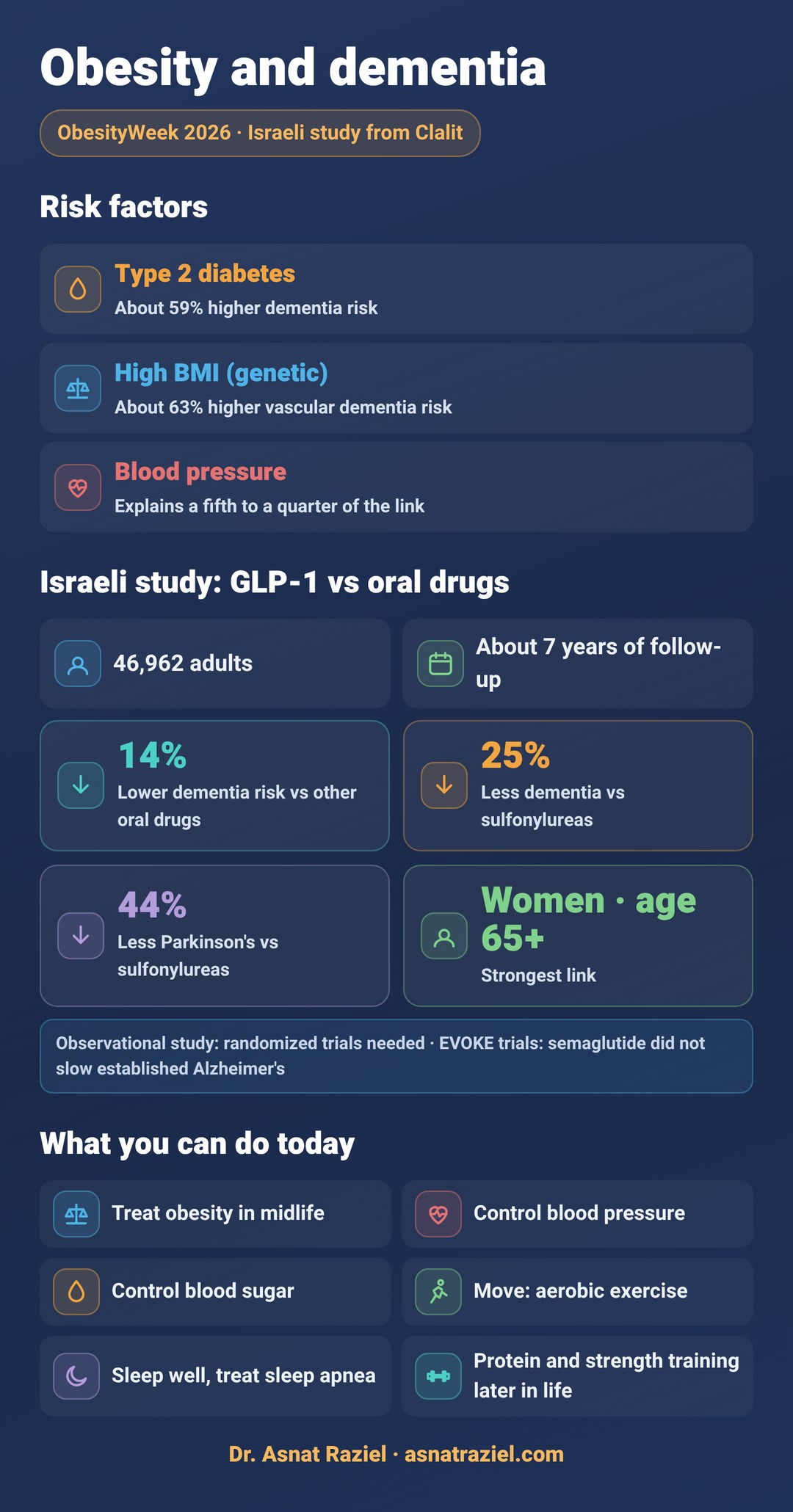
According to data shown at the meeting, type 2 diabetes raises the risk of dementia by about 59% and the risk of Parkinson’s disease by about 27%. Midlife obesity adds to that. The mechanisms are well known. High blood pressure damages small blood vessels in the brain. Insulin resistance disrupts energy use in nerve cells. Chronic inflammation reaches brain tissue as well.
Moreover, a Danish-British genetic study published this year strengthened the case for a causal link. The researchers used Mendelian randomization, which looks at gene variants that set a higher BMI from birth. Each one-standard-deviation increase in genetic BMI raised the risk of vascular-related dementia by about 63%. Blood pressure explained about a fifth to a quarter of this link.
The “obesity paradox”: shield or sword as we age?
The meeting held a symposium titled “To Gain or Not to Gain, That Is the Question”. Kristy Townsend of The Ohio State University chaired it. Kirk Erickson of the AdventHealth Research Institute presented brain scans of people with metabolic disease. The scans show early signs of neurodegeneration. C. Ronald Kahn of the Joslin Diabetes Center discussed factors inside and outside the cell.
The session covered both sides of the coin. On one hand, excess weight raises the risk of neurodegenerative disease. On the other hand, in very old age, too little weight and muscle loss are harmful in their own right. So the message is not “the less weight, the better”. The message is to treat obesity in time, and in older age to protect muscle and function first. I wrote more about this in my article on sarcopenia.
The Israeli study: GLP-1 drugs and dementia risk
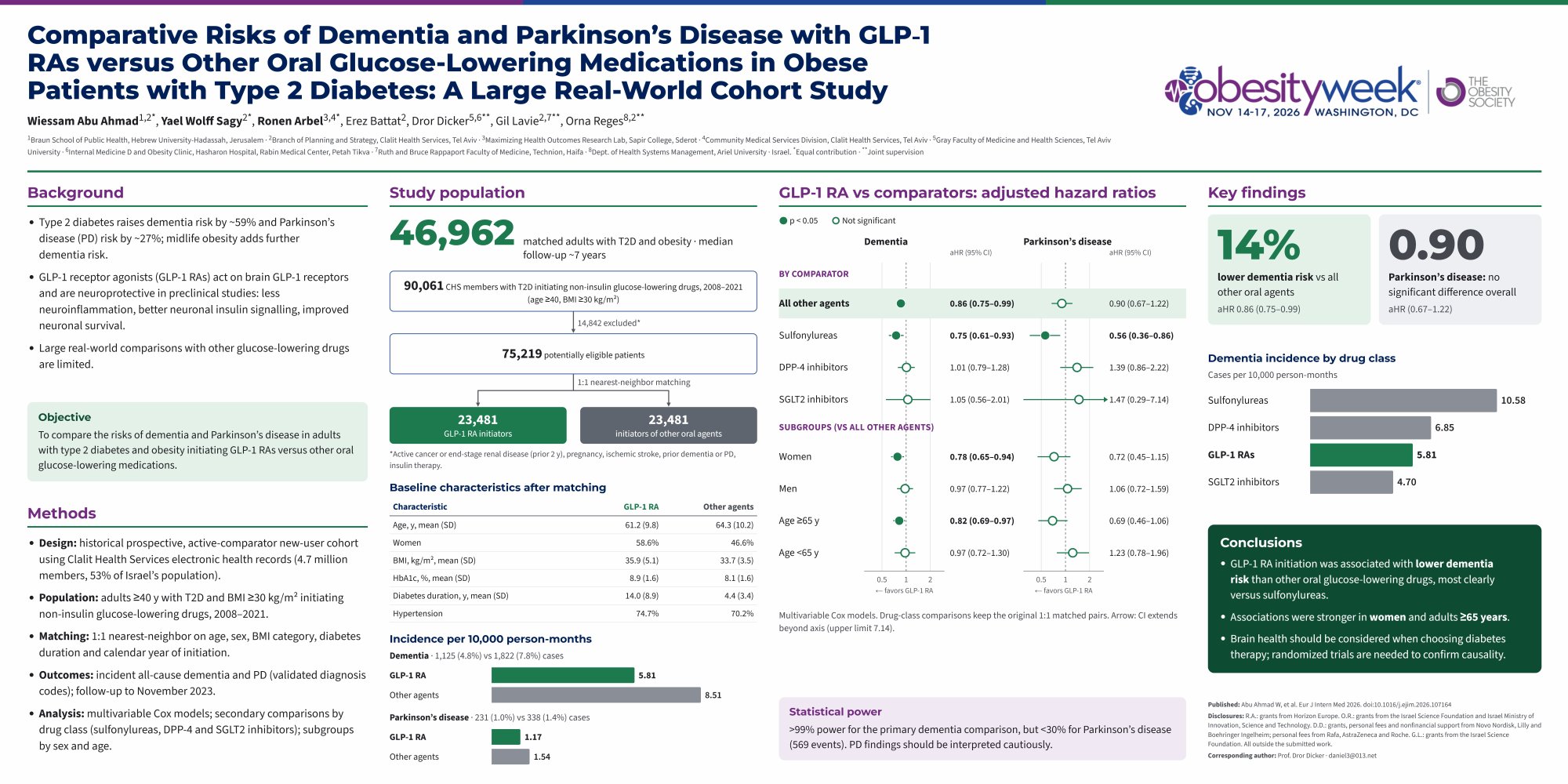
At the meeting, a broad Israeli research team presented a poster from Clalit Health Services, the Hebrew University, Sapir College, Tel Aviv University, the Technion and Ariel University. The study was led by Wiessam Abu Ahmad, Yael Wolff Sagy and Ronen Arbel, who contributed equally, together with Erez Battat. It was jointly supervised by Prof. Dror Dicker, Gil Lavie and Orna Reges. The study was also published in the European Journal of Internal Medicine.
The researchers used Clalit’s electronic health records. They studied adults aged 40 and over with type 2 diabetes and a BMI of at least 30. All started a non-insulin diabetes drug between 2008 and 2021. Each person who started a GLP-1 drug was matched to a person who started another oral drug. Matching included age, sex, BMI, diabetes duration and start year. The study included 46,962 adults with an average age of about 63. About half were women, and follow-up lasted about seven years.
Obesity and dementia: what the researchers found
GLP-1 drugs were linked to a 14% lower risk of dementia compared with other oral drugs. New cases occurred at 5.81 per 10,000 person-months, compared with 8.51 in the comparison group.
The largest gap appeared against sulfonylureas: 25% less dementia and 44% less Parkinson’s disease. Against DPP-4 inhibitors and SGLT2 inhibitors, there was no significant difference. The link was strongest in women and in adults aged 65 and over. For Parkinson’s disease in the whole group, the difference was not significant. The researchers note that statistical power for this outcome was low.
It is important to be precise. This is an observational study, not a randomized trial. At baseline, the GLP-1 group differed somewhat in age, BMI and diabetes duration. The researchers themselves write that only randomized trials can prove causality.
What other studies show
The wider evidence is mixed. A US study of Medicare beneficiaries aged 66 and over found no clear overall difference between GLP-1 drugs and DPP-4 inhibitors, although risk was lower in those under 75. A University of Pennsylvania study found lower risk versus DPP-4 inhibitors, but higher risk versus SGLT2 inhibitors. So the choice of comparison matters too.
The most important test came from the EVOKE and EVOKE+ trials. In these trials, people with early Alzheimer’s disease took oral semaglutide for two years. The drug did not slow the disease, even though blood inflammation markers improved. The researchers concluded that treating established disease is different from prevention in people at risk. Any brain benefit may come mainly from years of treating diabetes, blood pressure and weight.
What you can do today to protect your brain
The good news is that most risk factors can be changed. The Lancet Commission on dementia estimated that nearly half of dementia cases could be prevented or delayed by addressing 14 risk factors, including obesity, high blood pressure, diabetes and physical inactivity.
First, treat obesity in midlife. The key window is between ages 40 and 65. Lifestyle change, medication or surgery protect both the heart and the brain.
Second, control blood pressure. Blood pressure explained a good part of the link between BMI and dementia, and weight loss helps lower it.
Also, move every day. Erickson studies how aerobic exercise affects brain volume. Dancing, brisk walking and swimming combine movement, coordination and social connection.
In addition, control blood sugar. Poorly controlled diabetes damages brain blood vessels over the years. If you take diabetes medication, discuss brain health with your doctor as well.
Sleep well, too. During sleep the brain clears waste. Sleep apnea, common in obesity, disrupts this process. Read more in sleep and brain health.
Finally, protect your muscle. In older age, weight loss should be moderate and paired with protein and strength training.
A surprising liver-brain link: in a new rat study, a treatment that rejuvenated the liver’s blood vessels halved blood levels of an Alzheimer’s-linked protein.
Bottom line on obesity and dementia
The link between obesity and dementia now rests on strong evidence, including genetic evidence. The Israeli study adds an encouraging finding: in people with obesity and diabetes, GLP-1 drugs went hand in hand with less dementia, especially compared with sulfonylureas. Still, these are observational data, and the drugs did not halt established Alzheimer’s disease. The practical message is clear. Treating obesity, blood pressure and blood sugar in time is also an investment in the brain. Movement and good sleep complete the picture.
This article is general information and does not replace personal medical advice.
References
Dementia prevention, intervention, and care: 2024 report of the Lancet standing Commission