By Dr. Asnat Raziel, bariatric surgeon specializing in obesity treatment, metabolic health and healthy longevity; Director of the Multidisciplinary Center for Obesity Treatment, Assia Medical, Assuta Ramat HaChayal, Tel Aviv
Weight regain after GLP-1 drugs: what really happens
Weight regain after GLP-1 drugs is one of the most common worries I hear in my clinic. The worry is justified: studies show that most patients regain a large part of the weight within one to two years. However, this is not a life sentence. Once you understand what happens in the body, you can plan the stop differently, or decide together with your doctor not to stop at all.
In this article, I explain what the major studies found, why the body “pulls” back toward its previous weight, and what you can do to keep your results.
Why does weight regain happen after stopping GLP-1 drugs?
Injections such as semaglutide, known as Wegovy, and tirzepatide, known as Mounjaro, act on the hunger and satiety centers in the brain. They mimic natural gut hormones, so they reduce appetite and slow stomach emptying. In addition, they quiet what is known as food noise, the intrusive thoughts about food.
The problem is that this effect lasts only as long as the drug is in the body. When you stop, appetite gradually returns. Moreover, the body responds to weight loss with defense mechanisms: the hunger hormone rises, satiety hormones fall, and the body burns slightly less energy at rest. That is why obesity is a chronic disease, much like high blood pressure. When you stop a blood pressure drug, the pressure rises again. The same is true here.
What studies show about weight regain after GLP-1 drugs
Semaglutide: two-thirds of the weight came back within a year
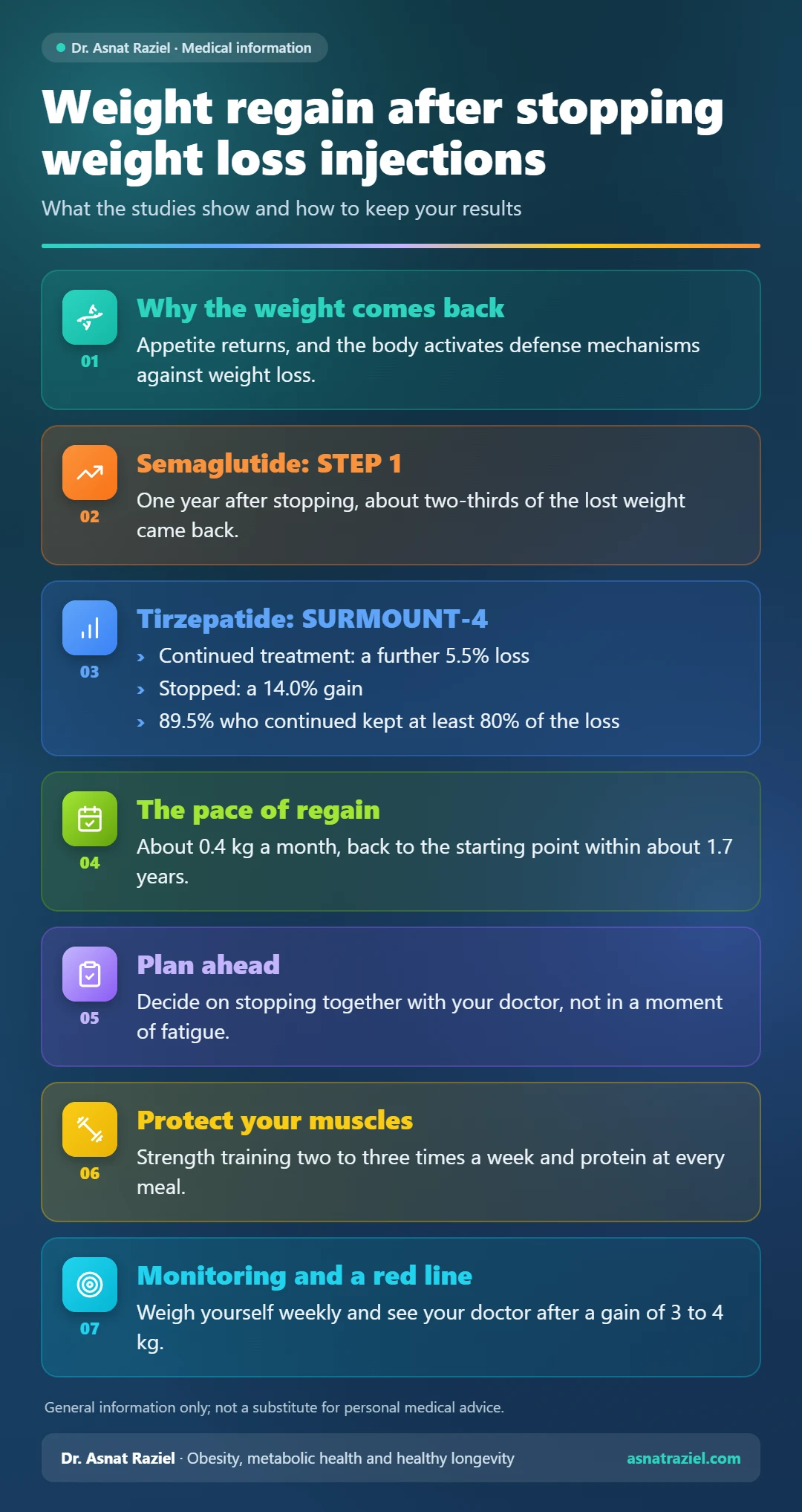
In the STEP 1 extension study, researchers followed 327 participants for a year after treatment ended. During 68 weeks of treatment, participants lost an average of 17.3% of their weight. However, a year after stopping, they had regained about two-thirds of the weight they had lost. In the end, the net loss was only 5.6%. Most of the improvement in blood pressure, blood sugar and blood fats also returned to the starting point.
Tirzepatide: the difference between continuing and stopping
The SURMOUNT-4 trial included 670 participants who had lost an average of 20.9% of their weight after 36 weeks on tirzepatide. Then half of them continued the drug, and half switched to a placebo injection. Over the following year, those who continued lost another 5.5%. By contrast, those who stopped gained 14.0%. Almost 9 in 10 who continued (89.5%) kept at least 80% of their weight loss, compared with only 16.6% of those who stopped.
So what can be done after reaching a goal weight? I discuss the options in my article on weight maintenance after GLP-1.
The bigger picture: how fast the weight comes back
A review published in the BMJ pooled 37 studies with 9,341 participants. On average, weight came back at a rate of about 0.4 kg a month. According to the researchers’ calculation, weight returns to the starting point within about 1.7 years, and with semaglutide and tirzepatide within about a year and a half. Likewise, heart and metabolic markers returned to baseline within about 1.4 years. It is worth noting that weight came back faster than after stopping lifestyle programs.
Weight regain after GLP-1 drugs is not a personal failure
Many patients feel guilty when the scale starts to climb. I want to say this clearly: it is not a lack of willpower. It is biology. The body works to bring back the weight it “knows.” That is why the decision about what happens when you stop treatment should be made in advance, together with your doctor, and not in a moment of fatigue or when the drug is out of stock.
Even well-known public figures describe this experience. Ynetnews reported that Oprah Winfrey regained weight after stopping GLP-1 injections, even though she kept eating well and staying active.
In addition, most patients report that hunger returns within the first few weeks. In separate articles, I explain how to cope with hunger after stopping weight loss injections, and also what to do about constant appetite after stopping drug treatment.
How to limit weight regain after GLP-1 drugs
There is no single approach that suits everyone. Still, if you have stopped the injections or are thinking about it, there are several principles I recommend.
Plan the stop in advance
First, talk to your doctor before you stop, not after. Sometimes you can consider gradually tapering weight loss drugs or a low maintenance dose. Keep in mind that studies on gradual tapering are still few. So the decision is personal and depends on each patient’s health, side effects and goals.
Protect your muscles
Part of the weight lost during treatment is muscle mass. Muscle burns energy even at rest, so losing muscle makes it easier for weight to come back. For this reason, I recommend strength training two to three times a week, already during treatment. In addition, make sure to eat protein at every meal, in line with your dietitian’s advice.
Build habits that will last without the drug
The treatment period is an opportunity to learn new habits while hunger is quiet. For example, regular meals, vegetables and protein on every plate, enough sleep and daily activity. Such habits do not cancel out the biological mechanisms. However, they slow the return of weight and help you spot it early.
Close monitoring in the first months
I recommend weighing yourself once a week and setting a “red line” in advance, for example a gain of 3 to 4 kg. When you reach it, go back to your doctor and review the plan. Patients do the same after surgery, as they learn how to keep their results over the years.
Weight regain after GLP-1 drugs: when it is better to continue treatment
For some patients, the right decision is simply not to stop. This is especially true for people with diabetes, fatty liver, sleep apnea or heart disease. In these cases, regaining weight may also bring back the complications. That is why it is worth building a long-term plan in advance that combines medication, nutrition, activity and emotional support. In our clinic, we build such a plan together with each patient, including planning for the day after.
The bottom line
Weight regain after GLP-1 drugs is an expected biological response, not a failure. Studies show that most of the weight comes back within one to two years if you stop without a plan. On the other hand, planning ahead, protecting your muscles, steady habits and close monitoring can limit the regain. Ultimately, the decision whether to stop, when and how should be made together with your treating doctor.
The information in this article is general and does not replace personal medical advice.
Questions and answers
How fast does weight regain happen after stopping weight loss injections?
According to the BMJ review, about 0.4 kg a month on average. For most people, weight returns to the starting point within about a year and a half to two years if they take no steps to maintain it.
Does gradual tapering prevent weight regain?
It may help some patients, but there are still no large studies that prove it. So it is best to plan it with your doctor.
Can the injections be used for years?
Yes. Long-term studies show that continuing treatment maintains the weight loss and the improvement in health markers, under medical follow-up.
What is the most important thing to do after stopping?
Protect your muscles with strength training and protein, weigh yourself regularly and go back to your doctor as soon as your weight starts to rise.