By Dr. Asnat Raziel, bariatric surgeon specializing in obesity treatment, metabolic health and healthy longevity; Director of the Multidisciplinary Center for Obesity Treatment, Assia Medical, Assuta Ramat HaChayal, Tel Aviv
Weight regain after sleeve gastrectomy: what you need to know
Weight regain after sleeve gastrectomy is common, and it is not a sign of personal failure. In most cases, weight loss in the first year or two is impressive. However, in some patients the weight starts to creep back up gradually a few years later. The good news is that today we have effective tools to stop the trend and get back on track.
In this article, I will explain what happens in the body after surgery, what drives the regain, when to get checked and which treatments have been studied.
What the surgery does, and what it does not do
In a sleeve gastrectomy, the surgeon removes about 80% of the stomach and leaves a narrow tube. As a result, you feel full quickly and your appetite drops. In addition, the surgery changes how the gut and stomach release hunger and satiety hormones.
According to the Mayo Clinic, most patients lose about 25% to 30% of their total body weight within two years. Still, the operation is a tool, not a magic cure. It requires new eating habits, physical activity, regular vitamin supplements and medical follow-up for years.
Before surgery, we also assess physical fitness and muscle mass. For example, frailty before bariatric surgery affects recovery and long-term results.
How common is weight regain after sleeve gastrectomy?
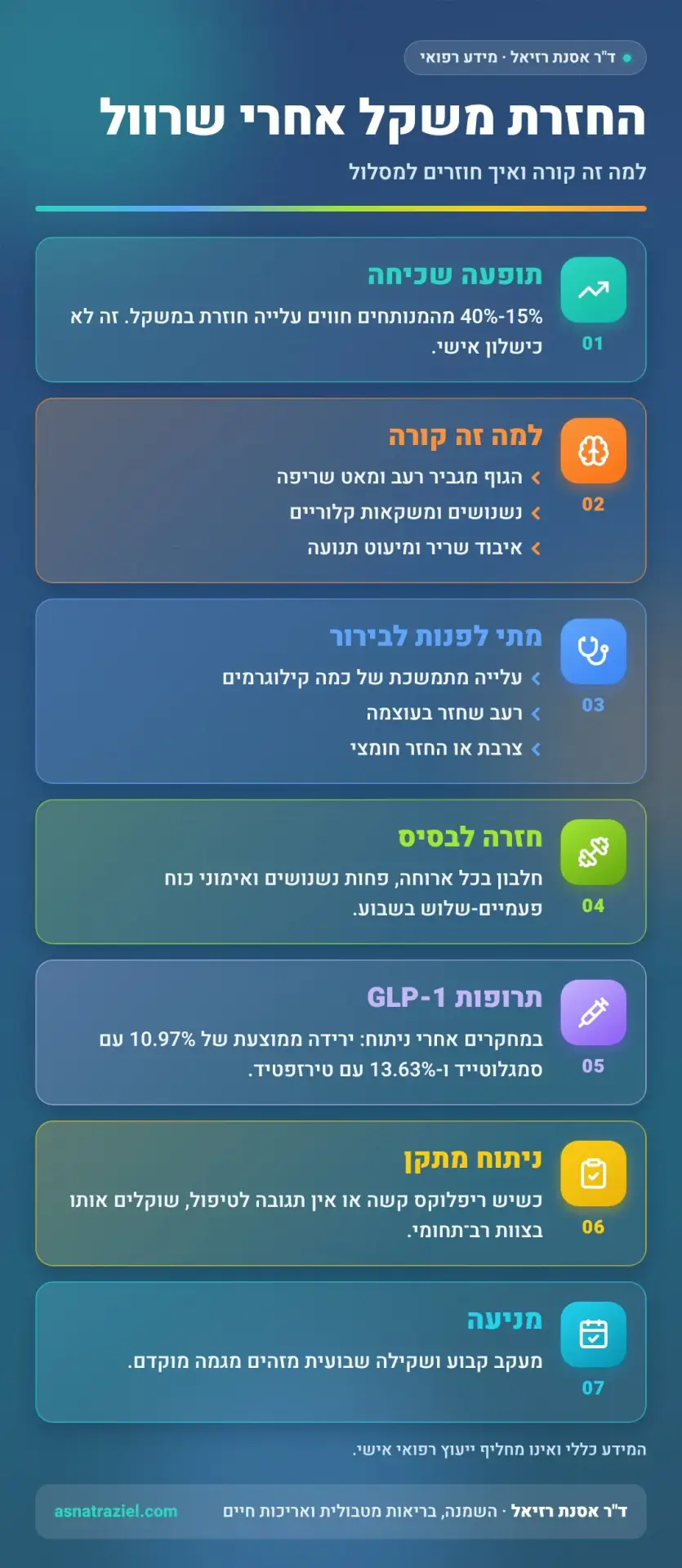
There is no single agreed definition of weight regain, so the numbers vary from study to study. A recent systematic review and meta-analysis estimates that 15% to 40% of patients regain weight after bariatric surgery.
The Finnish SLEEVEPASS trial offers a long-term picture. Researchers randomly assigned 240 patients to a sleeve or a gastric bypass and followed them for ten years. The ten-year results showed a median loss of 43.5% of excess weight after a sleeve, compared with 50.7% after a bypass. In other words, both operations maintained significant weight loss, but some of the weight came back over time.
Why does weight regain after sleeve gastrectomy happen?
Usually there is no single cause. Instead, several factors tend to add up, and identifying them helps us choose the right treatment.
Your body fights to keep the weight
Obesity is a chronic disease. After major weight loss, the body increases hunger and slows its energy use in an effort to restore the previous weight. Moreover, in some patients part of the hormonal effect of surgery fades over the years.
Eating habits that quietly return
Grazing throughout the day, sugary drinks, alcohol and soft, calorie-dense foods pass easily through a narrow sleeve. So you can take in a lot of calories without feeling full. Emotional eating, stress and short sleep also increase hunger.
Muscle loss and too little movement
When you lose weight quickly, you also lose muscle. Lower muscle mass reduces the energy you burn at rest. For this reason, we recommend measuring body composition after sleeve surgery, not just stepping on the scale. At the same time, it is worth learning how to prevent muscle loss while you lose weight.
Changes in the stomach and in your health
Sometimes the sleeve stretches slightly over the years. On the other hand, certain medications, hormonal changes, menopause or quitting smoking can also affect weight. Finally, dropping out of follow-up with your care team is one of the most common reasons for regain.
When should you get checked for weight regain?
Don’t wait until all the weight comes back. Contact your care team in any of the following situations:
- A steady gain of a few kilograms over recent months.
- Strong hunger that has returned, or a feeling that you can eat large portions again.
- Heartburn, acid reflux or difficulty swallowing.
- A return of diabetes, high blood pressure or sleep apnea.
An evaluation usually includes a visit with a physician and a dietitian, blood tests and a body composition analysis. If needed, we add a gastroscopy or an X-ray of the stomach. It is worth knowing that in SLEEVEPASS, esophagitis appeared in 31% of sleeve patients after ten years, compared with 7% after a bypass. Therefore, reflux symptoms need attention regardless of weight.
Weight regain after sleeve gastrectomy: how we treat it
Treatment is built in stages and tailored to each person. The Mayo Clinic lists strategies for getting back on track: changing your diet, increasing activity, behavioral support and, when needed, additional treatment.
Back to basics: nutrition and movement
First, return to regular meals with protein at every meal. In addition, separate drinking from eating and cut back on snacks and caloric drinks. Strength training two to three times a week helps preserve muscle, and combining aerobic and strength training supports weight maintenance. Support from a dietitian and a psychologist who know bariatric surgery also improves your chances of success.
GLP-1 medications after surgery
GLP-1 medications mimic a natural satiety hormone. For example, in the BARI-OPTIMISE trial, researchers in London studied 70 patients who had lost 20% or less of their weight at least one year after surgery. Liraglutide 3.0 mg daily led to an average weight loss of 8.82% within 24 weeks, compared with 0.54% in the placebo group. Gastrointestinal side effects occurred in 80% of patients on the drug, compared with 57% on placebo.
What’s more, the newer drugs are even stronger. In a meta-analysis of eight retrospective studies with 964 patients, semaglutide led to an average weight loss of 10.97%, and tirzepatide to a loss of 13.63%. However, these are observational studies, not controlled trials. In addition, an Italian observational study of tirzepatide in 34 patients showed an average loss of 18.1% within 24 weeks.
Keep in mind that drug treatment is usually long term. When you stop it, the weight tends to return, as I described in my article on stopping weight loss medication.
Revisional surgery
When there is severe reflux, significant stretching of the sleeve or no response to medication, we consider revisional surgery. The most common option is conversion to a gastric bypass. In SLEEVEPASS, the rate of repeat surgery for any reason reached 15.7% after a sleeve over ten years. We make this decision after a full evaluation and together with a multidisciplinary team.
You can read more about the overall approach in my article on weight regain after bariatric surgery.
How to prevent weight regain after sleeve gastrectomy
Prevention starts in the first year. Keep up regular follow-up, even when everything seems fine. Beyond that, weighing yourself weekly helps you spot a trend early. At our clinic, we would rather treat a gain of three kilograms than a gain of twenty.
The bottom line on weight regain after sleeve gastrectomy
Weight regain after sleeve gastrectomy is common, and it stems from a mix of biology, habits and life circumstances. Ultimately, early detection, a return to the basics and smart use of GLP-1 medications bring most patients back on track. When needed, revisional surgery is a good option. If your weight starts to rise, contact your care team.
The information in this article is general and does not replace personal medical advice.
Frequently asked questions
Does weight regain after sleeve gastrectomy mean the surgery failed?
No. Most patients maintain significant weight loss even after ten years. Partial regain is part of the natural course of a chronic disease, and it can be treated.
Can I take weight loss injections after sleeve surgery?
Yes. Studies show significant weight loss with GLP-1 medications after bariatric surgery. A physician who knows your medical history should decide whether they suit you.
Can the sleeve stretch?
Sometimes, yes, but that is not the only cause, and usually not the main one. A proper evaluation will also look at eating habits, muscle and hormones.
When is revisional surgery considered?
We consider it when there is severe reflux, a structural problem in the stomach or no response to lifestyle changes and medication. A multidisciplinary team makes the decision.