By Dr. Asnat Raziel, bariatric surgeon specializing in obesity treatment, metabolic health and healthy longevity; Director of the Multidisciplinary Center for Obesity Treatment, Assia Medical, Assuta Ramat HaChayal, Tel Aviv
Aerobic vs. strength training: which is better for your body?
Aerobic vs. strength training? It is one of the questions I hear most often in my clinic. The short answer: each type of exercise does something different, and the biggest benefit comes from combining them. Aerobic training burns energy and strengthens the heart. Strength training, on the other hand, builds and preserves muscle and bone. In this article I explain what the research shows about weight, physical function and life expectancy.
What is the difference between the two?
Aerobic training is continuous activity that keeps your heart rate up over time, such as brisk walking, running, swimming or cycling. Strength training, by contrast, works the muscles against resistance: weights, resistance bands, machines or your own body weight. There are other types too, such as flexibility and balance training. A general overview of the types of physical exercise describes the differences.
It is important to understand that muscle is not just the “engine” of movement. It is metabolically active tissue that takes up sugar from the blood and affects insulin sensitivity. That is why losing muscle with age, or while dieting, also harms your metabolism. Strong muscles also support upright posture and reduce the risk of falls.
Aerobic vs. strength training for weight loss
What the STRRIDE study found
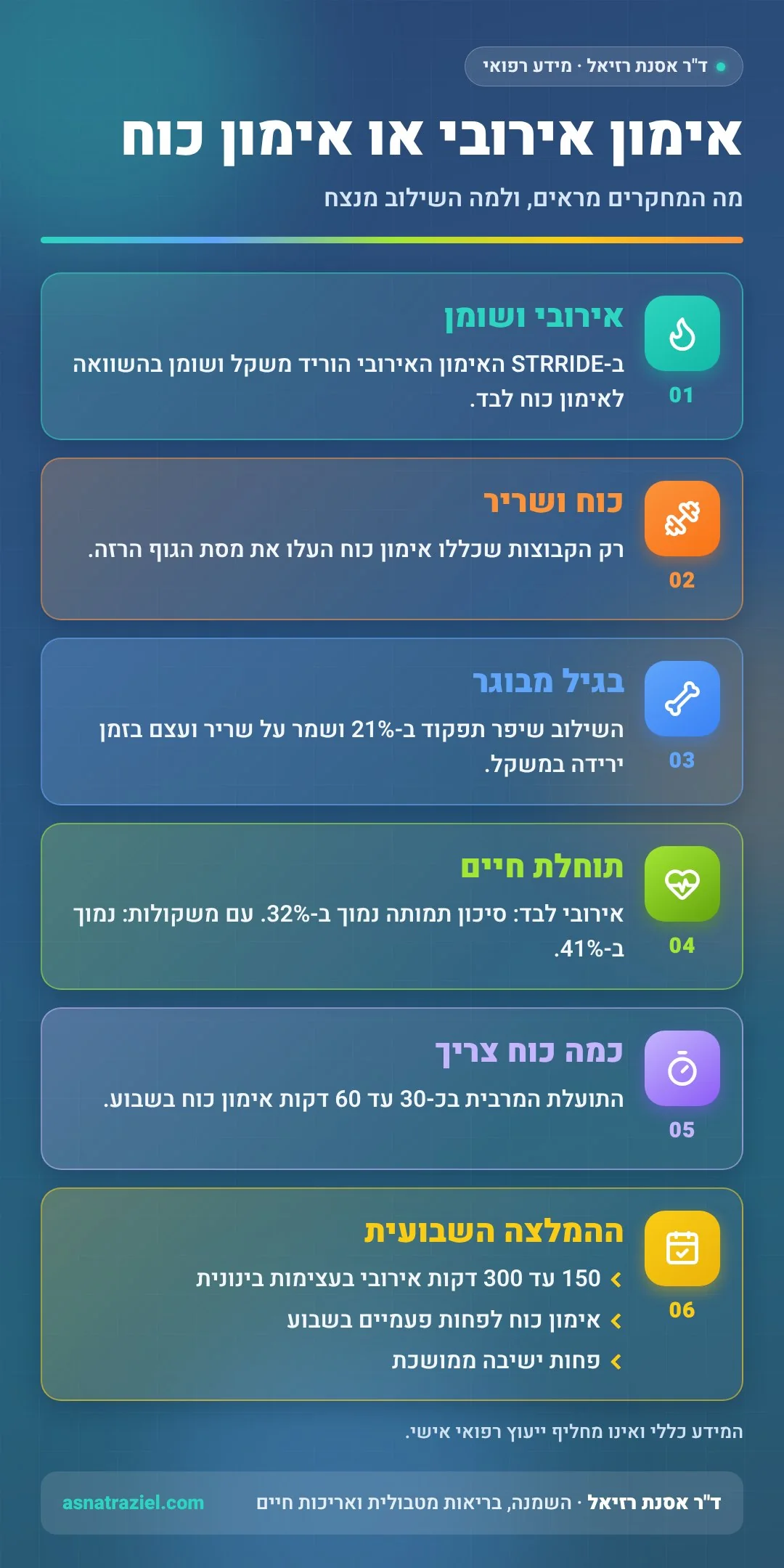
In the STRRIDE AT/RT study, 119 adults with overweight or obesity were divided into three groups for eight months: aerobic training, strength training, or a combination of the two. The aerobic group and the combination group lost weight and fat compared with the strength group. However, only the groups that included strength training increased their lean body mass. What’s more, the combined program took twice as much time but did not add any fat loss beyond aerobic training alone.
The practical takeaway: for burning fat, aerobic training is especially effective. But to build and preserve muscle, strength training is essential.
Older adults: the combination wins
A study published in the NEJM looked at 160 older adults with obesity who took part in a weight-loss program. All the exercise groups lost about 9% of their body weight. However, the combined program improved the physical function test score by 21%, compared with 14% for either type of training alone. In addition, muscle mass fell by 5% in the aerobic-only group, compared with 2% to 3% in the groups that included strength training. Hip bone density also declined less when strength training was part of the program.
Aerobic vs. strength training for longevity
A study of nearly 100,000 adults
A large observational study followed 99,713 adults, with an average age of 71, for about nine years. Those who met the recommendations for aerobic activity but did not lift weights had a 32% lower risk of death. By contrast, those who did both aerobic exercise and weight training once or twice a week reduced their risk by 41%. A Harvard summary of the study cites a 41% to 47% reduction in the combined group. Keep in mind that this is an observational study, meaning it shows an association, not necessarily cause and effect.
How much strength training do you need?
A meta-analysis of 16 cohort studies found that strength training is associated with a 10% to 17% lower risk of death, heart disease, cancer and diabetes. The maximum benefit appeared at about 30 to 60 minutes a week. Beyond that, the benefit did not increase, so there is no need to spend hours at the gym. Physical fitness declines over the years, so it pays to build up a reserve early.
Preserving muscle while losing weight
When you lose weight, some of what you lose is muscle. That is true with dieting, and it is also true with obesity medications. That is why I advise every patient starting this kind of treatment to combine strength training with adequate protein. I discuss this in more detail in my article on lean body mass with GLP-1 medications. Compound exercises such as the deadlift work several muscle groups at once, which makes them especially efficient for preserving muscle mass.
How much aerobic and strength training per week: the official recommendations
The World Health Organization guidelines recommend that adults get 150 to 300 minutes a week of moderate-intensity aerobic activity, or alternatively 75 to 150 minutes of vigorous-intensity activity. The guidelines also recommend regular muscle-strengthening activity, at least twice a week, covering all the major muscle groups. And one more point: cut down on prolonged sitting. In practical terms, even a daily walk helps, and studies show that walking about 8,500 steps a day helps people maintain their weight.
Aerobic vs. strength training: how to build a weekly routine
- Aerobic: 30 minutes of brisk walking, cycling or swimming, five days a week.
- Strength: two or three sessions a week working all the major muscle groups, with a gradually increasing load.
- Flexibility and balance: stretching, Pilates or yoga, especially from age 60.
- Rest: at least one day between strength sessions for the same muscle group.
If you are looking for gentler activity, yoga can also support metabolic health. There are also newer tools that incorporate recovery, such as training with infrared light. And alongside exercise, make time for hobbies and leisure, which help balance your day.
If you have heart disease or joint pain, or haven’t exercised in years, start gradually. In these cases it is a good idea to consult a doctor and work with a certified trainer.
The bottom line
The question “aerobic or strength training?” leads to a single answer: both. Aerobic training is especially effective for burning fat and for cardiovascular fitness. Strength training, on the other hand, preserves muscle, bone and physical function, particularly during weight loss and as we age. The combination is also associated with the lowest risk of death. If you are in the process of losing weight, build a plan that includes both, together with good nutrition and medical follow-up. You can read about my approach to treatment on the About Dr. Asnat Raziel page.
The information in this article is general and does not replace personal medical advice.
Frequently asked questions
Which burns more fat?
In the STRRIDE study, aerobic training reduced weight and fat compared with strength training alone. But only strength training added muscle mass.
Can I choose just aerobic or just strength training?
You can, but you’ll miss out. Each type of exercise offers a different benefit, and the combination is associated with the best results.
How much strength training do I need each week?
According to a large meta-analysis, the maximum benefit for mortality appeared at about 30 to 60 minutes a week.
Is strength training suitable for older adults?
Yes, and it is especially important. In a study of older adults with obesity, strength training preserved muscle and bone during weight loss.
Sources
Aerobic or Resistance Exercise, or Both, in Dieting Obese Older Adults
World Health Organization 2020 guidelines on physical activity and sedentary behaviour




