By Dr. Asnat Raziel, bariatric surgeon specializing in obesity treatment, metabolic health and healthy longevity; Director of the Multidisciplinary Center for Obesity Treatment, Assia Medical, Assuta Ramat HaChayal, Tel Aviv
Appetite after stopping GLP-1: why it comes back so strongly
The return of appetite after stopping GLP-1 medications for obesity is one of the most common complaints I hear in my clinic. Patients tell me that the feeling of fullness disappears within weeks and the thoughts about food come back. This is not weakness or a lack of discipline. It is a predictable biological response, and once you understand it, you can prepare for it in advance.
In this article, I will explain what happens in the body after you stop injections or pills, what the research shows and which tools actually help.
The biology behind appetite after stopping GLP-1
Our body defends the weight it used to have. So when weight goes down, the brain switches on mechanisms designed to bring it back up. A study published in the NEJM followed 50 patients who lost weight on a very low-calorie diet. On average, they lost 13.5 kg in ten weeks.
After the weight loss, levels of the satiety hormones fell: leptin, PYY, CCK, insulin and amylin. At the same time, the level of ghrelin, the hunger hormone, rose. The participants also felt hungrier. What’s more, a year after the weight loss most of these changes were still there, and hunger remained higher than at the start.
The same mechanism works after a diet and after medication
A review published by the American Diabetes Association lays out the biological reasons why it is hard to keep weight off. Besides the hormones, resting metabolic rate drops, and the brain boosts the pull toward high-fat food through the dopamine system. In other words, the body works through several channels at once. I wrote about the role of these hormones in detail in my article on the physiology of satiety.
What the medications do, and what happens when you stop
GLP-1 medications, such as semaglutide in Wegovy and tirzepatide in Mounjaro, mimic natural satiety hormones. They act on the appetite centers in the brain and slow the emptying of the stomach. As a result, the “noise” around food quiets down, and fullness arrives sooner. You can read more about the different options on my page about medications for obesity and metabolic disease.
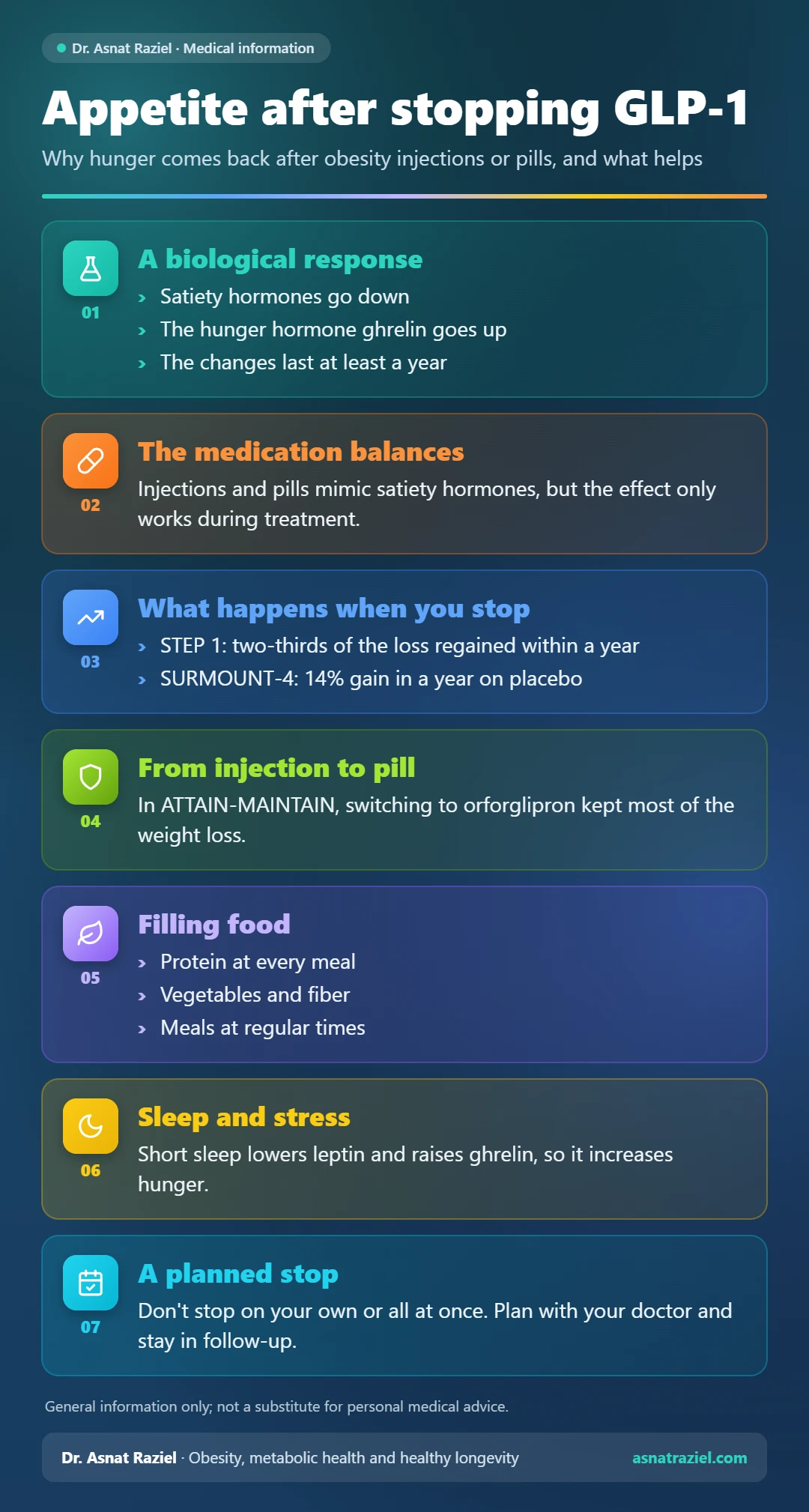
However, the medication does not cancel the biological mechanism that defends your weight. It only balances it for as long as the drug is in your body. That is why, when you stop treatment, the effect fades and the mechanisms I described above go back to working at full strength. In pharmacology, this kind of phenomenon is called a rebound effect: symptoms return after a treatment is stopped.
What studies show about appetite after stopping GLP-1
The data are consistent across different medications. In the extension of the STEP 1 trial, participants lost an average of 17.3% of their body weight on semaglutide. One year after semaglutide was stopped, they had regained about two-thirds of the weight they had lost. In addition, most of the improvement in blood pressure, blood sugar and blood lipids went back to where it started.
In the SURMOUNT-4 trial, participants lost 20.9% of their body weight after 36 weeks of tirzepatide. After that, those who switched to placebo gained 14.0% over the following year. By contrast, those who stayed on treatment lost a further 5.5%.
A large review in the BMJ pooled 37 studies with 9,341 participants, covering all types of weight loss medications. The researchers found weight regain of about 0.4 kg a month on average after the medication was stopped. According to their projections, heart and metabolic markers return to baseline within about 1.4 years. Interestingly, the regain was faster than after stopping lifestyle change programs.
Injections or pills: does it matter?
Today there are also daily pills from the same family. The FDA approved the Wegovy pill (semaglutide 25 mg) in December 2025, and Foundayo, that is, orforglipron, in April 2026. A pill, too, only works for as long as you take it. So the principle is the same: appetite can come back after you stop a pill, not only after an injection.
On the other hand, a pill can also serve as a bridge. In the ATTAIN-MAINTAIN trial, participants who had lost weight on injections switched to orforglipron for a year. According to the data presented, those who switched from an injection to the pill kept most of their weight loss: 74.7% of the loss after tirzepatide and 79.3% after semaglutide. In the placebo groups, they kept 49.2% and 37.6%, respectively.
How to cope with appetite after stopping GLP-1
The most important step is not to stop on your own or all at once. First, plan the stop with your doctor, and sometimes lower the dose gradually. I wrote more about this in my article on stopping GLP-1 drugs and weight regain. In addition, the following tools help most patients:
- Protein at every meal: In a small study, raising protein from 15% to 30% of calories cut daily intake by 441 calories.
- Vegetables, fiber and volume: A big plate of vegetables fills your stomach with fewer calories.
- Regular meals: A steady daily structure reduces extreme hunger and evening snacking.
- Strength training: Holding on to muscle mass helps maintain the rate at which you burn energy.
Sleep and stress affect appetite after stopping GLP-1
Short sleep makes the problem worse. In one study, two nights of restricted sleep in healthy young men lowered leptin by 18% and raised ghrelin by 28%. Hunger also rose by 24%. For this reason, getting enough sleep is part of treatment, as I explained in my article on sleep and brain health. Similarly, ongoing stress increases emotional eating.
Telling physical hunger from emotional hunger
Physical hunger builds gradually, and ordinary food settles it. Emotional hunger, by contrast, appears suddenly and targets a specific food. It helps to pause for a moment, drink some water and ask yourself what is really missing. You will also find more practical tools in my article on how to reduce constant hunger.
When to see a doctor about appetite after stopping GLP-1
See your doctor if your weight is rising quickly, if hunger is disrupting your daily life, or if your blood pressure and blood sugar are going up again. In such cases, we can consider restarting treatment, a low maintenance dose or a switch to a pill. Obesity is a chronic disease, so long-term treatment is not a failure. At our clinic, we build a stopping and follow-up plan for every patient, together with a dietitian and physical activity.
The bottom line
The return of appetite after stopping GLP-1 medications for obesity is a biological response, not a personal failure. Hormones and the brain work to bring the weight back, and the medication only balances them during treatment. That is why it is important to plan the stop in advance, strengthen your eating, sleep and exercise habits and stay in follow-up. If you would like to learn more about my approach, you can read about me, Dr. Asnat Raziel.
The information in this article is general and does not replace personal medical advice.
Questions and answers
How long does the increased hunger last after stopping treatment?
It varies from person to person. In the diet weight loss study, the hormonal changes and increased hunger lasted at least a year. So it is wise to treat weight maintenance as a long process.
Will all the weight come back if I stop treatment?
Not necessarily, but in most studies a large part of the weight did come back. In the STEP 1 extension, for example, participants regained about two-thirds of the weight they had lost within a year.
Is it better to switch from an injection to a pill instead of stopping?
For some patients, this is a good option. In the ATTAIN-MAINTAIN trial, switching to orforglipron helped people keep most of their weight loss. The decision depends on your health, the cost and your preference, so you make it together with your doctor.
What to eat to ease appetite after stopping GLP-1
Build every meal around protein, vegetables and fiber. In addition, eating at regular times and drinking enough fluids reduce hunger attacks. When eating out, my tips on ordering fast food smartly can help.
Sources
Long-term persistence of hormonal adaptations to weight loss
Why Weight Loss Maintenance Is Difficult
Adults switching from injectable drug to Foundayo maintain majority of weight loss
Novo Nordisk’s Wegovy pill approved in the US as first oral GLP-1 for weight management
FDA approves orforglipron, an oral GLP-1, for adults with obesity




