By Dr. Asnat Raziel, bariatric surgeon specializing in obesity treatment, metabolic health and healthy longevity; Director of the Multidisciplinary Center for Obesity Treatment, Assia Medical, Assuta Ramat HaChayal, Tel Aviv
Wartime stress at home: when the war comes indoors
Wartime stress does not stay on the battlefield. For many of us, it also comes home. Air-raid sirens, nonstop news and uncertainty change the rhythm of daily life. Together, they create a heavy emotional and physical burden.
During a period like this, many people leave the house less and see fewer friends and relatives. They also exercise less and often sleep badly. This mix of stress, loneliness and a broken routine weighs on mood. However, it affects physical health as well.
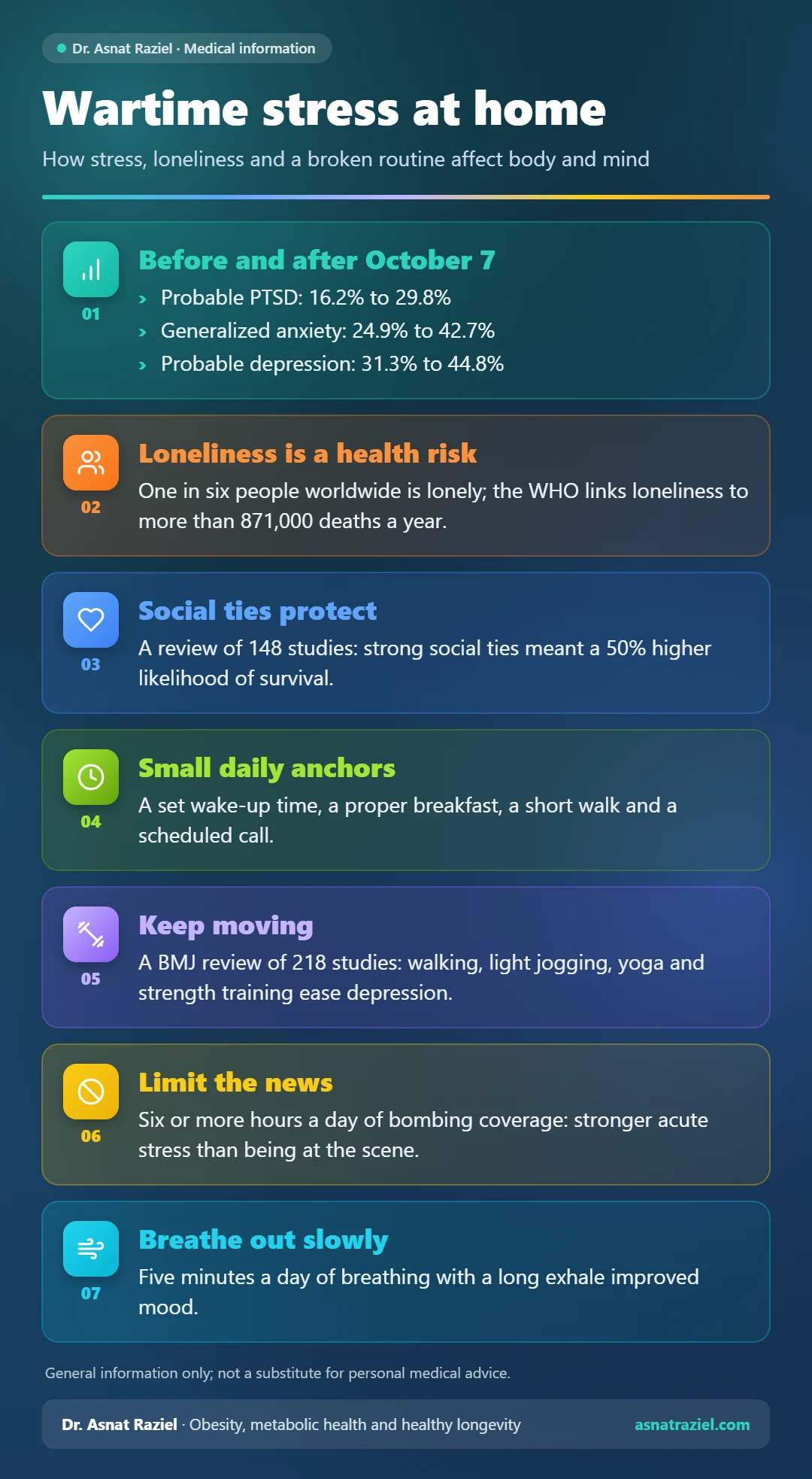
Data from Israel show the scale of the problem. A nationwide study assessed 710 adults about six weeks before the October 7, 2023 attack on Israel, and again about five weeks after it. The rate of probable PTSD (post-traumatic stress disorder) rose from 16.2% to 29.8%. Generalized anxiety jumped from 24.9% to 42.7%, and probable depression rose from 31.3% to 44.8%.
Loneliness: more common than it seems
In wartime, many people shut themselves in at home. Sometimes they simply don’t feel like going out. Sometimes it is a sense of insecurity, and sometimes it is plain emotional exhaustion.
When isolation lasts a long time, however, loneliness becomes a health risk. According to the WHO Commission on Social Connection, one in six people worldwide experiences loneliness. The organization links it to more than 871,000 deaths a year. Loneliness also raises the risk of stroke, heart disease, diabetes, depression and anxiety.
Human connection is a basic need. A review of 148 studies found that people with strong social ties had a 50% higher likelihood of survival. That is why even a short chat with a friend, a family meal or a phone call to someone close can lift your mood.
When daily routine falls apart
A daily routine gives us a sense of stability and control. When it is disrupted, many people feel confused and unsettled. People who were used to a daily walk, regular work or social gatherings suddenly find themselves stuck at home. The days feel long, and they have no clear structure. As a result, energy levels, mood and everyday habits change.
The answer is not to rebuild your old routine in full. Usually, a few small anchors throughout the day are enough. For example, get up at a set time, eat a proper breakfast and take a short walk near home, or even in the hallway. It is also worth scheduling a call with someone close in advance. Anchors like these restore a sense of control, even when the reality outside changes from day to day.
For more anchors like these, read my practical guide to staying healthy in wartime.
How wartime stress affects the body
Stress accompanies every period of uncertainty. When it persists, the body releases stress hormones such as cortisol and adrenaline. In the short term, these hormones help us deal with danger. But when their levels stay high for a long time, they affect many systems in the body.
Prolonged stress is linked to higher blood pressure and changes in blood sugar levels. It also weakens the immune system and causes fatigue, irritability and trouble concentrating. If you want to understand what happens to the body over months rather than weeks, read my article on what a year of data shows about the long-term toll of war.
Emotional eating in stressful times
Wartime stress often changes eating habits. Many people eat when they are tense, worried or bored at home. Food becomes a quick source of comfort: snacking between meals, sweets and eating in front of the TV.
Emotional eating is not driven by real hunger, but by feelings. Over time, it can lead to weight gain and harm metabolic health. The biological link between stress and weight is explained in my article on stress and obesity.
Sleep in the shadow of sirens
Night-time sirens, worry and hours of watching the news all hurt sleep quality. Many people struggle to fall asleep and wake up again and again. Others wake up tired even after a full night. Good sleep is a key part of health. It affects mood, appetite, energy and our ability to cope with stress. You can find ways to improve it in my article on improving sleep naturally.
Less movement, less resilience
When security tensions run high, many people stop going for walks or workouts. Moving less harms both body and mind. On the other hand, physical activity improves mood, reduces anxiety and supports good sleep. A large review in the BMJ, which included 218 studies, found that walking, light jogging, yoga and strength training ease depression. In other words, when we stop moving, fatigue and stress actually grow.
Coping with wartime stress: a home toolkit
Even when the world outside is unstable, you can create a space at home that protects your health. Here are a few simple steps:
- A daily routine, with set times for waking up, meals and sleep.
- Moderate physical activity, even indoors.
- Balanced nutrition and regular meals.
- Regular conversations with people close to you.
- Checking the news only once or twice a day.
- Breathing and relaxation exercises.
News exposure deserves special attention. A study of reactions to the Boston Marathon bombing reached a surprising conclusion. Six or more hours a day of bombing-related media coverage were linked to stronger acute stress than that of people who were actually at the scene.
Your breath is also a tool that is always available. In a controlled study, five minutes a day of breathing with a long exhale improved mood. It also slowed the breathing rate, compared with mindfulness meditation. You will find more practical methods in my guide to stress relief techniques, and in my article on what meditation research shows.
Human strength in uncertain times
History shows that people can adapt even to very hard situations. Especially in stressful times, it is important to strengthen our human connections. In addition, it helps to keep the body moving and to find small moments of calm in everyday life. Body and mind are connected. When we care for the body through movement, nutrition and sleep, we also strengthen our emotional resilience.
The bottom line on wartime stress
Wartime stress changes our routine and affects both body and mind. Still, it does not have to harm our health over the long run. Routine, human connection, movement and sleep are simple and effective tools. And if the difficult feelings last for weeks, see your family doctor or a mental health professional.
Older people living alone face an extra layer of risk. I address it in my article on loneliness in older adults during wartime.
The information in this article is general and does not replace personal medical advice.
References
Social connection linked to improved health and reduced risk of early death
Social relationships and mortality risk: a meta-analytic review
Media’s role in broadcasting acute stress following the Boston Marathon bombings
Brief structured respiration practices enhance mood and reduce physiological arousal