By Dr. Asnat Raziel, bariatric surgeon specializing in obesity treatment, metabolic health and healthy longevity; Director of the Multidisciplinary Center for Obesity Treatment, Assia Medical, Assuta Ramat HaChayal, Tel Aviv
Emotional eating in wartime: a human response to stress
Emotional eating in wartime is something many people know firsthand. In periods of uncertainty, such as the months of Israel’s 2026 campaign against Iran, eating habits change. Some people lose their appetite. For many others, however, the body is not truly hungry, but the mind is looking for comfort. Food, especially sweet, carb-heavy or fatty food, becomes a way to self-soothe.
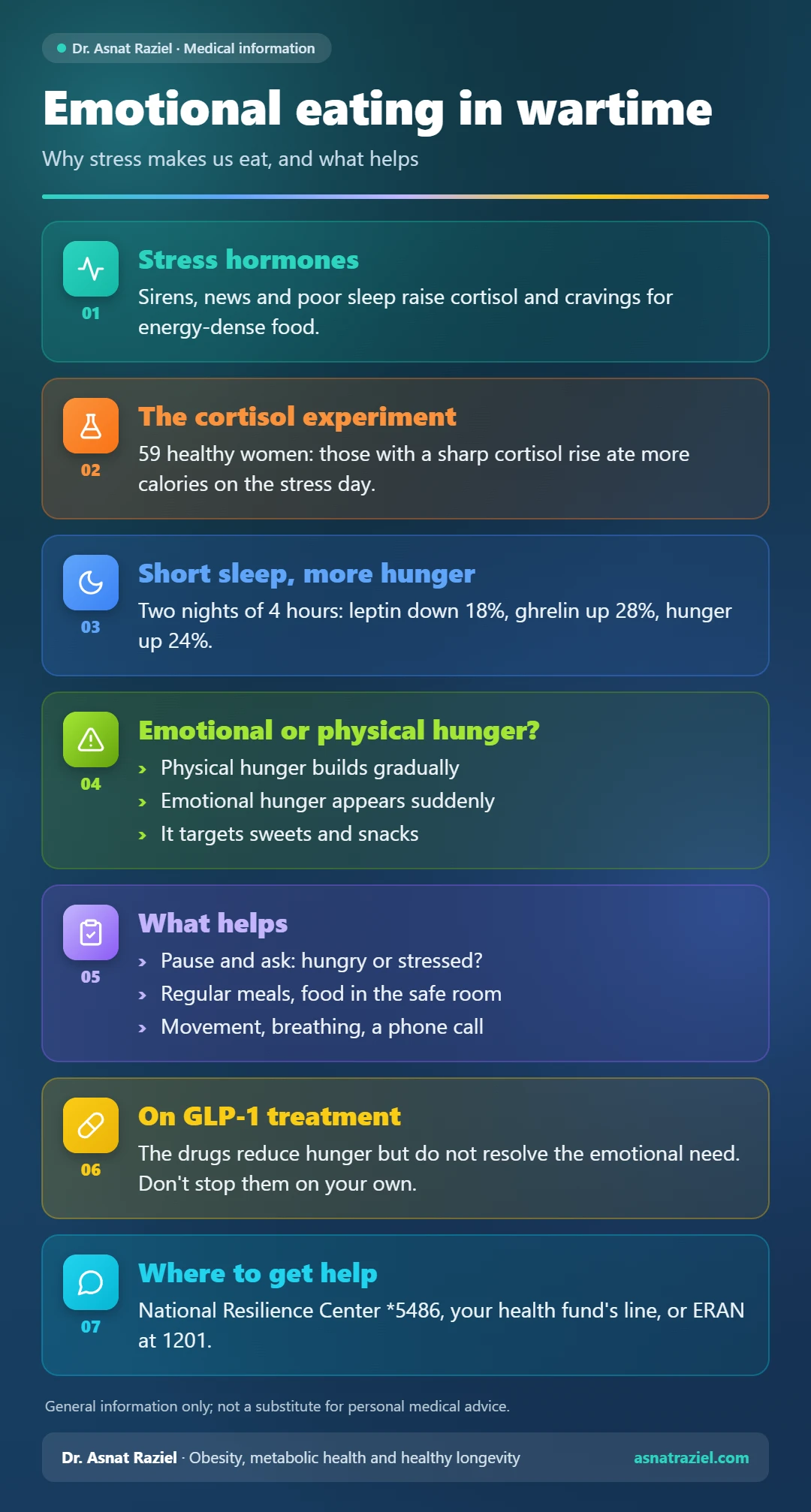
This is a natural, human response to stress. Air-raid sirens, distressing news and irregular sleep activate the body’s stress system. Levels of cortisol, the stress hormone, rise. In addition, cravings for energy-dense food grow stronger. Biologically, this is an ancient survival mechanism designed to prepare the body for emergencies.
Why stress makes us eat
When we experience fear or ongoing tension, the brain looks for quick ways to calm down. Food high in sugar and fat activates the brain’s reward system, which runs on the chemical messenger dopamine. That is why the sense of relief is real, but usually only temporary. A review by researchers at Yale University explained that stress we cannot control changes eating patterns. It increases the pull toward especially “rewarding” food, the kind that is rich in fat and sugar.
Cortisol plays a role too. A well-known laboratory experiment included 59 healthy women. Women who responded to stress with a sharp rise in cortisol ate more calories on the stress day than women with a smaller rise. On a regular day, there was no difference between them. Moreover, they preferred sweet food on regular days as well.
When routine breaks down and sleep suffers
In wartime, daily routine suffers as well. People stay at home, follow the news nonstop and sleep less. Sometimes a sense of losing control sets in. In this situation, eating becomes an easy, always-available action that offers a moment of control.
Israeli health data reflect this strain. According to Ynetnews, Maccabi’s Israel Health Index 2025 found that 30% of smokers had increased their smoking compared with a year earlier. Israelis also sit more than eight hours a day on average.
Sleep plays a central role here. In a small controlled study, 12 young men slept only four hours a night for two nights. Their level of leptin, the satiety hormone, dropped by 18%. At the same time, ghrelin, the hunger hormone, rose by 28%. Hunger also increased by 24%, and appetite for carb-rich food rose by 33% to 45%. In other words, nights of sirens increase hunger even apart from emotions.
Signs of emotional eating in wartime
Emotional eating is not linked to physical hunger. It often appears after tension, sadness, boredom or anxiety. Sometimes it shows up as eating quickly, eating large amounts or feeling out of control. Afterward, feelings of guilt or disappointment may follow.
There is a simple way to tell the difference. Real hunger builds gradually, and any food can satisfy it. Emotional eating, by contrast, usually appears suddenly and targets specific foods, most often sweets or carb-heavy snacks. You will find a detailed guide to this distinction in my article on when emotional eating is normal and when it is a warning sign.
How to cope with emotional eating in wartime
The first step is awareness. Simply telling physical hunger apart from an emotional need can change your behavior. For example, before you open the fridge, you can pause for a moment and ask: am I hungry, or am I stressed?
It is also important to keep a regular eating routine as much as possible. Regular meals throughout the day prevent extreme hunger, which easily leads to uncontrolled eating. Even when the day revolves around the safe room (the reinforced shelter room many Israeli homes have), it is worth keeping simple, nourishing food there.
It also helps to add moderate physical activity. Even a short walk at home or a few stretches reduce stress. So do deep breathing, a short meditation, a conversation with someone close or writing in a journal. All of these meet the emotional need instead of turning to food. You will find more practical tools in my guide on overcoming emotional eating.
War is only one trigger. I describe the wider picture in my article on the causes of emotional eating.
What about people taking obesity medications?
Many patients ask me whether their medications protect them from emotional eating. Drugs in the GLP-1 family reduce hunger and thoughts about food, so they help some patients during stressful periods as well. However, they do not resolve the emotional need itself. I wrote about this at length in my article on GLP-1 drugs, emotional eating and binge eating.
It is also important not to stop treatment on your own because of the situation. If it is hard to get to the clinic, use telemedicine. And if your eating changes a lot, tell your care team.
Children and family members at home
Children also respond to stress through food. They imitate their parents, so setting a personal example matters a great deal. Sit down for a family meal whenever possible, and talk about how everyone feels. In addition, it is better not to use sweets as a reward or as comfort after a siren. A hug, a game or a story meets the same need in a healthy way.
When to seek help
Ongoing stress affects all of us, but not to the same degree. A study that followed 1,052 young adults in Israel’s conflict zones found that loss, displacement from home and loss of income increase anxiety, depression and post-traumatic stress symptoms. So if your eating is getting out of control, or if anxiety is hurting your sleep and daily functioning, don’t stay alone with it.
Israel’s Ministry of Health has published mental health support lines that also operate in emergencies: the National Resilience Center at *5486, the lines of Israel’s health funds (HMOs), and the ERAN emotional first-aid hotline at 1201. In addition, if you experience repeated episodes of eating large amounts of food, read about binge eating disorder. It is a disorder with effective treatment.
Support goes far beyond these lines. I describe how hospitals and blood supplies work in wartime in a separate article.
Don’t fight yourself
In difficult times, it is important to remember that body and mind react to stress in different ways. There is no need to fight yourself or feel guilty. Sometimes even a conscious choice of “comfort food” is part of coping.
The goal is not perfection, but balance. A combination of awareness, self-compassion and a healthy routine helps you get through challenging periods while protecting your health. You can read more about the broader link between stress and the body in my article on how wartime stress affects body and mind at home.
The bottom line on emotional eating in wartime
Emotional eating in wartime is not a personal failure. It is a biological and emotional response to an extraordinary situation. In the end, precisely when our sense of security is shaken, caring for the body is also a way to care for the mind.
The information in this article is general and does not replace personal medical advice.
References
Thousands of Israelis evacuated to hospitals: the Ministry of Health guidelines (Hebrew)