By Dr. Asnat Raziel, bariatric surgeon specializing in obesity treatment, metabolic health and healthy longevity; Director of the Multidisciplinary Center for Obesity Treatment, Assia Medical, Assuta Ramat HaChayal, Tel Aviv
Dairy and weight loss: the question that returns every Shavuot
Dairy and weight loss is a topic that comes up in almost every conversation ahead of Shavuot, the Jewish harvest holiday traditionally celebrated with dairy meals. Tables fill up with cheesecakes, savory quiches, creamy pastas, yogurts and artisanal cheeses. At the same time, the world of nutrition is in turmoil, and the same questions keep coming back. Is dairy good for your health? Does it help you lose weight, or does it actually encourage weight gain? Should you choose low-fat products, or are butter and cream back in fashion? And what about sensitivity, allergy and inflammation?
The short answer: there is no single answer that fits everyone. Dairy can be part of a healthy, balanced diet. However, its effect depends on the type of product, the amount, your health status, your age, your physical activity and even your gut microbiome.
For a broader look at the research, see my article on dairy and health over the years.
From staple food to nutrition controversy
For decades, dairy was seen as a pillar of healthy eating. It provided calcium, protein, vitamin B12 and other vitamins. In addition, doctors recommended it for protecting bone, muscle and satiety.
Over the past decade, however, other voices have emerged. Some researchers raised concerns that a high intake of processed, sweetened dairy products contributes to weight gain and digestive discomfort. Alongside this, an opposite trend appeared: a return to full-fat dairy. In the past, 0% fat products were recommended almost automatically. Today, the recommendations on dairy and weight loss are far more cautious and balanced.
What studies say about dairy and weight loss
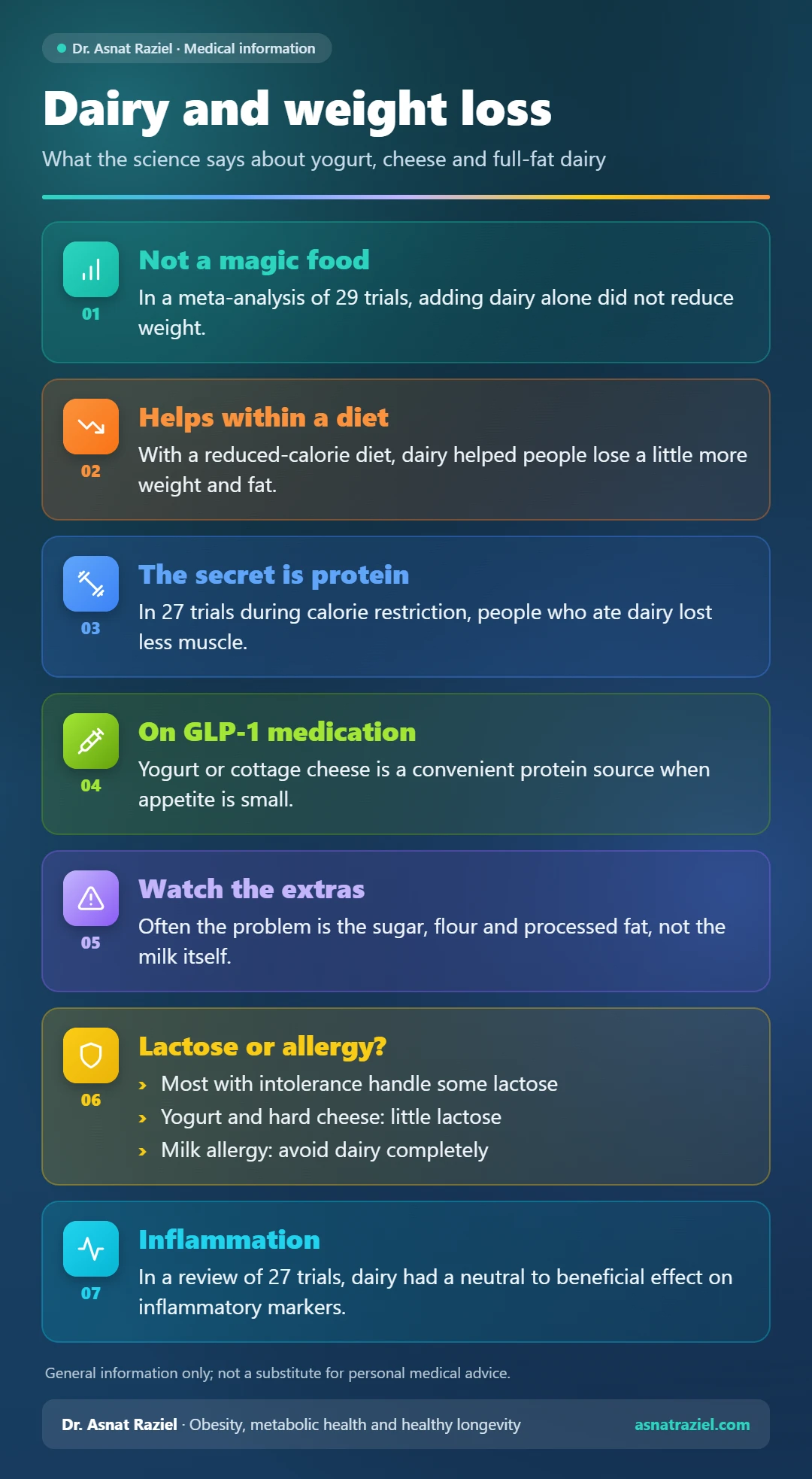
This is one of the most researched questions in the field. The scientific answer is that dairy is not a magic food. A meta-analysis of 29 controlled trials from Harvard University found that adding dairy on its own did not reduce weight. By contrast, when participants also followed a reduced-calorie diet, dairy helped them lose a little more weight and fat.
A comprehensive review from 2020 reached a similar conclusion. Without a change in diet, dairy did not change body composition. However, within a weight loss program, a high dairy intake led to slightly greater loss of weight and fat mass. In other words, the link between dairy and weight loss depends on the context of the whole diet.
The secret is protein
The main reason is the protein content, especially in yogurt, skyr, cottage cheese and soft white cheese. Protein increases satiety, helps preserve muscle and reduces snacking. In a meta-analysis of 27 trials during a reduced-calorie diet, participants who ate dairy lost less muscle mass. You can read more in my article on protein intake for weight loss.
Dairy and weight loss during drug treatment
This topic is especially important for women after menopause, for older adults and for patients on GLP-1 medications such as Wegovy, Ozempic and Mounjaro. These medications greatly reduce appetite, so many people eat too little protein. The joint advisory from four American organizations on nutrition during GLP-1 treatment emphasizes high-quality protein sources alongside strength training. In practice, yogurt or cottage cheese is a convenient solution when your appetite is small. You will find more strategies in my article on preventing muscle loss during weight loss. For a closer look at dairy protein specifically on these medications, see my article on why dairy protein matters with GLP-1 drugs.
That said, not all dairy products are the same. Plain yogurt or a good-quality cheese is very far from sweet dairy desserts, puddings or sweetened coffee drinks. Often the problem is not the milk itself, but the sugar, flour and processed fat that come with it.
The big comeback of fat
When it comes to dairy and weight loss, fat is the next big question. For years, we were taught that all saturated fat is harmful. Butter, full-fat cheeses and cream became almost dirty words. Today the picture is far more balanced. Recent studies show that full-fat dairy does not necessarily raise cardiometabolic risk, as was once thought.
One possible reason is that very low-fat food is sometimes less filling, so it may encourage compensating with sweets and carbohydrates. In addition, some low-fat products contain added sugar, starches and flavorings. Even so, there is no room for extremes here either. Butter is not a superfood. People with heart disease, high cholesterol or significant cardiovascular risk should still limit saturated fat.
Yogurt, kefir and the microbiome
Yogurt, kefir and fermented milk drinks contain bacteria that may help balance the bacterial population in the gut. New studies point to a possible link between a balanced microbiome and appetite regulation, the immune system, mood and metabolic health. In the future, we may be able to tailor personal recommendations to the makeup of each person’s microbiome. You can read more in my article on inflammation and the microbiome in obesity.
Lactose intolerance or milk allergy?
One common source of confusion is the difference between the two. Lactose intolerance is a common condition in which the body has trouble breaking down milk sugar. Symptoms include bloating, gas, abdominal pain and sometimes diarrhea. According to the US National Institute of Diabetes and Digestive and Kidney Diseases, most people with lactose intolerance can eat some lactose without symptoms. For example, yogurt and hard cheeses contain little lactose.
By contrast, a milk allergy is an immune system reaction, and it can cause a severe response. It is most common in children and requires complete avoidance of dairy. Moreover, not everyone who considers themselves sensitive to milk really is. Sometimes the source of the problem is a heavy load of processed food, eating too fast or stress.
Does dairy cause inflammation?
Social media is full of claims that dairy creates inflammation, increases mucus or is toxic to the body. The scientific literature does not support such sweeping claims. In a review of 27 controlled trials, the researchers concluded that dairy has a neutral to beneficial effect on inflammatory markers. In eight of the trials, dairy even lowered at least one inflammatory marker. Still, some people feel much better when they cut back on dairy, for example with a sensitive gut or certain skin conditions. That is why personal tailoring matters more than blanket bans.
Children, adults and older age
For children and teenagers, dairy is an important source of protein and calcium during growth. In older age, it may help preserve muscle and bone. This is especially important when people lose weight quickly with medication. Rapid weight loss without enough protein can lead to muscle loss, weakness and a decline in function.
Dairy and weight loss: Shavuot without guilt
The key message for the holiday is that there is no need to fear dairy, but there is also no reason to overdo it. You can enjoy a festive meal, a good cheese platter or a slice of cheesecake. Small choices make the difference: less processed food, plenty of vegetables, listening to your sense of fullness, and eating without pressure or guilt. If you struggle with emotional eating, you may also want to read my practical guide to coping with emotional eating.
For practical holiday tips, see my guide to a healthy Shavuot, the Jewish holiday known for its dairy meals.
The bottom line
Dairy and weight loss can absolutely go together, when you choose wisely and keep a balance. In the end, your health is not determined by one dish on one holiday evening. It is built from an entire pattern of living: a balanced diet, physical activity, good sleep, less stress, social connection and meaning. And perhaps that is also the beautiful message of Shavuot: a connection to the land, to simplicity, to family and to a shared meal, in balance and with joy.
The information in this article is general and does not replace personal medical advice.
References
Effects of dairy intake on body weight and fat: a meta-analysis of randomized controlled trials