By Dr. Asnat Raziel, bariatric surgeon specializing in obesity treatment, metabolic health and healthy longevity; Director of the Multidisciplinary Center for Obesity Treatment, Assia Medical, Assuta Ramat HaChayal, Tel Aviv
Microbiome and obesity: what lies behind excess weight
The link between the microbiome and obesity runs through a hidden partner: inflammation. Inflammation and the gut microbiome are two hidden players that shape the health of people with obesity. In recent years, it has become clear that obesity is not just an accumulation of fat. It is an active biological state that involves the immune system, metabolism and the brain. At the center of the picture are chronic low-grade inflammation and the population of gut bacteria. The link between them is hidden from view, but its effect on health is profound. In this article, I focus on the cycle that connects them, and on practical ways to break it.
Chronic inflammation: the silent fire
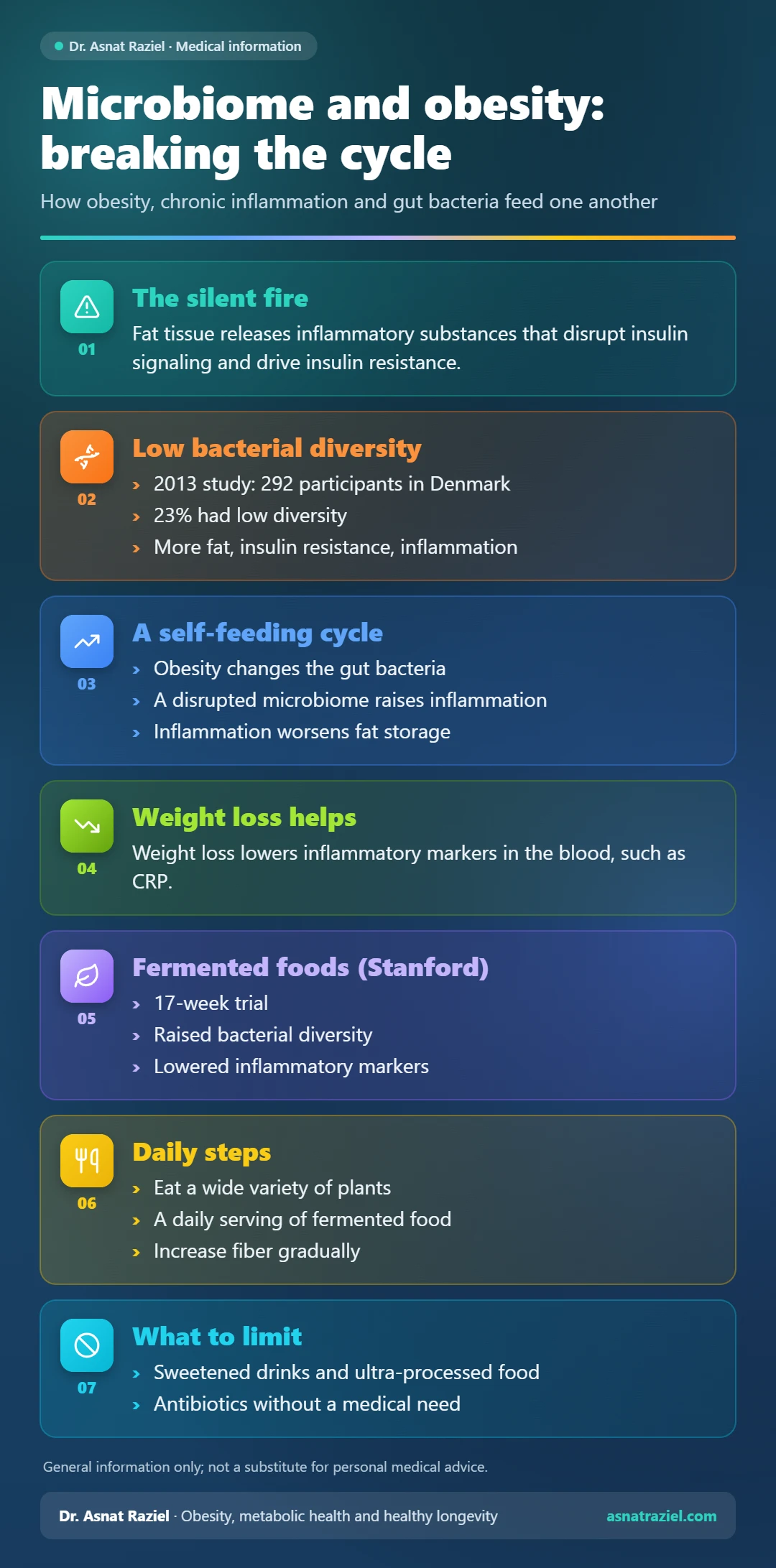
Fat tissue is not a passive energy store. It is an active endocrine organ that releases cytokines, the signaling proteins of the immune system, along with other inflammatory substances. As fat mass grows, especially abdominal fat, a mild but persistent inflammation develops. This inflammation does not cause pain or fever, but it works in the background without a break.
A landmark review in the journal Nature described how this inflammation disrupts insulin signaling. In this way, it contributes to insulin resistance, atherosclerosis and fatty liver disease. In addition, it also plays a role in cancer processes. I wrote in detail about the fat that wraps the abdominal organs in my article on visceral fat.
The microbiome: an unseen organ
The microbiome is the collection of bacteria that live in our gut. Many experts now see it as a kind of organ in its own right. Trillions of bacteria affect digestion, nutrient absorption, immune regulation and even appetite. When its makeup is healthy, it supports good health. By contrast, when its makeup is disrupted, it can speed up inflammatory and metabolic processes.
The evidence comes from important studies. A 2006 study in mice showed that an obesity-associated microbiome extracts more energy from food. When the researchers transferred it to germ-free mice, those mice gained much more fat than mice that received a “lean” microbiome. A 2013 study in humans examined 292 participants in Denmark. The researchers found that 23% of them had low bacterial diversity. These people had more excess fat, insulin resistance, abnormal blood lipids and inflammation.
In obesity, we often see a drop in bacterial diversity and a rise in strains that promote inflammation. At the same time, the production of short-chain fatty acids declines. These are substances that bacteria make from fiber, and they have anti-inflammatory and metabolically helpful effects. You can read more about the link between the microbiome and aging in my article on the microbiome and biological age. A study on how well the microbiome predicts inflammation is covered in my separate article on gut bacteria and inflammation, while this article focuses on obesity and on breaking the cycle.
Microbiome and obesity: a self-feeding cycle
The link between obesity, inflammation and the microbiome is circular. Obesity changes the makeup of the gut bacteria, and a disrupted microbiome increases inflammation. Inflammation then worsens insulin resistance and fat storage, and the cycle repeats. This loop explains why obesity tends to progress, and why it is hard to break with diet alone.
One of the mechanisms is called metabolic endotoxemia, the leakage of bacterial components from the gut into the bloodstream. A study in mice showed that a high-fat diet raised blood levels of LPS two- to threefold. LPS is a component of the outer wall of certain bacteria that triggers a strong inflammatory response. This rise led to weight gain, inflammation and insulin resistance. However, these are animal findings, and the picture in humans is more complex.
What’s more, the cycle also affects the response to treatment. Patients with high inflammation and a disrupted microbiome may respond less well to some interventions. On the other hand, improving the inflammatory environment may make treatment more effective.
Three ways to break the cycle
If the cycle feeds itself, where can we break it? The research in this article points to three entry points. First, weight loss itself lowers inflammatory markers in the blood, such as CRP. Second, the gut environment matters: in the Stanford trial, fermented foods raised bacterial diversity and lowered inflammatory markers. Third, medical treatment plays a part. Bariatric surgery clearly changes the gut bacteria, and obesity medications may affect the microbiome as well, although research in humans is still at an early stage. In practice, effective treatment combines these entry points rather than relying on any single one.
What happens to the microbiome when obesity is treated?
Weight loss and metabolic improvement affect more than the number on the scale. They also affect inflammation and the microbiome. Weight loss lowers inflammatory markers in the blood, such as CRP. A dietary intervention study in 49 people with overweight and obesity tested a diet for weight loss and weight stabilization. The diet improved bacterial diversity in those who started with low diversity, as well as their clinical measures. However, in this group, the effect on inflammatory markers was weak.
Bariatric surgery clearly changes the makeup of the gut bacteria. Obesity medications may also affect the microbiome, through changes in hormones, gut motility and food choices. Still, research on these drugs in humans is at an early stage. These changes may explain part of the rapid improvement in metabolic measures, sometimes even before significant weight loss. I wrote about how these drugs work in my article on how obesity medication works.
Diet, fiber and fermented foods
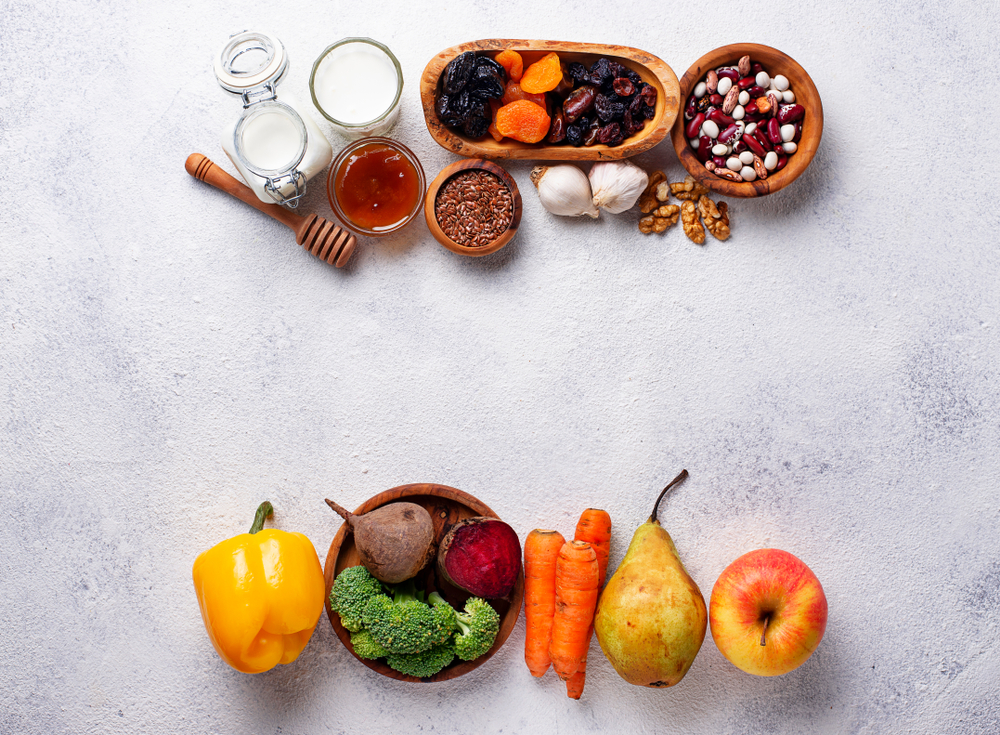
Diet plays a central role in shaping the microbiome. Vegetables, legumes, whole grains and unprocessed food support beneficial bacteria. By contrast, a diet high in sugar and ultra-processed food encourages bacteria that increase inflammation.
An interesting study from Stanford University tested two approaches. In a 17-week trial, participants ate either a high-fiber diet or a diet rich in fermented foods, such as yogurt, kefir, sauerkraut and kimchi. The fermented foods gradually increased bacterial diversity and lowered inflammatory markers. In contrast, the fiber diet did not change diversity during this period, although it did change bacterial activity. In other words, the two approaches complement each other.
So proper obesity treatment is not only about cutting calories. It is also about the quality of food and its effect on the gut environment. This is one reason why different dietary approaches work for different people. You will find tips for improving the body’s response to insulin through diet in my article on insulin sensitivity through diet.
Practical steps for the microbiome in obesity
- Eat a wide variety of plants, including vegetables, fruit, legumes, nuts, seeds and spices.
- Add a daily serving of fermented food, such as yogurt, kefir or sauerkraut.
- Increase your fiber intake gradually to reduce bloating and discomfort.
- Cut back on sweetened drinks, snacks and ultra-processed food.
- Sleep well and move every day, because sleep and physical activity also lower inflammation.
Keep in mind that probiotic supplements are no substitute for a varied diet. Also, take antibiotics only when there is a medical need, because they reduce bacterial diversity.
The bottom line on the microbiome and obesity
Understanding obesity as an inflammatory and metabolic disease with a microbial component changes how we think about treatment. There is no one-size-fits-all solution and no shortcut. Effective treatment combines weight loss, metabolic improvement, lower inflammation and support for a healthy microbiome. Ultimately, the future of obesity medicine lies in tailoring diet, medication and lifestyle to the individual. Attention to inflammation and the microbiome is an inseparable part of that plan.
The information in this article is general and does not replace personal medical advice.
References
Inflammation and metabolic disorders
An obesity-associated gut microbiome with increased capacity for energy harvest
Richness of human gut microbiome correlates with metabolic markers
Metabolic endotoxemia initiates obesity and insulin resistance