By Dr. Asnat Raziel, bariatric surgeon specializing in obesity treatment, metabolic health and healthy longevity; Director of the Multidisciplinary Center for Obesity Treatment, Assia Medical, Assuta Ramat HaChayal, Tel Aviv
Dairy protein and weight loss injections: not just calcium
Dairy protein and weight loss injections are a pairing nobody would have imagined a few years ago. Every year on Shavuot, the Jewish holiday traditionally celebrated with dairy foods, cheesecakes, quiches, yogurts and cheeses take center stage on the table. But in 2026, the medical world is looking at dairy products in a new way. In the past, the focus was on calcium and bone health. Today, the main interest is actually protein.
The reason lies in the revolution of recent years: the GLP-1 and GIP drugs, such as Ozempic, Wegovy and Mounjaro. These medications reduce hunger, improve fullness and allow significant weight loss. In addition, they improve related conditions such as diabetes, high blood lipids, fatty liver, sleep apnea and knee pain. However, doctors have identified a new problem: many people lose weight, but they also lose muscle mass along the way.
It’s not only fat that you lose
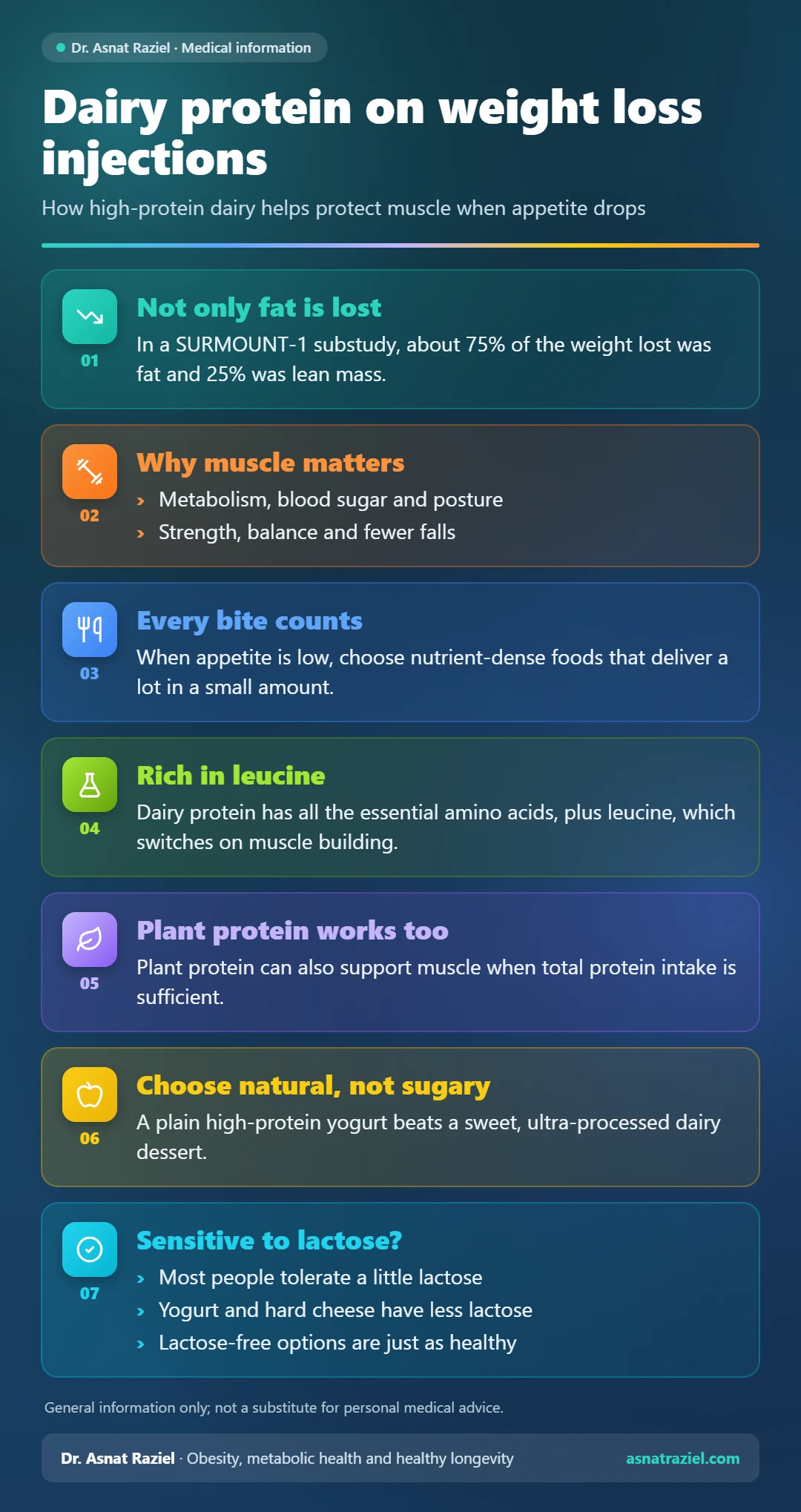
When a person loses weight, the body doesn’t lose only fat. Part of the loss also comes from lean body mass, which includes muscle. In a SURMOUNT-1 substudy, for example, researchers examined the body composition of patients on tirzepatide. About 75% of the weight lost was fat, and 25% was lean mass. Similarly, in an MRI substudy of STEP UP with semaglutide at 7.2 mg, 84% of the loss came from fat. Muscle mass fell by about 10%, but participants kept their functional strength. Muscle loss can be especially significant when weight loss is rapid or protein intake is low.
This issue matters most for women after menopause and for people over 60. It’s also important for anyone who doesn’t get enough physical activity. Many patients on the new medications say they “just have no appetite.” At first glance, that sounds ideal. Medically, though, it can be a problem. When the body doesn’t get enough protein over time, it starts to break down muscle as well. I discussed this at length in my article on preserving muscle during weight loss.
Why does muscle matter so much?
People tend to think about muscles in terms of appearance. In modern medicine, however, muscle mass is one of the most important markers of health. Muscle affects metabolism, blood sugar, posture, strength and balance. In older adults, it is directly linked to functional independence and to preventing falls and fractures. I described the link between muscle loss and obesity in my article on sarcopenic obesity.
That’s why a clear message kept coming up at the major obesity conferences of 2026. The goal is not only to lower the number on the scale, but also to protect the quality of the body during weight loss.
Dairy protein and weight loss injections: every bite counts
At a time when people eat less because of weight loss drugs, every bite matters far more. When appetite shrinks, it’s worth choosing nutrient-dense foods, meaning foods that deliver a lot of nutrition in a small amount. A joint advisory from four US organizations in lifestyle medicine, nutrition and obesity stresses exactly this point. According to the advisory, quality protein and nourishing food are the foundation of nutrition during GLP-1 treatment.
High-protein dairy products meet this need. High-protein yogurt, cottage cheese, white cheese (a soft, spreadable Israeli cheese similar to quark) and milk-based protein drinks provide plenty of protein in a small volume. For patients who struggle to eat large meals, this is a simple way to get enough protein. You’ll find more practical ideas in my protein intake guide.
For example, a 58-year-old woman taking Mounjaro reports that she barely feels hungry most of the day. She used to eat a sandwich, pasta and snacks throughout the day. Now she makes do with one coffee until the afternoon. In a case like this, a high-protein yogurt in the morning, cottage cheese at lunch and white cheese in the evening can make a meaningful difference in preserving muscle.
Why dairy protein in particular?
Dairy protein is high-quality protein because it contains all the essential amino acids. Moreover, it is rich in leucine, an amino acid that switches on muscle building. A recent 2026 review found that whey protein and milk protein trigger especially strong muscle building, thanks to their leucine content and fast absorption. The effect is particularly striking in older adults.
That said, the same review notes that plant protein can also support muscle when total intake is sufficient. In other words, dairy products are a convenient and effective tool, but not the only one. Athletes have used whey-based protein powders for years. Today, the same principle is reaching obesity medicine, and dietitians and doctors recommend spreading quality protein throughout the day.
Not all dairy products are the same
There’s a huge difference between a plain, high-protein yogurt and a sweet dairy dessert. Some dairy treats “marketed as healthy” contain large amounts of sugar, flavorings and additives. So the new approach talks less about “low fat” and more about food quality. A natural, simple and filling dairy product is usually better than an ultra-processed “diet” product. I wrote about the problem of ultra-processed food in another article.
Attitudes toward fat in dairy have changed, too. In the past, any product with more than 3% fat caused something close to fear. Today, some experts note that a slightly richer product, such as plain whole-milk yogurt, may be very filling for some people. The decision should be personal, based on your blood lipid levels and your care team’s advice.
Dairy protein when you’re sensitive to lactose
Not everyone who feels bloated after dairy has significant lactose intolerance. According to the US National Institute of Diabetes and Digestive and Kidney Diseases, most people with lactose intolerance can have a little lactose without symptoms. In addition, yogurt and hard cheeses contain less lactose than milk.
What’s more, there is now a wide range of high-protein, lactose-free products. According to the same source, they are just as healthy as regular dairy products. This way, people with lactose sensitivity can also enjoy the nutritional benefits without discomfort.
The bottom line: dairy protein in the new era
One of the most interesting changes of recent years is that dairy products are no longer just holiday food or a source of calcium for kids. In the era of weight loss drugs, they are part of a complete medical strategy. Its goal is to protect muscle, metabolism and overall health during weight loss. You’ll find more about a suitable menu in my nutrition guide for weight loss injections.
Ultimately, the combination of dairy protein and weight loss injections reflects a simple message. Success in treating obesity is measured not only in kilograms, but also in how the body feels and functions along the way. That’s why a good yogurt, a high-protein cheese or simple cottage cheese takes on new meaning. Each is part of the path to a strong, healthy body, even while losing weight.
This article provides general information and does not replace personal medical advice.
References
Sustaining Muscle, Cardiovascular Health, and the Environment: Is Plant-Based Protein the Key?
Higher-Dose Semaglutide Nears 28% Weight Loss in Early Responders




