By Dr. Asnat Raziel, bariatric surgeon specializing in obesity treatment, metabolic health and healthy longevity; Director of the Multidisciplinary Center for Obesity Treatment, Assia Medical, Assuta Ramat HaChayal, Tel Aviv
Psychiatric treatment and weight: what is the link and why it matters
Keeping weight stable during psychiatric treatment is a challenge I see in my clinic almost every week. Patients tell me that their mental health treatment is finally working, but their weight keeps climbing. As a result, some of them consider stopping the medication. That is a mistake that can cost them dearly.
The good news is that both sides can be treated together. In this article, I will explain which medications affect weight, why this happens and what to do in practice, without giving up mental balance.
Psychiatric treatment and weight: understanding why it goes up
Some medications act on brain systems that also regulate appetite and fullness. For example, blocking certain histamine and serotonin receptors increases hunger. In addition, some drugs cause fatigue, so people move less during the day.
Moreover, some medications harm metabolism directly. They raise blood sugar, blood fats and blood pressure, even before weight goes up. Many patients also describe food noise, meaning thoughts about food that won’t let go. However, the response is highly individual: the same drug can have a big effect on one person and almost none on another.
Which medications affect weight the most
Antipsychotics
A large review published in Lancet Psychiatry pooled 100 controlled trials with 25,952 patients with schizophrenia. After only about six weeks of treatment, clear differences emerged between the drugs. Clozapine raised weight by an average of 3.01 kg compared with placebo. Alongside it, olanzapine showed the worst metabolic profile.
By contrast, aripiprazole, brexpiprazole, cariprazine, lurasidone and ziprasidone had the mildest effect on weight and blood fats. It is important to remember that this is a snapshot of just a few weeks. With long-term treatment, the weight gain may build up.
Antidepressants
Antidepressants differ greatly in how they affect weight. A large US study followed 183,118 patients who started one of eight common drugs. Compared with sertraline, escitalopram added an average of 0.41 kg over six months, paroxetine 0.37 kg and duloxetine 0.34 kg. On the other hand, bupropion showed the smallest gain.
The average differences are small, but some patients gain a significant amount. For instance, escitalopram, paroxetine and duloxetine raised the risk of gaining 5% or more of body weight by 10% to 15%. In addition, mirtazapine and tricyclic drugs such as amitriptyline are known to increase appetite.
Mood stabilizers
Lithium, valproate and carbamazepine increase the risk of weight gain. In contrast, lamotrigine is the exception. A good summary of this picture appears in Harvard’s guide to weight gain from medications.
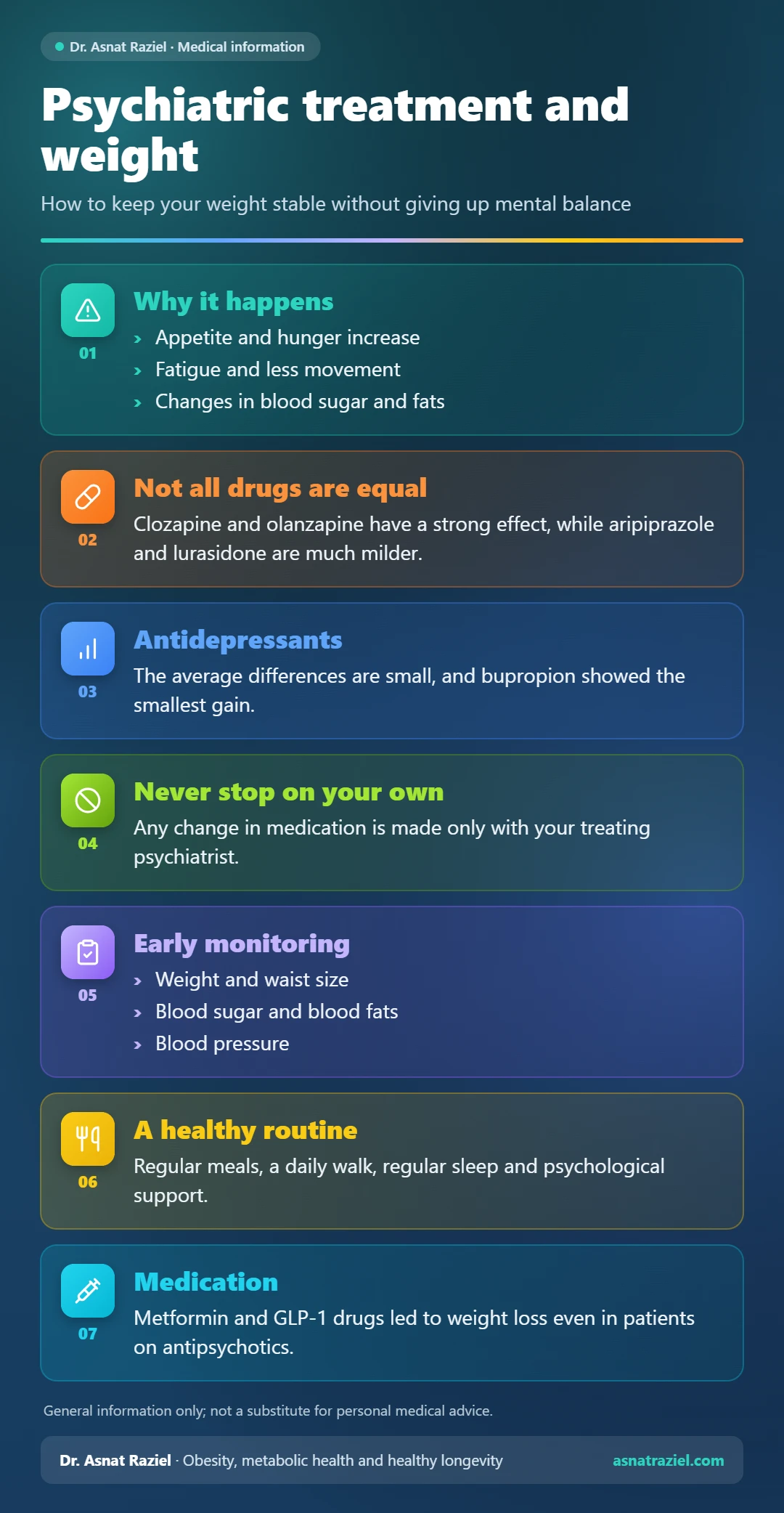
Psychiatric treatment and weight: never stop a medication on your own
Stopping a psychiatric medication suddenly can cause a relapse, a return of the illness and withdrawal symptoms. That is why any change in dose or switch of drug is made only with the treating psychiatrist. Mental balance is the foundation, and it comes before the number on the scale.
Still, it is fine and even wise to ask questions. For example: is there an alternative with a milder effect on weight? Can the dose be lowered? Sometimes there is a suitable alternative. At other times the current drug is the right one, and then weight is treated in other ways.
Psychiatric treatment and weight: what to do in practice
Monitoring from day one
First, weigh yourself before starting treatment and check your waist size, blood pressure, blood sugar and blood fats. Then repeat these tests regularly. The fastest gain usually appears in the first months. In other words, this is exactly the time to act, before the weight builds up.
Nutrition, movement and sleep
At this stage, it helps to build a simple routine: regular meals with protein and vegetables, little processed food and few sugary drinks, plus a daily walk. In addition, regular sleep helps regulate appetite and mood, as I explained in my article on sleep and brain health. Your home environment matters too: a dark, cool bedroom helps you keep a steady nighttime routine.
Furthermore, focused psychological support, such as cognitive behavioral therapy, helps people cope with emotional eating and cravings. In many cases, depression and obesity feed each other, and I have written about this at length in my article on GLP-1 drugs and depression.
Medication for obesity
When lifestyle changes are not enough, effective drug treatment is available today. For example, a meta-analysis of 12 studies with 743 patients found that metformin reduced weight by 3.27 kg on average compared with placebo in patients taking antipsychotics.
In addition, a controlled trial from Denmark gave liraglutide, a GLP-1 drug, to 103 patients taking clozapine or olanzapine. After 16 weeks, they lost 5.3 kg compared with placebo, and 63.8% of them returned to normal blood sugar levels, compared with 16.0% in the placebo group. Questions about mental health safety come up often, so I have gathered the information in my articles on the FDA review of GLP-1 drugs and suicide risk and GLP-1 drugs and addiction.
Psychiatric treatment and weight: why teamwork changes the outcome
The best care combines a psychiatrist, an obesity medicine doctor, a dietitian and sometimes a psychologist. Each of them sees a different part of the picture. In our clinic, we coordinate with the psychiatrist before any change. Family can help too, and I have some tips on how to talk with your family about treatment. For more on the drugs themselves, see also my article on psychiatric medications and weight gain.
The bottom line
Keeping your weight stable during psychiatric treatment is possible, and weight gain is not inevitable. The drugs differ greatly from one another, and you can act early: monitoring, a healthy routine, adjusting treatment with your psychiatrist and, when needed, medication for obesity. Ultimately, the goal is a balanced mind and a healthy body together. If your weight worries you, it is worth consulting a doctor who specializes in obesity.
The information in this article is general and does not replace personal medical advice.
Questions and answers
Does everyone on psychiatric treatment gain weight?
No. The effect depends on the drug, the dose and the person. Some medications hardly change weight at all.
Can I stop my medication if I have gained weight?
Not on your own. Any change is made only with your treating psychiatrist, who can consider an alternative or a dose adjustment.
Are GLP-1 drugs suitable for people on psychiatric treatment?
In many cases, yes, with a personalized plan and in coordination with the psychiatrist. Studies have shown weight loss and better blood sugar even in patients taking clozapine and olanzapine.
When should I see a doctor about psychiatric treatment and weight?
As early as possible. It is best to seek advice right at the start of treatment, or when your weight goes up by 5% or more.