By Dr. Asnat Raziel, bariatric surgeon specializing in obesity treatment, metabolic health and healthy longevity; Director of the Multidisciplinary Center for Obesity Treatment, Assia Medical, Assuta Ramat HaChayal, Tel Aviv
Weight-loss drug expectations: between excitement and reality
Weight-loss drug expectations may be the topic we talk about least in the clinic. In recent years, drugs from the GLP-1 family have changed the rules of the game. What was once a long, frustrating struggle has become a fast and effective process for many people. But alongside the excitement come hard questions, real fears and aspects that are less comfortable to discuss.
I don’t shy away from these questions. On the contrary, I want to put them on the table. People who start treatment with a realistic picture usually do better and feel less disappointed.
From pen to pill: a quiet revolution
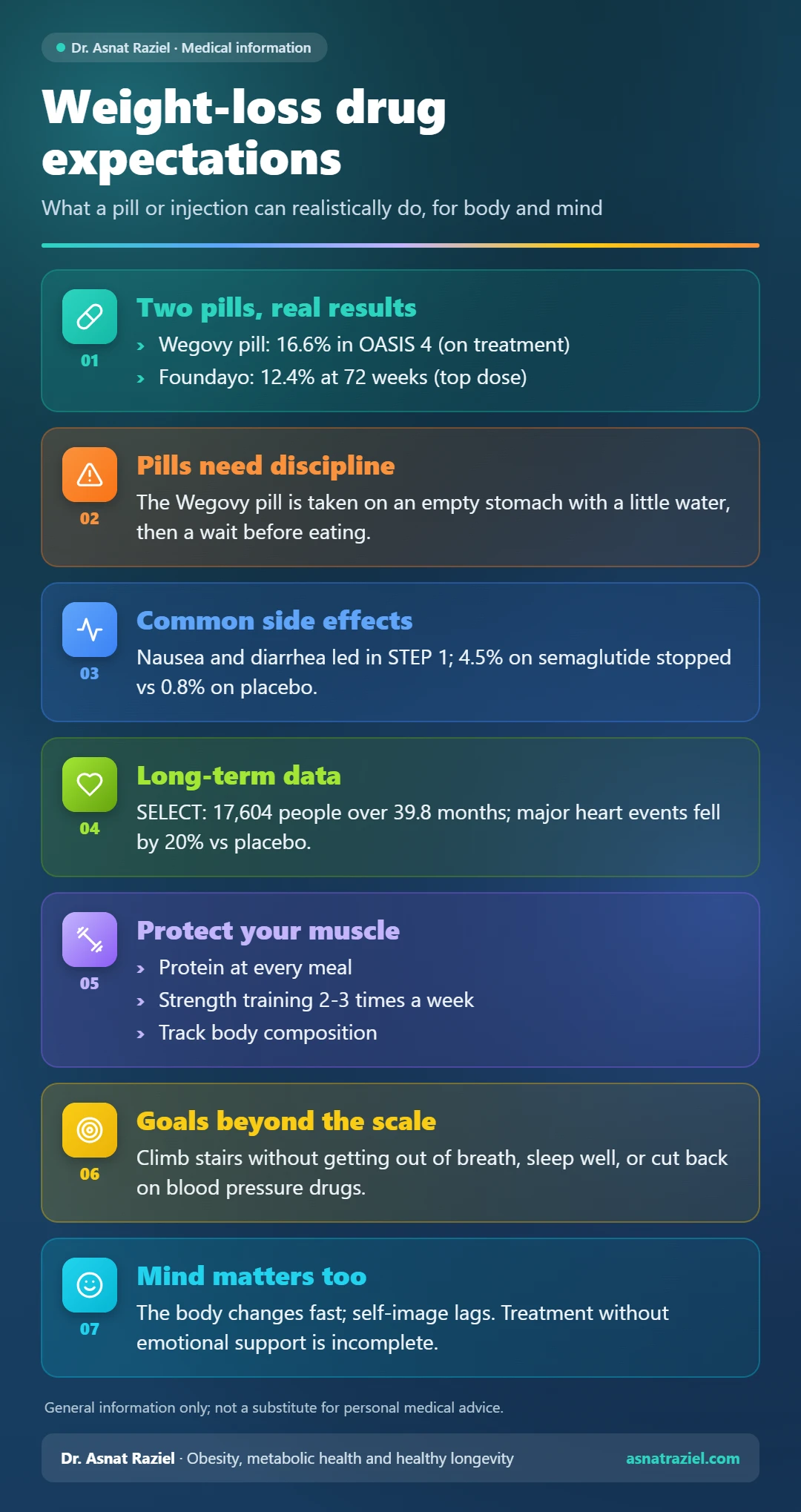
One of the most intriguing trends in drug development is the shift from injections to pills. This is no longer a vision. In December 2025, the FDA approved the Wegovy pill, semaglutide at a dose of 25 mg a day. During the 64-week OASIS 4 trial, participants who stayed on treatment lost an average of 16.6% of their body weight.
In April 2026, Foundayo (orforglipron) from Lilly joined it. At the highest dose, participants who continued treatment lost 12.4% of their weight after 72 weeks. In Israel, Foundayo has been available in pharmacies since mid-September 2026. I offer a detailed comparison of the two pills in my article on the Wegovy pill vs Foundayo.
Weight-loss drug expectations for pills
For quite a few people, the injection was a barrier. Some patients struggle with the act of injecting itself, others feel fear or aversion, and some simply cannot stick with it. That is why an effective pill can make treatment accessible to much wider groups of people. I write about the emotions behind the injection in a separate article.
Even so, a pill is not a magic solution. First, the Wegovy pill requires discipline: you take it on an empty stomach with a little water, and then wait before eating. Second, pills also cause digestive side effects. In addition, personal tailoring still requires close medical follow-up. If you are torn between the two, take time to weigh the considerations for choosing a pill or an injection.
Side effects everyone experiences but few talk about
In the shadow of the glowing success stories, some side effects stay out of the public conversation. Nausea, vomiting, constipation, weakness and dizziness are things we see every day. Sometimes appetite drops so much that eating becomes hard. In the STEP 1 trial, nausea and diarrhea were the most common side effects. Most were mild to moderate and faded over time. Still, 4.5% of patients on semaglutide stopped treatment because of them, compared with 0.8% on placebo.
There are also less-discussed effects: ongoing fatigue, loss of muscle mass, a changed relationship with food and sometimes a sense of disconnection from the body. In my view, the problem is not the drug itself but the lack of comprehensive support. When a drug is given without a supportive framework for nutrition, physical activity and mental health, there can be a price to pay. You will find a practical guide in my article on GLP-1 side effects.
Fear of the unknown: what we know about the long term
A question that comes up again and again in the clinic is what will happen in 10 or 20 years. It is a legitimate fear. We do not yet have 30 years of follow-up, and it is important to say so honestly.
But we are not starting from zero, either. GLP-1 drugs have been used to treat diabetes for about 20 years. What is new is their widespread use for obesity. In addition, the SELECT trial included 17,604 people with obesity and heart disease, with an average follow-up of 39.8 months. Semaglutide reduced major cardiovascular events by 20% compared with placebo. On the other hand, 16.6% stopped treatment because of side effects, compared with 8.2% on placebo.
It is important to remember the other side of the equation. Obesity, too, is a chronic disease with serious long-term complications: diabetes, heart disease, cancer and joint damage. So the question is always one of balancing risks, not whether any risk exists at all.
Body over number: weight-loss drug expectations beyond the scale
The number on the scale is only part of the story. Rapid weight loss can also include muscle loss. That is why I also measure success in strength, function, blood tests and quality of life. To protect muscle, I ask my patients for three things: enough protein at every meal, strength training two or three times a week, and tracking body composition. It also helps to set goals that have nothing to do with weight. For example, climbing stairs without getting out of breath, sleeping well or cutting back on blood pressure medication. Goals like these keep motivation up even when the weight stalls. I explain more in my article on why body composition matters more than weight.
What about the mind? The body is fast, the head not always
People expect to feel happy, confident and whole. But confusion, anxiety and even sadness often appear. The body changes quickly, and the self-image has not caught up yet. The way other people treat you changes too. And sometimes an old coping mechanism that was tied to food disappears.
Some people miss food as an emotional anchor, and others suddenly feel exposed. In terms of safety, the European Medicines Agency reviewed the link to suicidal thoughts in 2024 and found no causal link. Even so, obesity treatment without emotional support is incomplete treatment. I discuss this further in my article on body image after weight loss.
Between Hollywood and the clinic
Hollywood stars, red carpets and new bodies create the illusion of a simple, glamorous solution. But reality is far more complex. Celebrities show a result, not a process. They don’t talk about the side effects, the fears and the daily struggle. So our medical responsibility is to bring the conversation back down to earth: less magic and more understanding, less idealization and more humanity.
Bottom line: weight-loss drug expectations that help you succeed
Weight-loss drugs are a powerful, revolutionary and important tool. The World Health Organization also recommends them as a long-term treatment, alongside a nutrition and activity program. But they are no substitute for listening, personal tailoring and a broad view of body and mind. Weight-loss drug expectations should be realistic, and then success will be lasting too. Ultimately, the goal is not just to lose weight. The goal is to live better.
The information in this article is general and does not replace personal medical advice.
References
Wegovy pill approved in the US as first oral GLP-1 for weight management
Once-Weekly Semaglutide in Adults with Overweight or Obesity
Semaglutide and Cardiovascular Outcomes in Obesity without Diabetes
Meeting highlights from the Pharmacovigilance Risk Assessment Committee (PRAC) 8-11 April 2024
WHO issues global guideline on the use of GLP-1 medicines in treating obesity
The STEP 1 and SELECT trials were funded by Novo Nordisk.