By Dr. Asnat Raziel, bariatric surgeon specializing in obesity treatment, metabolic health and healthy longevity; Director of the Multidisciplinary Center for Obesity Treatment, Assia Medical, Assuta Ramat HaChayal, Tel Aviv
Body composition: the question the scale can’t answer
Body composition is the balance of fat, muscle, bone and water that makes up each of us. For years, we measured the success of obesity treatment by one number: how many kilograms came off. The lower the number on the scale, the more successful we considered the treatment. Today, however, we know the picture runs much deeper. Weight loss on its own is not a medical goal. The important question is which part of the body the weight came from: fat, muscle or both.
From weight to body composition: a profound shift in thinking
The modern approach moves the focus from body weight to body composition. In other words, it asks not only how much a person weighs, but what the ratio is between fat mass and muscle mass. Two people can weigh exactly the same and still be in completely different states of health.
The global medical community is embracing this approach too. In 2025, the Lancet commission on the definition of clinical obesity stated that BMI, the body mass index, is not enough for an individual diagnosis. According to the commission, excess fat should be confirmed by direct measurement of body fat, or at least by an additional measure such as waist circumference. You can read about the limits of this index in a guide to calculating BMI.
Muscle is not just tissue for movement
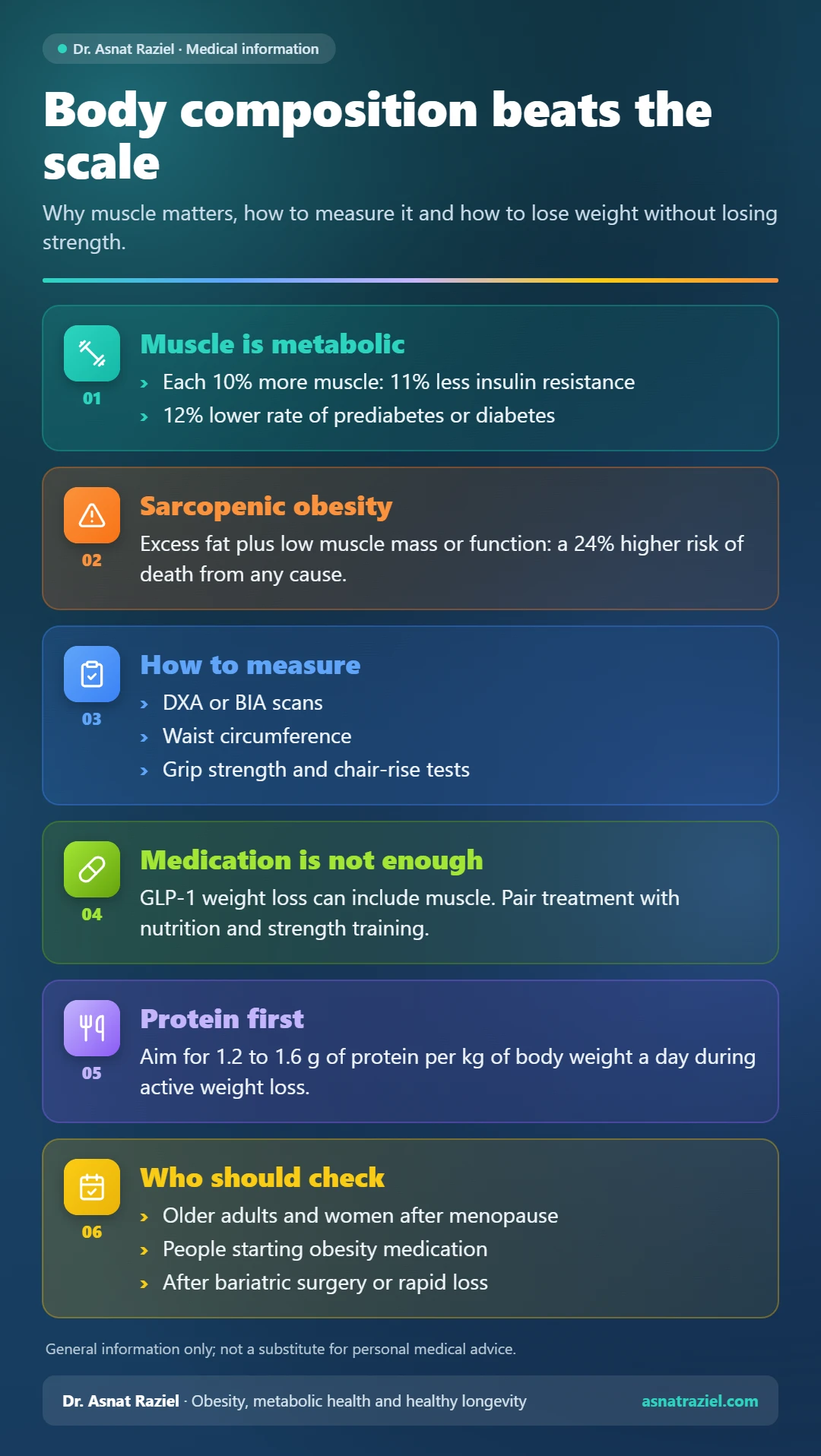
Muscle is active metabolic tissue. It affects insulin sensitivity, blood sugar control, posture and strength. In addition, it maintains balance and quality of life as we age. An analysis of data from 13,644 participants in the NHANES III survey found a clear link. Every 10% increase in the relative muscle mass index came with an 11% drop in insulin resistance. It also came with a 12% drop in the prevalence of prediabetes or diabetes.
Excess fat, by contrast, and especially belly fat, works in the opposite direction. It increases inflammation and insulin resistance. You will find more in my article on visceral fat.
Sarcopenia and sarcopenic obesity
When weight loss does not distinguish between fat and muscle, significant muscle loss can occur. Sarcopenia is the loss of muscle mass and strength. When sarcopenia appears together with obesity, it creates a particularly dangerous condition: sarcopenic obesity. The ESPEN and EASO consensus defines it as excess fat combined with low muscle mass or low muscle function. Furthermore, the consensus recommends checking muscle function first, and only then body composition.
Why losing muscle is a medical problem
Losing muscle mass is not just a cosmetic issue. Sarcopenia is linked to falls, fractures, hospital stays and illness. A meta-analysis of 12 cohort studies, with 35,287 participants, found that sarcopenic obesity is linked to a 24% higher risk of death from any cause. In the context of obesity, muscle loss can also worsen insulin resistance and slow metabolism. As a result, it makes it harder to keep the weight off over time.
Sharp, rapid weight loss through an extreme diet, medication or surgery, without a strategy to preserve muscle, can harm the very mechanisms that should improve. In such cases, the patient is indeed lighter, but also weaker and more vulnerable. That is why we check body composition throughout treatment.
How body composition is measured in practice
A home scale tells only part of the story. Several relatively simple tools complete the picture:
- DXA: a low-dose X-ray scan that separates fat, muscle and bone.
- BIA: bioelectrical impedance, which estimates the amount of fat and muscle.
- Waist circumference: a simple measure of belly fat.
- Function tests, such as grip strength and rising from a chair.
Ultimately, the combination of measures matters more than any single number. One body composition measurement at the start of treatment, followed by repeat measurements along the way, reveals the real trend.
Who needs this most? I recommend measuring body composition for older adults, women after menopause and people starting obesity medication. It is also important for anyone who has had bariatric surgery or rapid weight loss. For them, even a small change in muscle mass can greatly affect function.
Medication: not on its own
GLP-1 drugs have transformed obesity medicine. They allow significant weight loss and improve metabolic markers. However, the data show that part of the weight lost also includes muscle mass. The risk is highest when treatment is not paired with suitable nutrition and physical activity.
The clinical meaning is clear: obesity medication cannot stand on its own. The joint recommendations of four American organizations include assessing strength, function and body composition before starting treatment. They also recommend strength training at least three times a week. You can read about the right combination in my article on combining nutrition and exercise for weight loss.
Muscle-focused nutrition: quality before quantity
The modern nutritional approach does not focus only on cutting calories. Instead, it emphasizes the quality of foods and their timing. Adequate protein intake is the foundation. In addition, it is important to spread protein across the day and include foods that support muscle building. The recommendations mentioned above suggest a target of 1.2 to 1.6 grams of protein per kilogram of body weight per day during active weight loss. You will find practical details in my protein guide.
The goal is not an extreme or temporary diet. Instead, we build a nutritional foundation that lets you lose weight while preserving muscle, function and vitality. That is the difference between weight loss that leads to burnout and weight loss that leads to health.
The bottom line: body composition, not just a number
Obesity medicine in this new era requires a change in thinking. The goal is no longer just to lose weight, but to lose it the right way. Preserving muscle is key to metabolic health, daily function and preventing complications. It also helps maintain results over time. Advanced treatment looks at the whole body and the person behind it. This is also how we work in metabolic rehabilitation, where body composition is one of the main measures of success.
The information in this article is general and does not replace personal medical advice.
References
Definition and diagnostic criteria of clinical obesity
Definition and diagnostic criteria for sarcopenic obesity: ESPEN and EASO consensus statement




