By Dr. Asnat Raziel, bariatric surgeon specializing in obesity treatment, metabolic health and healthy longevity; Director of the Multidisciplinary Center for Obesity Treatment, Assia Medical, Assuta Ramat HaChayal, Tel Aviv
Obesity and hormonal disorders: a two-way connection
Obesity and hormonal disorders share a close link, and it works in both directions. Excess fat tissue disrupts hormonal balance. On the other hand, a hormonal disorder can make it harder to lose weight. The result may be an irregular menstrual cycle, lower fertility and, in men, lower testosterone levels.
The good news is that this cycle is largely reversible. In this article, I will explain how fat affects hormones, what happens in women and in men, and which treatments help restore balance.
Fat tissue is a hormonal organ
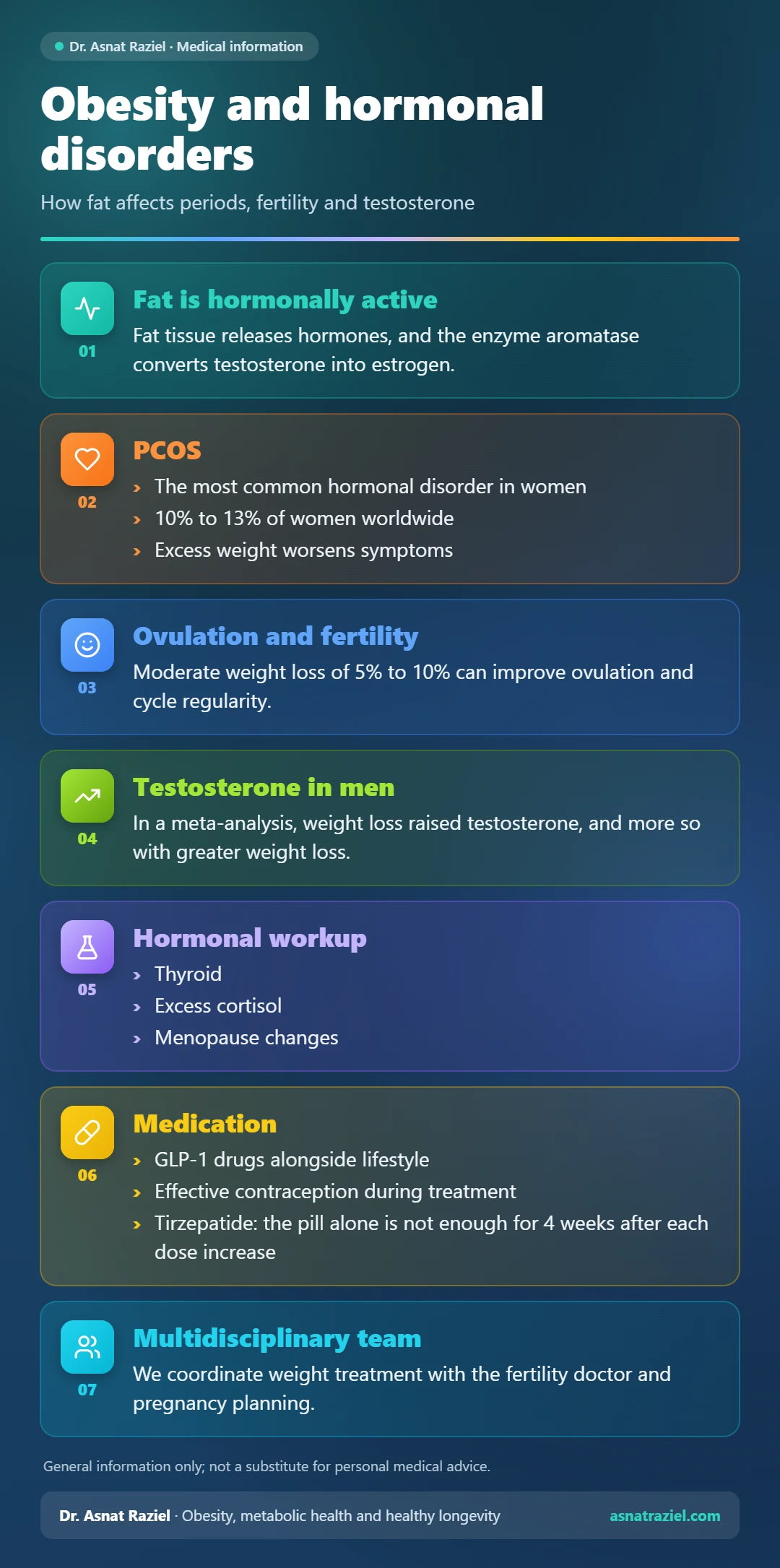
For years, doctors thought fat tissue was nothing more than an energy store. Today we know it is highly active. It releases hormones and inflammatory substances, and it affects the brain, the liver and the sex glands. For example, an enzyme called aromatase, which is active in fat, converts some testosterone into estrogen.
In addition, excess fat, especially around the belly, leads to insulin resistance. This means the body needs a large amount of insulin to keep blood sugar in balance. High insulin levels, in turn, increase the production of male hormones in the ovaries. This is one of the main mechanisms linking excess weight to the effect of body weight on hormones and fertility. You can read more about these mechanisms in my article on the role of hormones in weight loss.
Obesity and hormonal disorders in women
Polycystic ovary syndrome
Polycystic ovary syndrome (PCOS) is the most common hormonal disorder in women of reproductive age. According to the international guideline for the assessment and management of PCOS, it affects 10% to 13% of women worldwide. The syndrome includes irregular periods, signs of excess male hormones such as excess hair growth and acne, and sometimes a typical appearance of the ovaries on ultrasound.
Not every woman with PCOS has excess weight. Still, excess weight worsens the symptoms and the metabolic risk. That is why the guideline states that a healthy lifestyle is a central part of treatment for every woman with the syndrome. You will find a detailed guide in my article on polycystic ovary syndrome.
Mayo Clinic’s overview of PCOS symptoms and causes also lists insulin resistance as a cause. It adds that overweight or obesity may raise the risk.
Periods, ovulation and fertility
Even without PCOS, excess weight can disrupt ovulation. According to an overview of obesity and fertility, in women with a BMI above 32, each one-unit rise in BMI comes with a 5% drop in the chance of spontaneous pregnancy. In addition, fertility treatment with excess weight sometimes requires higher hormone doses, and success rates are lower.
On the other hand, moderate weight loss of 5% to 10% can improve ovulation and make periods more regular. Some women even conceive naturally after losing weight.
Obesity and hormonal disorders in men
In men, obesity often goes hand in hand with low testosterone levels. Part of the explanation lies in aromatase: excess fat converts testosterone into estrogen, and the estrogen suppresses the signals from the brain to the testes. The result may be fatigue, lower sex drive, loss of muscle mass and sometimes lower sperm quality.
Encouraging news comes from a meta-analysis of 24 studies. The researchers found that weight loss, through diet or bariatric surgery, raised testosterone levels and lowered estrogen levels. The more weight people lost, the more their testosterone rose. Bariatric surgery achieved a larger increase than diet. You can also read about the link between testosterone and metabolism in my article on testosterone and diabetes.
Obesity and hormonal disorders: what else to check
Sometimes the direction is reversed, and a hormonal disorder is what causes the weight gain. An underactive thyroid, excess cortisol (Cushing’s syndrome) and the changes of menopause are familiar examples. So before starting treatment, it is important to do the right blood tests.
Menopause deserves special attention. The drop in estrogen changes how fat is distributed, and fat tends to build up around the belly. I discuss this in detail in my article on obesity in menopause.
How we treat obesity and hormonal disorders
Lifestyle as the foundation
A balanced diet, regular physical activity and good sleep improve insulin sensitivity. In this way, they also help restore hormonal balance. Moreover, for women with PCOS, the guideline recommends a healthy lifestyle regardless of weight loss.
Medication
The international PCOS guideline states that medications such as liraglutide and semaglutide can be considered in addition to lifestyle changes. However, the guideline stresses two points. First, women need effective contraception during treatment, because there is not enough data on safety in pregnancy. Second, the doctor raises the dose gradually to reduce side effects. It is also worth getting to know the different options for obesity medication.
One point is especially important when it comes to tirzepatide, the active ingredient in Mounjaro. According to information from the manufacturer, Lilly, the drug may reduce the absorption of birth control pills. Therefore, the recommendation is to switch to a non-oral method, or to add a barrier method, for 4 weeks after starting treatment and after each dose increase. Many women also ask how Mounjaro affects the menstrual cycle, and about proper planning before pregnancy during treatment with incretin drugs.
When you are planning a pregnancy
When the goal of treatment is pregnancy, the guideline recommends letrozole as the first-line medication to induce ovulation in women with PCOS. We do this planning together with a fertility specialist. In our clinic, we work as a multidisciplinary team and coordinate weight treatment with pregnancy planning.
The bottom line
Obesity and hormonal disorders feed each other, but the cycle can be broken. Moderate weight loss improves ovulation, periods and fertility in women, and raises testosterone in men. A hormonal workup, a healthy lifestyle and tailored medication are the keys. If you have questions, Dr. Asnat Raziel and the clinic team will be happy to help.
The information in this article is general and does not replace personal medical advice.
Questions and answers
Are obesity and hormonal disorders always linked?
Not always, but often. Excess fat affects insulin, estrogen and testosterone. On the other hand, disorders such as an underactive thyroid can cause weight gain.
How much weight do I need to lose to improve fertility?
In many cases, losing 5% to 10% of body weight improves ovulation and makes periods more regular.
Can I get pregnant while on weight loss injections?
The guidelines recommend effective contraception during treatment, because there is not enough data on safety in pregnancy. When you plan a pregnancy, coordinate with your doctor when to stop the medication.
Does weight loss raise testosterone in men?
Yes. A meta-analysis found that weight loss raised testosterone levels, and that the increase grew with greater weight loss.
References
Can Zepbound (tirzepatide) be used with oral contraceptives or hormone replacement therapy?