By Dr. Asnat Raziel, bariatric surgeon specializing in obesity treatment, metabolic health and healthy longevity; Director of the Multidisciplinary Center for Obesity Treatment, Assia Medical, Assuta Ramat HaChayal, Tel Aviv
Mounjaro for teens: what the new trial showed
Mounjaro for teens with obesity lowered BMI by about 19% compared with placebo. What’s more, over half of the teens who received the drug moved out of the obesity range. These are the findings of the SURMOUNT-ADOLESCENTS trial, presented today at ObesityWeek 2026 in Washington, D.C. At the same time, the study was published in JAMA. I sat in on the session, and here are the numbers that matter most to parents and teens.
Why obesity in adolescence is a concern
Obesity in adolescence is not about appearance. It often comes with high blood pressure, high blood lipids and prediabetes. It also affects body image, self-confidence and quality of life. I often write about obesity treatment in children and teens. Until now, however, data on newer medications in this age group were limited.
Tirzepatide, the active ingredient in Mounjaro, activates two satiety hormones: GLP-1 and GIP. In adults it has already shown large weight loss, as I described in my review of the SURMOUNT trials. The question was whether teens would see similar results.
How the Mounjaro for teens trial was designed
The trial enrolled 160 adolescents aged 12 to 18 at 31 sites in six countries. Israel was one of them, and Dr. Marianna Rachmiel of Shamir (Assaf Harofeh) Medical Center is a co-author of the paper. The average age was 14.6, and 61.9% of participants were girls. Average BMI at the start was 38.6.
The researchers randomized participants 2:1. In other words, 109 received tirzepatide and 51 received placebo (a dummy injection). Every participant also received healthy-lifestyle coaching. Treatment started at 2.5 mg a week and increased by 2.5 mg every four weeks. The goal was the highest dose each teen could tolerate: 5, 10 or 15 mg. By the end of the trial, 61.6% of those on the drug were taking 15 mg. I covered these steps in detail in my Mounjaro dose-escalation guide.
The results: a sharp drop in BMI
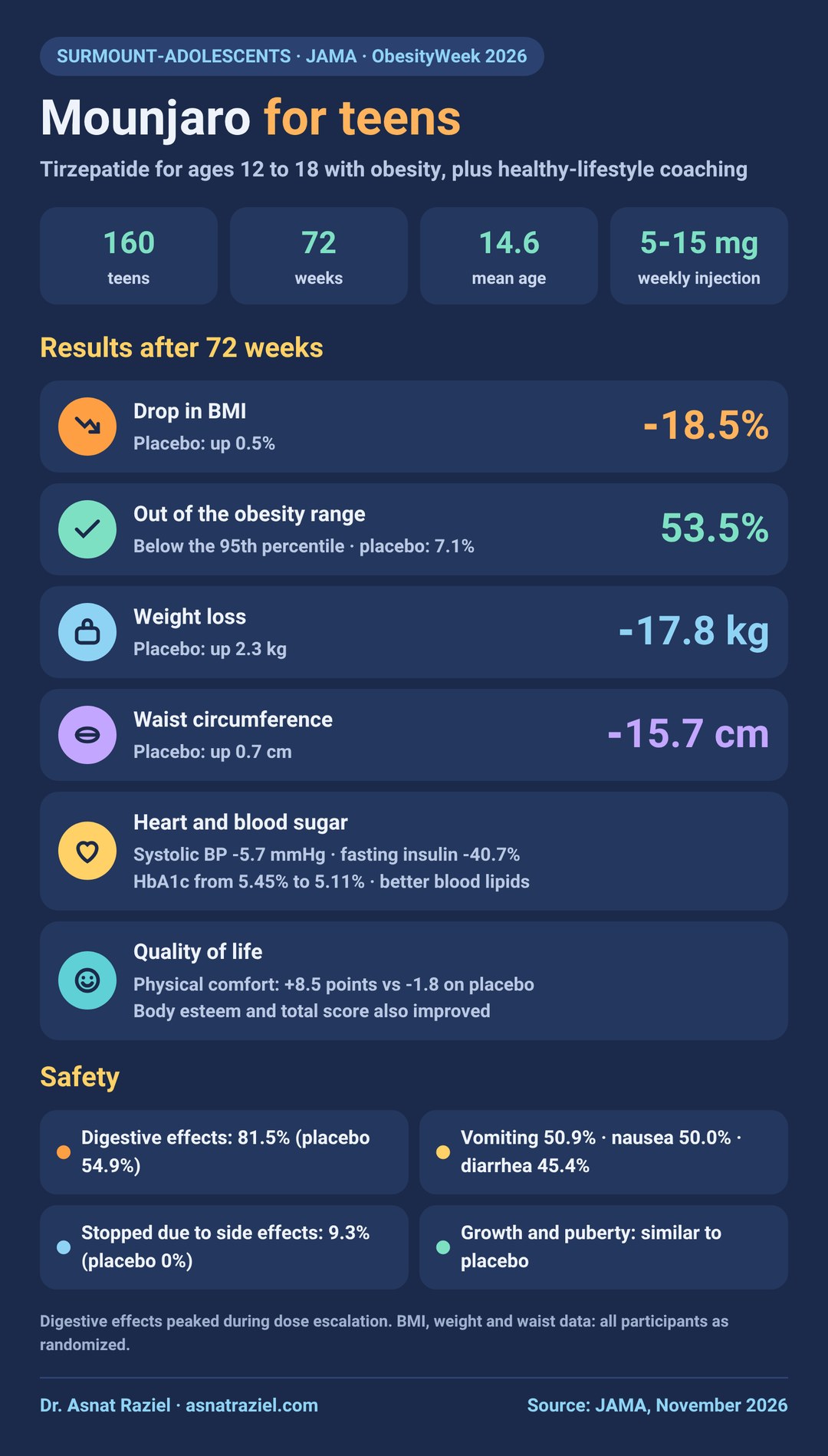
After 72 weeks, BMI fell by an average of 18.5% in the tirzepatide group. In contrast, it rose by 0.5% in the placebo group. Among teens who stayed on treatment, the drop reached 21.4%. The absolute numbers are impressive too:
- Average BMI fell from 38.2 to 31.7.
- Weight dropped by an average of 17.8 kg, compared with a 2.3 kg gain on placebo.
- Waist circumference shrank by 15.7 cm, compared with a 0.7 cm increase on placebo.
- 48.1% reached a BMI reduction of at least 20%, compared with 7.9% on placebo.
The severity of obesity also changed. At the start, 75% of the drug group had class 2 or 3 obesity; by the end, only 24% did.
The most moving finding: 53.5% of teens who received tirzepatide fell below the 95th percentile. In other words, they no longer met the definition of obesity. On placebo, only 7.1% got there.
Mounjaro for teens and metabolic health
Beyond weight, the researchers looked at heart and blood sugar measures. Systolic blood pressure fell by 5.7 mmHg, compared with 0.1 on placebo. The researchers also saw drops in triglycerides, LDL and non-HDL cholesterol, along with a rise in HDL, the “good” cholesterol. Fasting insulin fell by 40.7%. HbA1c, the three-month average of blood sugar, went from 5.45% to 5.11%. Finally, a DXA scan showed less body fat, a 33.0% difference in favor of the drug.
Teens’ quality of life
Dr. Gitanjali Srivastava presented the quality-of-life data, based on the IWQOL-Kids questionnaire. It measures how weight affects the daily lives of children and teens. In the physical comfort domain, scores rose by 8.5 points with tirzepatide and fell by 1.8 with placebo. The 10.3-point difference crosses the threshold for a clinically meaningful change. The total score and body esteem also improved. On the other hand, social life and family relations did not differ between the groups.
Safety: what parents should know
As in adults, the most common side effects were digestive. 81.5% of teens on tirzepatide reported them, compared with 54.9% on placebo. Vomiting occurred in 50.9%, nausea in 50.0% and diarrhea in 45.4%. However, these effects peaked during dose escalation. Serious adverse events occurred in 7.4%, compared with 3.9% on placebo. In addition, 9.3% stopped treatment because of side effects, while no one on placebo stopped for that reason. There were no deaths.
A few other findings deserve attention:
- Menstrual pain was reported by 12.1% of girls on tirzepatide, compared with 3.1% on placebo. I wrote about this in my article on Mounjaro and the menstrual cycle.
- Depression or suicidal thoughts were reported in 4.6% on tirzepatide, compared with 2.0% on placebo. None of these cases was classified as serious, and mood and anxiety questionnaires looked similar in both groups. Two cases of self-injury, without suicidal behavior, were also reported in the drug group. Dr. Claudia Fox noted that depression rates are already high among teens with obesity. Even so, the researchers recommend close monitoring of mood.
- There was one case of gallstones and one gallbladder removal in the drug group.
- Height, growth and pubertal development were similar in both groups.
General information on GLP-1 side effects is available in a separate article.
What it means for treating teens
Overall, the results resemble what tirzepatide achieved in adults. In the STEP TEENS trial, for example, Wegovy (semaglutide) lowered BMI by 16.1% after 68 weeks. However, the trials differ in design and length, so they should not be compared directly. I wrote about treating younger children in my article on Wegovy from age six.
The study also has limitations. First, it lasted only 72 weeks, so longer follow-up is still missing. Second, most participants had already completed puberty. In addition, the sample was relatively small and mostly white. Finally, Eli Lilly funded the trial.
What parents can do today
If your child is living with obesity, now is the time to see a doctor. In practice, good care starts with a full medical assessment and a multidisciplinary team. In the trial, every participant received healthy-lifestyle coaching, and that remains the foundation in any case. Start at home with healthy food for the whole family, enough sleep and moving together. The decision about medication is made with the doctor, according to the approved indications.
Bottom line on Mounjaro for teens
The SURMOUNT-ADOLESCENTS trial shows that Mounjaro for teens, alongside a healthy lifestyle, lowers BMI substantially. More than half of the teens moved out of the obesity range, and heart and blood sugar measures improved. Digestive side effects are common, so it is important to raise the dose gradually with close follow-up. This is real good news for teens, who until recently had very few tools.
This article provides general information and does not replace personal medical advice.
Sources
Tirzepatide in Adolescents With Obesity: The SURMOUNT-ADOLESCENTS Randomized Clinical Trial
The study was funded by Eli Lilly and Company, and some of the authors are company employees.