By Dr. Asnat Raziel, bariatric surgeon specializing in obesity treatment, metabolic health and healthy longevity; Director of the Multidisciplinary Center for Obesity Treatment, Assia Medical, Assuta Ramat HaChayal, Tel Aviv
Mounjaro and the menstrual cycle: what we know today
Mounjaro and the menstrual cycle is a topic that comes up a lot in conversations with my patients. Some women report a period that comes early, late or heavier than usual after starting treatment. The scientific data are still limited, but we already understand a few of the mechanisms. There’s also one especially important point: Mounjaro may weaken the effect of birth control pills.
In this article, I’ll explain what we know, what we don’t know yet, and when it’s worth seeing a doctor.
What Mounjaro is and how it works
Mounjaro is the brand name of tirzepatide. It is a once-weekly injection that mimics two satiety hormones from the gut: GLP-1 and GIP. The drug reduces appetite, improves blood sugar control and slows stomach emptying.
Treatment starts at 2.5 mg a week. After at least four weeks, the dose is raised gradually, in steps of 2.5 mg, up to a maximum of 15 mg. These dose increases also matter for contraception, as I’ll explain below.
Beyond weight loss, the drug has broad effects on metabolism. For example, I’ve written about Mounjaro and heart health. However, its effect on the reproductive system has been studied less.
What studies show about Mounjaro and the menstrual cycle
In the official Mounjaro label, menstrual changes do not appear in the list of side effects from the clinical trials. In other words, the large trials did not clearly identify such a problem.
On the other hand, a study published in Obstetrics and Gynecology examined reports to the FDA’s adverse event database. The researchers focused on women aged 12 to 55. For tirzepatide, they identified a signal of bleeding between periods and of blood clots during menstruation. For semaglutide, the active ingredient in Wegovy, the signals were broader.
It’s important to understand the limitation. A reporting database shows only a statistical association and does not prove that the drug caused the change. Even so, the finding justifies asking patients about their cycle during treatment.
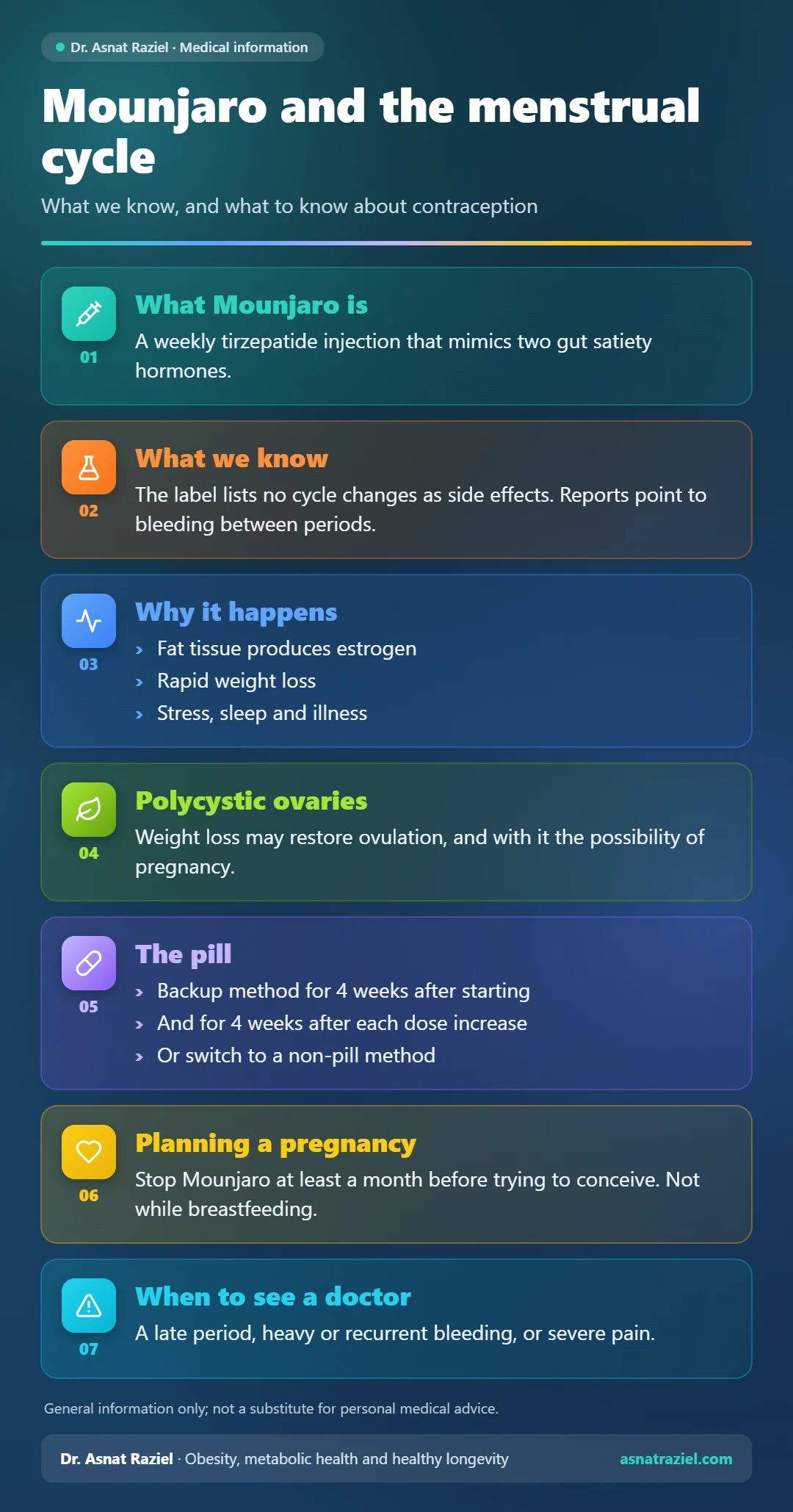
Why might Mounjaro and the menstrual cycle be linked?
Fat tissue is an active hormonal organ. It produces estrogen and affects insulin levels. So when weight drops quickly, hormonal balance changes as well. In addition, a sharp drop in food intake can temporarily affect ovulation.
Other factors affect the cycle regardless of the drug. Examples include psychological stress, too little sleep and illness. I’ve written about how stress affects the body in my article on the impact of war on health. You’ll find broad information on the link between weight and hormones in my guide to obesity and hormonal disorders.
Polycystic ovaries: Mounjaro and the menstrual cycle
For women with polycystic ovary syndrome (PCOS), the situation is different. Excess weight and insulin resistance disrupt ovulation, so the cycle is irregular. A scientific review found that GLP-1 drugs may improve cycle regularity and the chances of natural pregnancy. However, most of the studies are small and short.
The practical meaning is clear. A woman who hasn’t ovulated for years may start ovulating and become pregnant without planning to. That’s why effective contraception is especially important in this group.
I review the new international guidance on incretins, fertility and pregnancy (in Hebrew) in a column for the Camoni health community.
Mounjaro and birth control pills
This is the most important point in the article. According to the Mounjaro label, the drug may reduce the effectiveness of birth control pills. The reason is slower stomach emptying, which changes how the pill is absorbed.
In a study cited in the label, a single 5 mg dose lowered the peak levels of the pill’s hormones by 55% to 66%. The effect is greatest after the first dose, and it weakens over time. That’s why the recommendation focuses on periods of change:
- Four weeks from the start of Mounjaro treatment.
- Four weeks after each dose increase.
- During these periods, add a barrier method, such as a condom, or switch to a non-pill method.
Both the UK medicines regulator (MHRA) and the Australian regulator (TGA) have issued similar guidance. According to the MHRA, an intrauterine device or an implant is less affected. In addition, vomiting and diarrhea, which are common side effects early in treatment, can impair absorption of the pill.
Planning a pregnancy and breastfeeding
GLP-1 drugs are not meant for use in pregnancy. According to the MHRA, Mounjaro should be stopped at least a month before trying to conceive. In addition, these drugs should not be taken while breastfeeding. You’ll find more on timing in my article on stopping GLP-1 before pregnancy.
A woman who thinks she may be pregnant should stop the injections and see a doctor as soon as possible.
When to see a doctor about Mounjaro and the menstrual cycle
Most changes are mild and pass. However, some situations call for a checkup:
- A late period, especially if you used the pill during a dose change. Start with a pregnancy test.
- Very heavy bleeding, or bleeding that lasts more than a week.
- Recurrent bleeding between periods, or bleeding after sex.
- Severe pain in the lower abdomen.
- No period for three months.
It’s also worth logging your period dates in an app. That makes it easy to spot a trend and show it to your doctor. For more on how weight and medications affect women, read my article on metabolic health in women, and see my separate guide to Mounjaro side effects.
Bottom line
The link between Mounjaro and the menstrual cycle is not yet proven. Reports point to bleeding between periods in some women, and weight loss may also regulate an irregular cycle. The key practical point is contraception: if you take the pill, you need an additional method for the four weeks after starting and after each dose increase.
The information in this article is general and does not replace personal medical advice.
Questions and answers
Does Mounjaro cause a late period?
It’s possible, but it hasn’t been proven. Rapid weight loss and stress affect the cycle. If your period is late, take a pregnancy test first.
Can I keep taking the pill with Mounjaro?
Yes, but with an additional method for four weeks from the start of treatment and after each dose increase. Another option is to switch to a non-pill method.
Does Mounjaro improve fertility?
Weight loss may restore ovulation, especially in polycystic ovary syndrome. But you should not get pregnant during treatment, and it should be stopped at least a month before trying to conceive.
Mounjaro and the menstrual cycle: does the change pass?
For most women, the cycle settles after a few months, once weight and dose stabilize. If the change persists, it’s worth consulting your doctor.
What should I do about bleeding between periods?
If it recurs, is heavy or comes with pain, it’s worth getting checked by a gynecologist.
Sources
MOUNJARO (tirzepatide) Prescribing Information
Benefits of Incretin Therapy on Ovarian Function: A Scientific Literature Review
GLP-1 medicines for weight loss and diabetes: what you need to know