By Dr. Asnat Raziel, bariatric surgeon specializing in obesity treatment, metabolic health and healthy longevity; Director of the Multidisciplinary Center for Obesity Treatment, Assia Medical, Assuta Ramat HaChayal, Tel Aviv
Weight loss drugs and pregnancy: why planning matters
Weight loss drugs and pregnancy is a topic every woman of childbearing age who uses weight loss injections should understand. Wegovy, Ozempic and Mounjaro, for example, are not meant for use during pregnancy. That is why women stop them before trying to conceive, or as soon as they discover they are pregnant. The real question, however, is what comes next, so that both mother and baby stay safe.
In this article, I explain when to stop each drug, what we know about accidental exposure in early pregnancy, and how to manage weight during the pregnancy itself.
Weight loss drugs and pregnancy: when to stop treatment
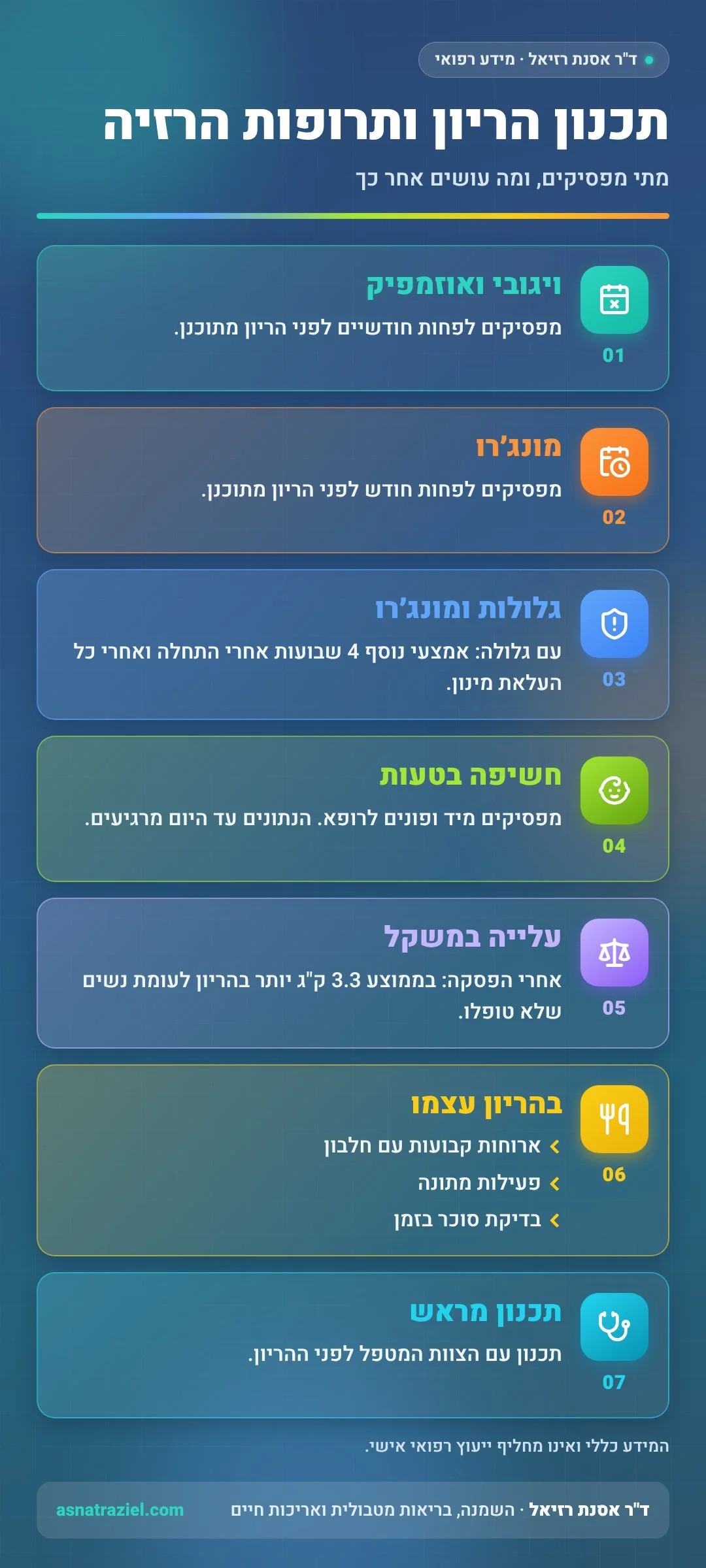
Drugs in the GLP-1 family have a long half-life. In other words, the drug stays in the body for weeks after the last injection. For this reason, the manufacturers set a “washout period”: a stretch of time between the last dose and trying to conceive.
- Semaglutide, the active ingredient in Wegovy and Ozempic: according to the FDA prescribing information for Wegovy, stop at least two months before a planned pregnancy.
- Tirzepatide, the active ingredient in Mounjaro: according to the UK prescribing information, stop at least one month before a planned pregnancy.
- If the pregnancy was not planned: stop the drug as soon as you find out, and contact your doctor.
I also cover what happens to weight after treatment ends in my guide to stopping weight loss medication.
Mounjaro and birth control pills
Many women don’t know about one important point that concerns the pill. According to the Zepbound prescribing information, tirzepatide may reduce the effectiveness of oral contraceptives. Doctors therefore recommend switching to a non-oral method of contraception, or adding a barrier method such as a condom. This advice applies for 4 weeks after starting treatment and for 4 weeks after each dose increase.
Weight loss drugs and pregnancy: accidental early exposure
This happens more often than you might think. A woman discovers she is pregnant a few weeks after an injection. Her first step is to stop the drug and not panic. Next, she should tell her doctor and her prenatal care team.
So far, the data are reassuring, but not conclusive. A meta-analysis of seven cohort studies, with more than 40,000 exposed pregnancies, found no significant increase in major birth defects. Nor did it find a rise in preterm birth, miscarriage or small-for-gestational-age babies. However, the researchers rated the certainty of the evidence as low.
In addition, a French nationwide study looked at 19,092 pregnancies in women with type 2 diabetes. First-trimester exposure to these drugs did not raise the rate of birth defects compared with insulin. On the other hand, further analyses raised the possibility of a small risk of heart defects, so the researchers could not rule it out completely.
Weight loss drugs and pregnancy: what happens to your weight
After you stop the drug, your appetite gradually returns. This is natural, but in pregnancy it matters. A study published in JAMA compared 448 pregnancies in women who used GLP-1 drugs before or early in pregnancy with 1,344 similar pregnancies without exposure.
Women who stopped the drug gained an average of 13.7 kg during pregnancy, compared with 10.5 kg in the comparison group, a difference of 3.3 kg. The researchers also found higher rates of gestational diabetes (20% vs. 15%), high blood pressure in pregnancy (46% vs. 36%) and preterm birth (17% vs. 13%). Keep in mind that this was an observational study. As a result, it shows an association, not necessarily cause and effect.
Managing pregnancy after stopping weight loss drugs
During pregnancy, the goal is not to lose weight but to gain weight in a controlled way. According to the US Centers for Disease Control and Prevention (CDC), a woman with a pre-pregnancy BMI of 30 or higher should gain 11 to 20 pounds, or about 5 to 9 kg. A few habits can help:
- Regular meals with protein, vegetables and whole grains, to temper the returning hunger.
- Walking or moderate activity on most days of the week, with your doctor’s approval.
- Monthly weight checks, rather than daily weighing that adds stress.
- Blood sugar testing on time, and sometimes earlier than usual, as your doctor advises.
- Support from a dietitian who understands the move from medication to pregnancy.
Your environment matters too. Stress, too little sleep and a tense security situation all affect appetite and pregnancy, as an Israeli study on pregnancy during wartime has shown.
Weight loss drugs and pregnancy: special situations
Weight loss drugs, diabetes and pregnancy
In a woman with type 2 diabetes, stopping the drug may raise blood sugar levels. That is why we plan ahead for a switch to a treatment that is suitable in pregnancy, usually insulin. You can read more in my guide to obesity and type 2 diabetes.
Polycystic ovaries and fertility
Weight loss sometimes improves ovulation in women with polycystic ovary syndrome (PCOS). A systematic review described these drugs as promising for the syndrome. As a result, pregnancy may come sooner than expected, which is one more reason to use reliable contraception. I discuss the link between weight and hormones in my complete guide to PCOS.
Breastfeeding and restarting treatment
Information on breastfeeding is still limited. The tirzepatide label describes a single-dose study in 11 breastfeeding women, in which the drug was either undetectable in breast milk or present at low levels. However, there are no data on effects on the baby. You and your doctor decide together when to restart treatment after delivery, based on breastfeeding, weight and any underlying conditions.
The bottom line
Pregnancy and weight loss drugs don’t go together, but you can manage the transition safely. Stop on time, use suitable contraception, and during pregnancy focus on controlled weight gain and blood sugar testing. Accidental exposure in early pregnancy is a reason to see your doctor, not a reason to panic. Ultimately, handling weight loss drugs and pregnancy well starts with an early conversation with your care team.
This article provides general information and does not replace personal medical advice.
Frequently asked questions
How long before pregnancy should I stop Wegovy?
According to the US prescribing information, at least two months before a planned pregnancy.
And how long before pregnancy should I stop Mounjaro?
The UK prescribing information says at least one month before a planned pregnancy.
I injected and then found out I’m pregnant. What now?
Stop the drug and contact your doctor. The existing data are reassuring, but your doctor will tailor the follow-up to you.
Can I keep taking weight loss drugs during pregnancy to avoid gaining weight?
No. In pregnancy, the aim is not weight loss but controlled weight gain and good nutrition.
References
WEGOVY (semaglutide) – Prescribing Information (FDA)
ZEPBOUND (tirzepatide) – Prescribing Information (FDA)
Revised SPC: Mounjaro (tirzepatide) 15mg solution for injection in pre-filled pen
Gestational Weight Gain and Pregnancy Outcomes After GLP-1 Receptor Agonist Discontinuation