By Dr. Asnat Raziel, bariatric surgeon specializing in obesity treatment, metabolic health and healthy longevity; Director of the Multidisciplinary Center for Obesity Treatment, Assia Medical, Assuta Ramat HaChayal, Tel Aviv
Obesity and type 2 diabetes: two diseases, one root
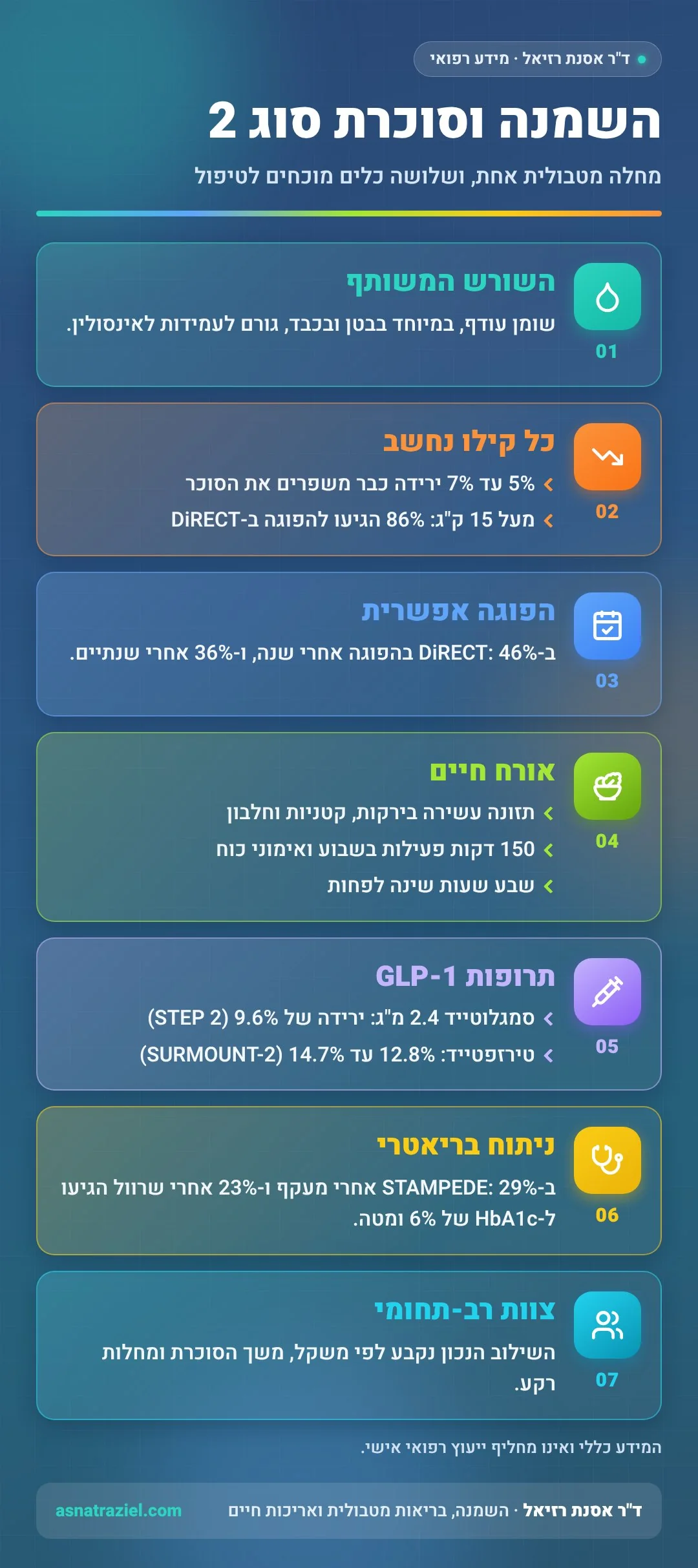
Obesity and type 2 diabetes almost always travel together. Most people with type 2 diabetes also have overweight or obesity. The good news is that the connection works in the other direction too: substantial weight loss improves blood sugar control and can sometimes even put diabetes into remission.
In this article I explain why the two diseases are linked, how much weight you need to lose to see a difference, and which treatments have been proven in clinical studies.
What links obesity and diabetes?
Type 2 diabetes develops when the body stops responding well to insulin while, at the same time, the pancreas becomes exhausted. Insulin is the hormone that moves sugar from the blood into the cells. When the cells “ignore” it, sugar stays in the bloodstream. This state is called insulin resistance.
Obesity, and especially abdominal fat and fat in the liver, is the main driver of this resistance. Excess fat in the liver and pancreas disrupts both the action and the secretion of insulin. That is why losing weight strikes directly at the mechanism that creates the disease. In other words, these are not two separate problems but a single metabolic disease with two faces.
Obesity and type 2 diabetes: how much weight do you need to lose?
Losing just 5% to 7% of body weight already improves blood sugar levels. That said, the greater the weight loss, the greater the benefit. The British DiRECT trial showed this clearly. Participants, whose diabetes had been diagnosed within the previous six years, followed a low-calorie diet program with close support.
After one year, 46% of them had achieved diabetes remission, meaning an HbA1c (average blood sugar over the past three months) below 6.5% without medication. In the control group, only 4% reached remission. What’s more, among those who lost 15 kg or more, 86% achieved remission. After two years, 36% were still in remission, and staying in remission was linked to keeping the weight off.
Lifestyle: the foundation of every treatment
Diet, physical activity and sleep are the foundation, even when medications are added. The DPP study enrolled 3,234 people with prediabetes. A healthy lifestyle program, with a target of 7% weight loss and 150 minutes of activity per week, reduced the risk of diabetes by 58%. By comparison, metformin reduced the risk by 31%.
In addition, the Look AHEAD trial tested an intensive lifestyle intervention in people who already had diabetes.
What this means in practice
- A diet rich in vegetables, legumes and protein, with less sugar and fewer processed carbohydrates.
- At least 150 minutes of aerobic activity per week, plus strength training.
- At least seven hours of sleep, because sleep deprivation impairs insulin sensitivity.
Obesity and type 2 diabetes: drug treatment
Medications in the GLP-1 family have transformed the treatment of both diseases at once. They lower blood sugar, reduce appetite and help with weight loss. Some have also been shown to protect the heart. You will find an overview of the options on the page on medications for obesity and metabolic disease.
Semaglutide (Wegovy and Ozempic)
In the STEP 2 trial, 1,210 adults with diabetes and excess weight received semaglutide 2.4 mg once a week. After 68 weeks, their weight had dropped by an average of 9.6%, compared with 3.4% in the placebo group. It is worth knowing that people with diabetes usually lose less weight than people without diabetes.
Tirzepatide (Mounjaro)
Tirzepatide acts on two hormones, GLP-1 and GIP. The SURMOUNT-2 trial enrolled 938 adults with obesity and diabetes. After 72 weeks, participants had lost 12.8% of their body weight on the 10 mg dose and 14.7% on the 15 mg dose. In the placebo group, weight loss was 3.2%.
The most common side effects of both drugs are nausea, diarrhea and vomiting, mainly at the start of treatment. Anyone also taking insulin or a sulfonylurea needs monitoring because of the risk of low blood sugar.
Obesity and type 2 diabetes: when to consider surgery
For people with significant obesity, bariatric surgery is one of the most effective treatments for diabetes. The STAMPEDE trial enrolled 150 patients with type 2 diabetes. After five years, 29% of gastric bypass patients and 23% of sleeve gastrectomy patients reached an HbA1c of 6% or below. By contrast, only 5% of patients on medical therapy alone reached that target. On the other hand, surgery is a major decision that requires preparation and lifelong follow-up.
Obesity and type 2 diabetes: other factors to check
At our clinic, we look at the full picture, not just blood sugar: for example, fatty liver, blood pressure, blood lipids and sleep apnea. In men, low testosterone levels are also linked to increased risk. And people at the prediabetes stage can still prevent the disease.
The bottom line
Obesity and type 2 diabetes are two sides of the same metabolic disease. Losing 5% of body weight already improves blood sugar, and losing 15 kg or more brings many people into remission. Today we have three proven tools: lifestyle change, GLP-1 medications and bariatric surgery. Ultimately, the right combination depends on each patient’s weight, how long they have had diabetes, and their other medical conditions. If you are living with obesity and type 2 diabetes, it is worth building a plan with a multidisciplinary team.
The information in this article is general and does not replace personal medical advice.
Questions and answers
Can you get rid of type 2 diabetes?
Not always, but remission is possible. In the DiRECT trial, almost half of the participants achieved remission after one year. The chances are especially high when the diabetes is recent and the weight loss is large.
How much weight do I need to lose to improve my blood sugar?
Even 5% to 7% improves control. However, losing 10% to 15% or more delivers a much greater benefit.
Are GLP-1 medications suitable for everyone with obesity and type 2 diabetes?
Usually, but not for everyone. For example, they are not suitable for people with a history of medullary thyroid cancer. The decision is made together with your treating physician.
When is bariatric surgery considered?
Usually when BMI is high and diabetes remains uncontrolled despite treatment. The decision is made after an assessment by a multidisciplinary team.
Sources
Reduction in the incidence of type 2 diabetes with lifestyle intervention or metformin
Bariatric Surgery versus Intensive Medical Therapy for Diabetes – 5-Year Outcomes