By Dr. Asnat Raziel, bariatric surgeon specializing in obesity treatment, metabolic health and healthy longevity; Director of the Multidisciplinary Center for Obesity Treatment, Assia Medical, Assuta Ramat HaChayal, Tel Aviv
Weight loss drug use: a quiet revolution in numbers
In recent years, weight loss drug use has gone from a fringe phenomenon to a large-scale medical treatment. New medications, mainly from the GLP-1 and GIP families, have changed the way doctors and patients view obesity. Today we see it less as a personal failure and more as a chronic biological disease, one that we can and should treat. The latest figures from Israel and the United States show just how deep this change runs.
Israel: more than a quarter of a million people on injections
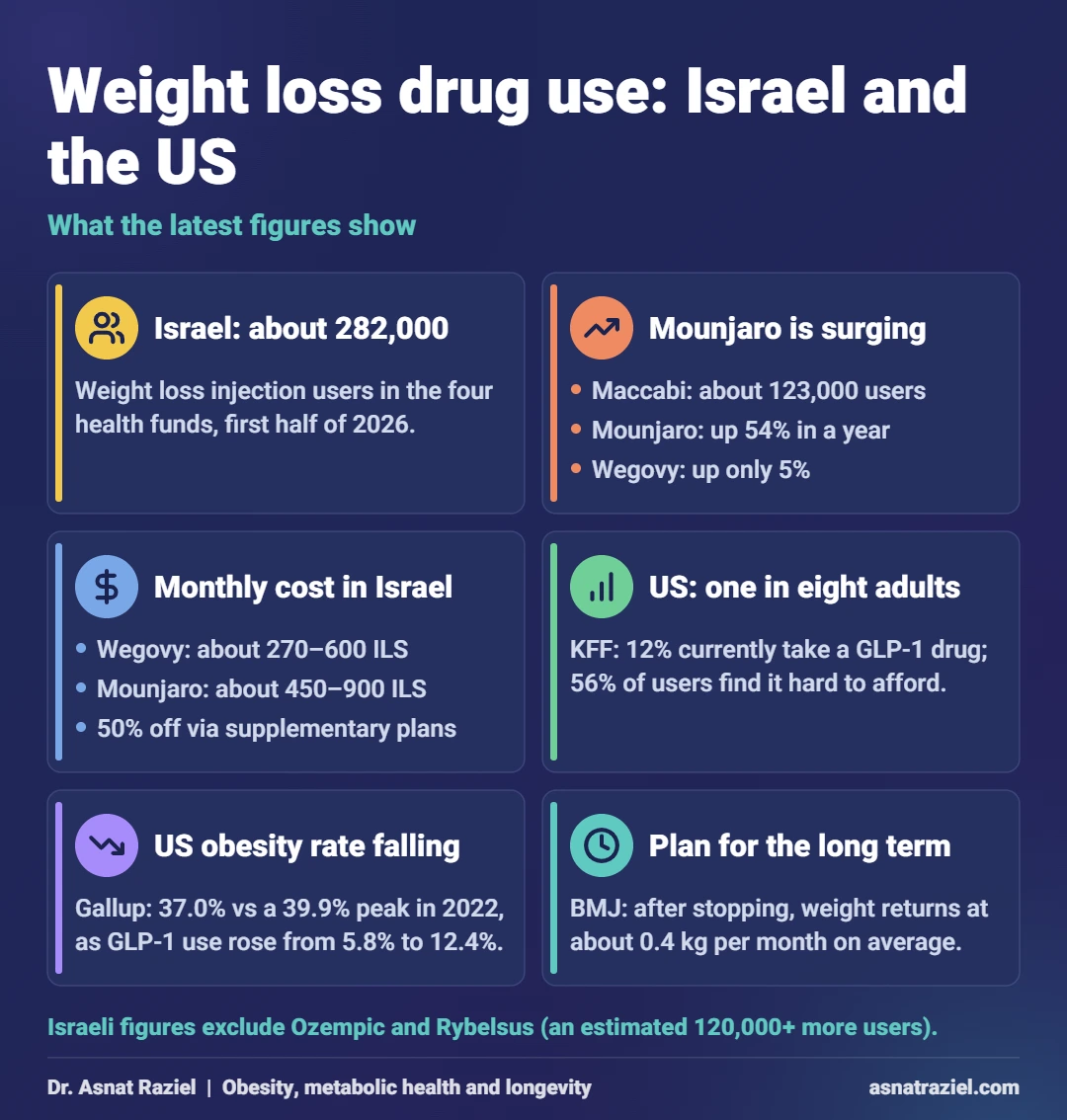
For a long time, Israel had no organized data on this. In August 2026, the Israeli newspaper Israel Hayom published data from all four health funds (HMOs) for the first half of the year. According to these data, about 282,000 Israelis used weight loss injections, mainly Wegovy (semaglutide) and Mounjaro (tirzepatide).
Maccabi led with about 123,000 users, followed by Clalit with about 100,000. Meuhedet had about 39,000 users and Leumit about 20,000. At Maccabi alone, the number rose by 23% compared with 2025. In addition, this count does not include Ozempic and Rybelsus, which are approved for diabetes. The newspaper estimates that they add at least another 120,000 users.
These figures match an earlier trend. Back in late 2025, Maccabi reported that more than 100,000 of its members had received weight loss injections. So we can say with confidence that use in Israel keeps rising year after year.
Weight loss drug use in Israel: who takes what
The data also reveal a shift in preferences. At Maccabi, for example, the number of Mounjaro users rose by 54% within a year, while Wegovy use rose by only 5%. At Meuhedet, too, the number of users more than doubled compared with 2025. In other words, the market is not only growing but also changing.
Price plays a central role here. All four health funds sell the injections at a 50% discount through their supplementary insurance plans. According to the same data, Wegovy costs about 270 to 600 shekels (ILS) a month, and Mounjaro about 450 to 900 shekels, depending on the dose. You will find a full cost comparison in my article on the cost of obesity medication.
What the numbers say about Israel
This figure reflects a change in perception. Many Israelis now understand that drug treatment can be a legitimate, and sometimes essential, part of a broader effort to improve their health. At the same time, it reflects the depth of the problem: high rates of obesity, diabetes, high blood pressure and fatty liver. There is also a growing understanding that lifestyle alone, however important, is not always enough.
In September 2026, a pill joined the options. Foundayo (orforglipron) arrived in Israeli pharmacies. You will find more details in my article on Foundayo in Israel.
The United States: one in eight adults
In the United States, the numbers are enormous. According to a KFF poll from November 2025, 12% of adults are currently taking a GLP-1 drug. That is about one in eight adults, or tens of millions of people. In addition, 18% said they had taken such a drug at some point. However, 56% of users said they found it hard to afford.
A Gallup survey from October 2025 found a similar picture. In that survey, 12.4% of adults reported using GLP-1 drugs for weight loss, up from 5.8% in February 2024. Meanwhile, the obesity rate fell to 37.0%, down from a peak of 39.9% in 2022. The survey does not prove cause and effect, but the direction is clear.
Weight loss drug use: why is the gap so large?
The first reason for the gap between Israel and the United States is population size. But that is not the only reason. In the United States, the private market offers wide access, alongside public campaigns and huge investments by drug companies.
In Israel, by contrast, financial and attitudinal barriers remain. Israel’s 2026 national health basket covers Wegovy only for teenagers aged 12 to 18. Adults buy the drugs mainly through supplementary insurance, at a 50% discount. You can read more about the differences between the health funds in my article on Mounjaro in Israel’s health funds. Even so, the trend is clear: the numbers rise every year.
Not a trend, but a paradigm shift
It is important to emphasize that the rise in use is not a passing fad. It reflects a deep change in how we understand obesity, similar to what happened in the past with high blood pressure and diabetes. In December 2025, the World Health Organization also issued its first guideline on using GLP-1 drugs for obesity. According to the WHO, more than a billion people worldwide live with obesity. However, the WHO expects that by 2030 the drugs will reach fewer than 10% of those who could benefit from them. You can read more in my article on the WHO guideline.
Weight loss drug use over the long term
Drug treatment does not stand alone. Long-term success depends on combining a tailored diet, physical activity, sleep, stress reduction and medical follow-up. In addition, obesity is a chronic disease. A meta-analysis published in the BMJ in January 2026 showed that after people stop the drugs, weight returns at an average rate of 0.4 kg per month. That is why we should plan weight loss drug use for the long term, rather than as a short course.
What the numbers mean for an individual patient
Behind every number is a person with their own story, medical conditions and goals. So national data cannot tell you which medication is right for you. First, see a doctor who knows the field in depth and will follow your treatment over time. Second, buy medications only with a prescription and from a recognized pharmacy, never through social media. Finally, plan your follow-up in advance: blood tests, body composition and nutrition. You will find tips for choosing your care provider in my article on how to choose an obesity doctor.
The bottom line
The data from the United States and Israel point in the same direction. Today, many people choose science-based medical help and are less willing to keep struggling alone. The question is no longer whether weight loss drug use is here to stay. Rather, the question is how to integrate it responsibly, safely and in a personalized way, as part of modern, humane and respectful medicine.
This article provides general information and does not replace personal medical advice.
References
A nation with obesity: about a quarter of a million Israelis are injecting (Israel Hayom, in Hebrew)
No more injections? New weight-loss pill to launch in Israel next week
Obesity Rate Declining in U.S.
WHO issues global guideline on the use of GLP-1 medicines in treating obesity