By Dr. Asnat Raziel, specialist in obesity treatment, metabolic health and healthy longevity; Director of the Multidisciplinary Center for Obesity Treatment, Assia Medical, Assuta Ramat HaChayal, Tel Aviv
Protein on GLP-1 medication: why it needs a plan
Protein on GLP-1 medication is more than a nutrition target. These drugs change your appetite, and that can change how you eat. So protein becomes part of a plan that respects how much food you can actually manage. It also has to fit a varied diet. Look at each meal as a whole, not as a single nutrient.
In this guide, you’ll find a practical way to think about how much protein you need during treatment. We’ll look at sources that fit into small meals and at how to spread them through the day. We’ll also see how to combine protein with carbohydrates and healthy fats, without turning every meal into a tiring calculation. Needs differ from person to person. Still, a few clear principles make daily life easier.
Key takeaways
- Match your protein target to your weight, health status and activity level.
- Choose nutritious protein sources that fit easily into small meals.
- Build meals that combine protein with carbohydrates, vegetables and healthy fats.
- Medical and nutrition support can help connect drug treatment with lifestyle change.
What to know about protein on GLP-1 medication
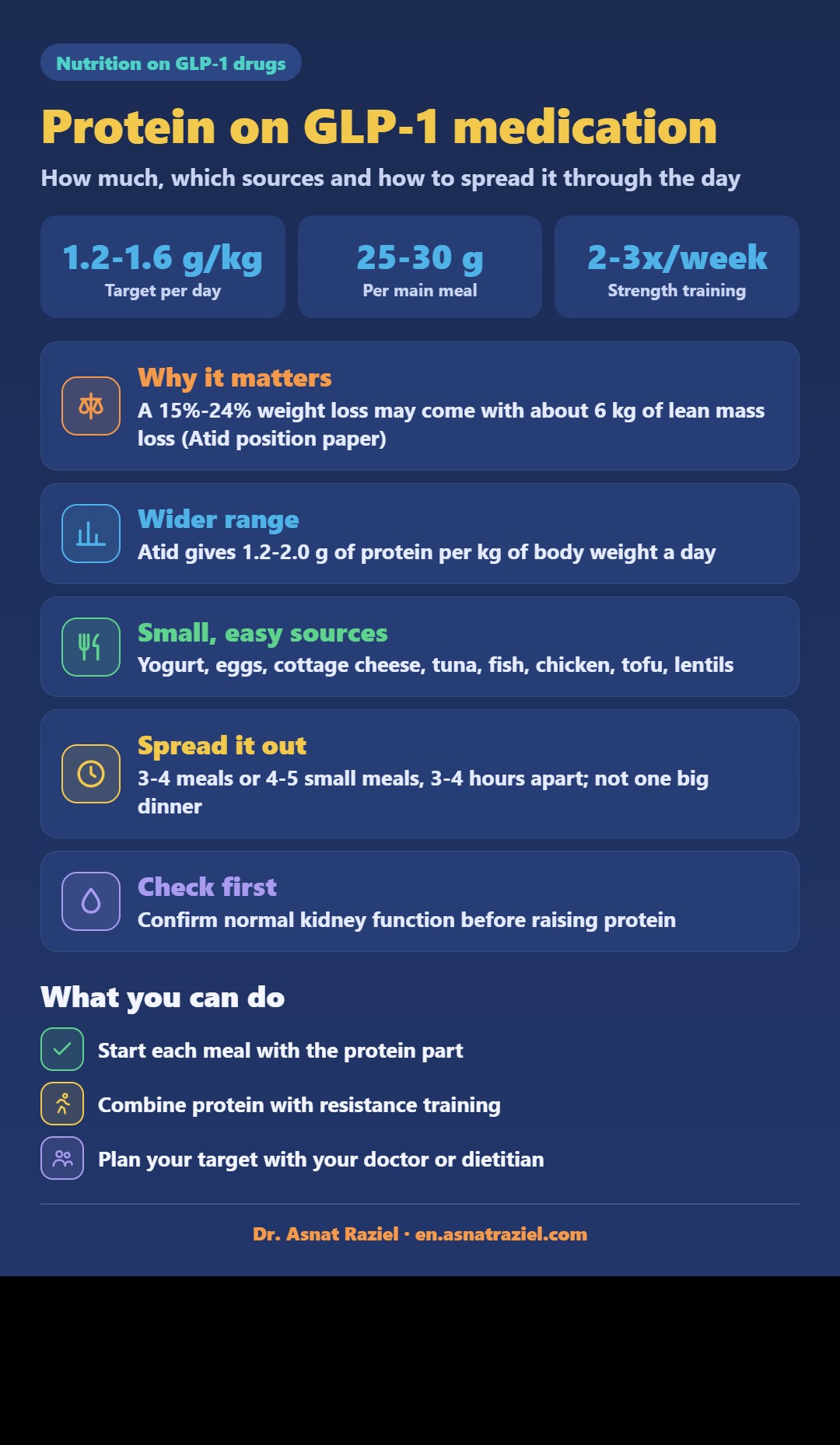
GLP-1 drugs can reduce appetite, so it’s easy to eat less of every food group. As you lose weight, your body may also lose lean mass, which includes muscle. According to the position paper of Atid, the Israeli association of dietitians and nutritionists, a 15%-24% weight loss during treatment may come with an average loss of about 6 kg of this lean mass. That’s why it matters to look at what you lose, not only at the number on the scale.
For people on these drugs, the suggested target is 1.2-1.6 grams of protein per kilogram of body weight per day. The Atid position paper gives a wider range, 1.2-2.0 grams per kilogram. Your own target depends on your weight, age, physical activity and health. Before you increase protein, check with your doctor or dietitian that your kidney function is normal.
Protein does not replace carbohydrates or fats. Carbohydrates from whole grains, legumes, vegetables and fruit add fiber and variety. Olive oil, nuts and avocado provide healthy fat. For example, pair an egg with whole-grain bread and vegetables, or fish with rice and vegetables. That way, each meal includes several food groups.
Adjust your choices to your appetite and tolerance, especially when nausea or fullness makes a regular meal hard. Resistance training two to three times a week, according to your ability, works together with enough protein to support muscle strength. Start with one easy change, such as adding a protein source to a meal you already eat. You can read more in my guide to protecting your muscles on GLP-1 injections.
Protein on GLP-1 medication: sources that take up little room
When a large meal doesn’t fit, choose a small protein food that’s easy to eat. A cup of yogurt, a yogurt drink, an egg or cottage cheese can work for breakfast or a snack. A single-serving cheese or tuna can also suit busy days, because you don’t need to cook. Pick the texture and taste that feel good to you that day.
Fish and chicken fit well into a small portion next to vegetables or a grain. For example, serve pieces of chicken with cooked vegetables, or fish with a little rice. If you fill up quickly, start with a few bites of the protein and then eat the rest as your appetite allows. You don’t have to choose the same food every time.
On a vegetarian or vegan diet, tofu, seitan, lentils and beans widen your options. Add tofu to a vegetable bowl, or combine lentils with a whole grain. If legumes feel heavy, try a small portion and see whether another time of day suits you better. My article on plant protein sources has more ideas.
Keep ready options at home
Keep a few ready options at home, such as eggs, yogurt cups and tuna. When your appetite changes, a ready choice makes the decision simpler. You can also note for one day which sources you ate and see what fits in easily. Mixing animal and plant foods keeps the routine easier and supports your muscles during weight loss. Dairy is one handy option, as I explain in my article on dairy protein and weight loss injections.
Plan your choices around what’s available, not around a fixed rule. Yogurt, cottage cheese, cheese, tuna, fish and chicken are all worth considering when a light meal suits you. If you pick a few options in advance, you can switch between them without replanning every time your appetite shifts.
Spreading protein on GLP-1 medication across your meals
Planning protein on GLP-1 medication starts with spreading it through the day, rather than eating most of it at dinner. You can aim for about 25-30 grams at each main meal, depending on your personal target. Three main meals and one or two snacks often make a comfortable split. If a large meal feels heavy, divide it into smaller portions.
For example, start the morning with a meal that includes protein. At lunch, a 120-gram portion of salmon provides about 25 grams of protein. In the evening, combine a protein dish again with vegetables and a carbohydrate. Between meals, choose a small snack if it fits your appetite and your nutrition plan.
Because these drugs can reduce appetite, you may feel full after a few bites. In that case, start with the protein, and then move on to the vegetables and the rest of the meal. This gives priority to the part that’s hardest to make up when you eat little. Spreading protein this way lets small portions match a changing appetite.
A flexible meal rhythm
You can plan gaps of about three to four hours between small meals, without a rigid schedule. Track your meals for one day to see where a protein source is missing. If you miss your target on a given day, simply return to your routine the next day. There is no need to double portions or squeeze everything into one meal.
Some guidance frames the target as 25-40 grams of protein per meal, alongside the advice to aim for about 25-30 grams of high-quality protein at each main meal. These are planning frameworks, not a reason to overeat when you fill up early. You can spread protein over 3-4 meals, or choose 4-5 small meals a day, 3-4 hours apart. The key is not to rely on one large portion in the evening.
Medical support for obesity drug treatment
I offer drug treatment for obesity together with follow-up and holistic care. My approach connects medication, nutrition and everyday habits. During follow-up, you can also raise practical questions, such as which protein sources to choose and how to spread them across meals. The joint advisory on nutritional priorities during GLP-1 therapy also stresses enough protein and strength training to preserve lean mass.
Ask for support when it’s hard to eat enough, when nausea or other side effects disrupt your routine, or when it’s unclear how to adapt your menu to the treatment. A change in appetite or trouble keeping your strength also deserves a professional conversation. Regular follow-up makes it possible to review your response to treatment, your eating habits and your personal needs.
Drug treatment does not stand alone. Holistic obesity care also addresses movement, sleep, stress and emotional resilience. These parts work alongside the medication and medical follow-up. For a broader look at eating during treatment, see my guide on what to eat on GLP-1 drugs.
You can come to a consultation with a simple description of one day of eating: when you ate, which protein sources you chose and what was hard. This helps focus the conversation on your needs rather than a general target. If treatment or eating feels complicated, don’t stay alone with your questions.
The bottom line on protein on GLP-1 medication
On GLP-1 medication, a target of 1.2-1.6 grams of protein per kilogram a day, spread over several small meals, helps protect your muscles. Combine it with vegetables, whole grains and healthy fats, and with resistance training. Check your kidney function before raising protein, and adjust the plan with your medical team.
This article provides general information and is not a substitute for personal medical advice.