By Dr. Asnat Raziel, bariatric surgeon specializing in obesity treatment, metabolic health and healthy longevity; Director of the Multidisciplinary Center for Obesity Treatment, Assia Medical, Assuta Ramat HaChayal, Tel Aviv
Personalized diet: what the new trial tested
A personalized diet built by an algorithm sounds like the future of diabetes care. However, a new randomized trial found a surprising picture. In people starting metformin, a personal menu designed around their blood sugar responses did not lower HbA1c more than standard healthy eating. The good news is that both groups improved nicely.
In other words, if you start treatment today alongside simple, healthy eating, you get a real benefit. You do not need to wait for a sophisticated app to begin.
Why researchers looked for a personalized diet
Metformin is the first-line drug for type 2 diabetes. Yet many people do not reach their blood sugar targets with metformin alone. So the researchers asked whether diet could strengthen the treatment.
The idea was born at the Weizmann Institute of Science in Israel. There, Prof. Eran Segal and Prof. Eran Elinav showed that different people respond to the same food with very different blood sugar spikes. They therefore developed an algorithm that predicts each person’s post-meal glucose rise from their personal data, including gut bacteria.
How the trial was designed
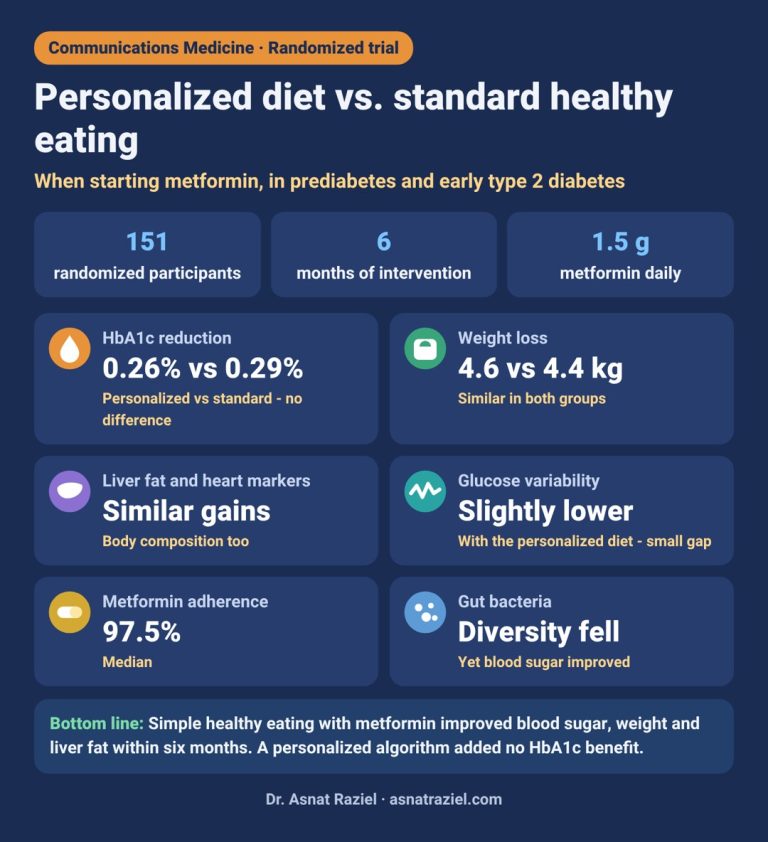
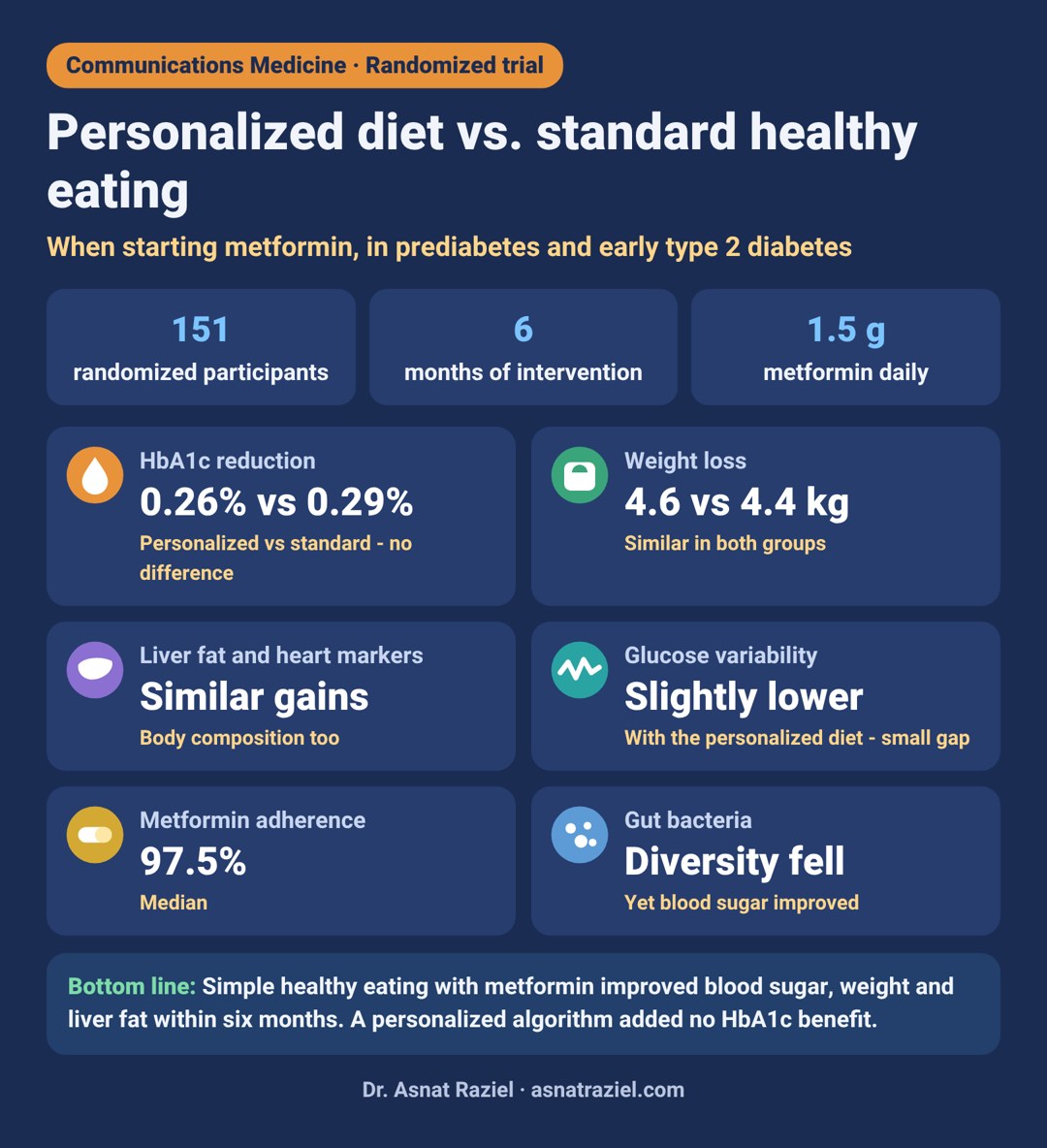
The trial took place at the Garvan Institute of Medical Research in Sydney, Australia, together with the Weizmann Institute. In total, 151 adults with prediabetes or early type 2 diabetes were randomly assigned to two groups. All participants started metformin at 1.5 g a day.
One group (74 participants) followed a personalized diet from the algorithm through a smartphone app. The other group (77 participants) followed a low-fat, high-fiber diet based on standard guidelines. In the end, 138 participants started the intervention and were analyzed (66 and 72). The main outcome was the change in HbA1c, the average blood sugar over the past three months, after six months.
Results: personalized diet vs. healthy eating
HbA1c fell in both groups, with no difference between the diets. According to the report on the study, the drop was 0.26% with the personalized diet and 0.29% with standard healthy eating. Weight loss was also similar: 4.6 kg versus 4.4 kg.
In addition, body composition, liver fat and heart risk markers improved similarly in both groups. Daily glucose swings fell slightly more with the personalized diet. However, the researchers judged this difference small and unlikely to matter clinically.
Moreover, adherence to metformin was very high, with a median of 97.5%. The most common side effect was mild to moderate digestive discomfort: 11 participants on the personalized diet versus 18 on standard eating.
What happened to gut bacteria
The researchers also studied the microbiome, the community of bacteria in the gut. Bacterial diversity fell with the personalized diet, and species richness fell in both groups. In addition, short-chain fatty acids fell in the standard group. Even so, blood sugar and weight improved. The researchers conclude that the link between microbiome changes and metabolic improvement is complex.
Limitations of the study
First, the researchers planned to enroll 264 participants, but the COVID-19 pandemic halted recruitment. So the trial may have been too small to detect a subtle difference. Second, there was no metformin-only or diet-only group. Also, most participants were well-educated women, which limits how far the findings apply.
Finally, carbohydrate intake fell in the personalized group and rose in the standard group. So it is unclear whether any small advantage came from personalization or simply from eating fewer carbs.
What a personalized diet means in the clinic
The main message is encouraging: simple, healthy eating alongside metformin improved blood sugar, weight and liver fat within six months. A personalized diet guided by artificial intelligence can help people who enjoy close tracking. Still, it is not a requirement for success.
In my clinic I see that the best diet is the one you can stick with. I wrote about this in my article on building a personal nutrition plan. True personalization starts with getting to know the person: habits, schedule, preferences and challenges.
What you can do today
If you have prediabetes or early type 2 diabetes, you can start this week with a few simple steps:
Tests: HbA1c and fasting glucose, a lipid profile, liver function and fatty liver tests, and vitamin B12 for anyone taking metformin long term.
Nutrition: a plate with vegetables, protein and whole grains, fewer sugary drinks and less processed food. Meal order matters too: vegetables and protein before carbs. You can compare approaches in my article on types of diets.
Movement: a 10 to 15 minute walk after meals lowers the blood sugar rise. In addition, strength training twice a week improves muscle sensitivity to insulin.
Sleep and stress: about seven hours of sleep and stress management directly affect blood sugar and appetite.
Medication: metformin is available, inexpensive and well known. When it is not enough, GLP-1 drugs and other medications can help. I covered the options in my article on diabetes prevention drugs.
Beyond that, a healthy lifestyle alone lowers risk over many years, as shown by 21 years of follow-up in prediabetes. In many cases, people can even reach type 2 diabetes remission.
At our multidisciplinary center, the dietitian builds a menu that fits your life with you. The psychologist helps with eating habits, and an exercise professional builds a movement plan. When needed, the physician adds medication, and in suitable cases metabolic surgery.
Bottom line
An algorithm-based personalized diet did not beat standard healthy eating in people starting metformin. Both paths led to similar improvements in blood sugar, weight and the liver. So you can start today, with simple steps and professional support.
This article is general information and does not replace personal medical advice.
References
Personalised Medicine in Pre-diabetes and Early Type 2 Diabetes
Can an AI-guided diet beat healthy eating when taking metformin?
The study was funded by the Garvan Research Foundation and the St. Vincent’s Clinic Foundation, and the authors reported no competing interests.