By Dr. Asnat Raziel, bariatric surgeon specializing in obesity treatment, metabolic health and healthy longevity; Director of the Multidisciplinary Center for Obesity Treatment, Assia Medical, Assuta Ramat HaChayal, Tel Aviv
Diabetes remission: why so few patients hear about it
Type 2 diabetes remission is a real possibility, yet most patients never hear about it. Instead, they learn that diabetes is a progressive disease. So they expect another drug and a higher dose at every visit. However, research shows that an intensive lifestyle program brings some patients into remission.
A new opinion piece on Medscape by Dr. Prasanthi Tondapu, an endocrinologist who leads a site of the American College of Lifestyle Medicine remission program, urges clinicians to start this conversation. In this article, I explain what remission means, who is a good candidate and how to begin.
Not only medications: what drugs do and what lifestyle does
Today there are more than 10 classes of medications for type 2 diabetes, including GLP-1 drugs. They are valuable tools. Still, Dr. Tondapu stresses that medications lower blood sugar but do not reverse the underlying disease. Lifestyle change, by contrast, targets the root cause, such as insulin resistance and excess fat in the liver and pancreas.
Many doctors also hesitate to raise the subject. The reasons include a lack of training, uncertainty about the definition and too little time in clinic. That is why new guidance focuses on practical skills: how to explain remission, whom to select and how to support people along the way.
How is diabetes remission defined?
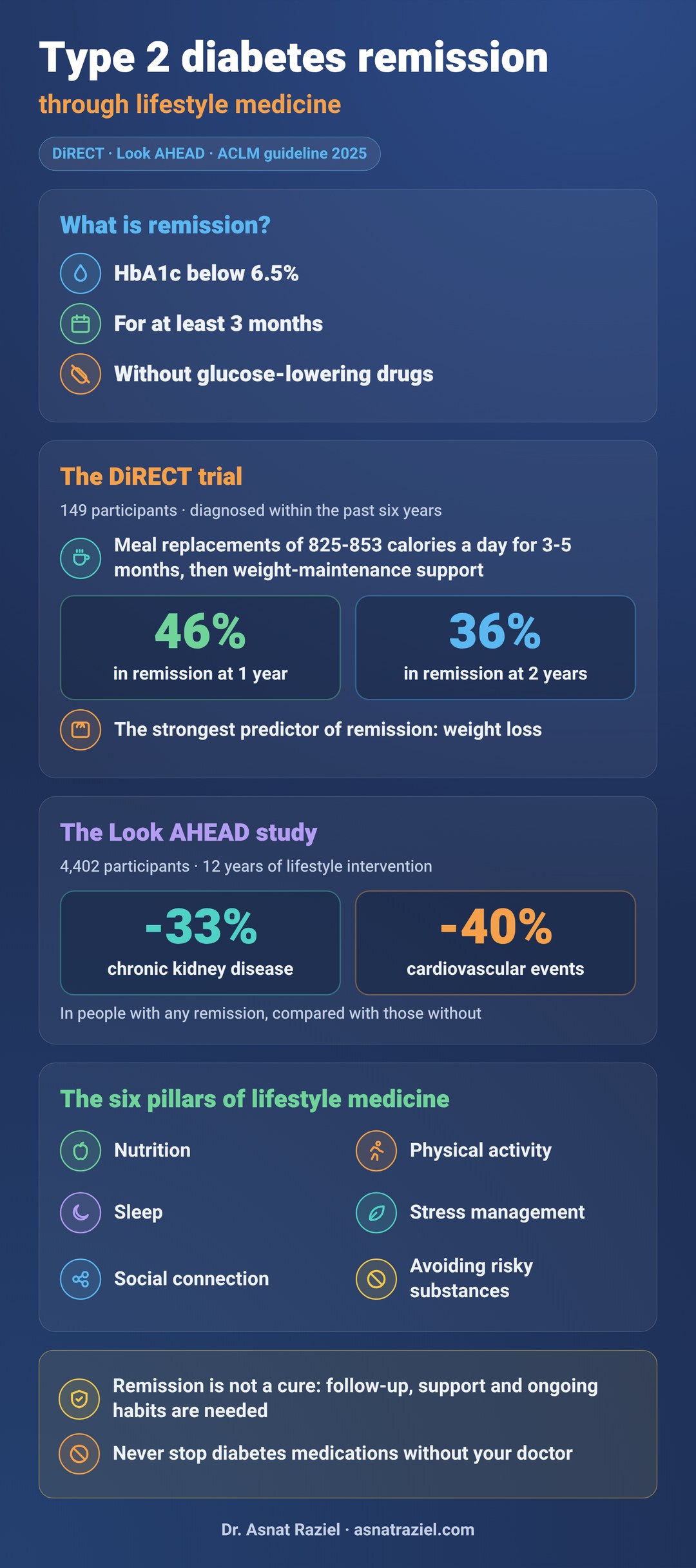
According to the American Diabetes Association expert consensus, remission means an HbA1c below 6.5%. HbA1c is a blood test that reflects average blood sugar over the past three months. To confirm remission, it is measured at least three months after glucose-lowering drugs are stopped.
Lifestyle medicine adds one more condition. Remission should happen without surgery, without medical devices and without active glucose-lowering medication. In other words, we are talking about remission that comes mainly from changing daily habits.
Remission is not a cure
Many people confuse remission with a cure. In fact, during remission the disease is no longer clinically active, but the underlying tendency remains. Keeping remission therefore requires ongoing lifestyle change, regular monitoring and continued support. People who return to old habits may also see their diabetes return.
Who is a good candidate for diabetes remission?
The best chances usually belong to people who were diagnosed recently and take few medications. Dr. Tondapu explains that early on, the beta cells in the pancreas, which make insulin, still work well. As a result, acting early improves the odds.
What the DiRECT trial found
The British DiRECT trial enrolled only people aged 20 to 65, diagnosed within the past six years, with a BMI of 27 to 45, who were not on insulin. First, participants used meal replacements of 825-853 calories a day for 3-5 months. After that, they received weight-maintenance support for two years.
The intervention group had 149 participants. Of these, 68 (46%) reached remission at one year and 53 (36%) at two years. Weight loss was the strongest predictor: each kilogram lost raised the odds of diabetes remission (adjusted odds ratio 1.24 at one year). Fewer medications, lower triglycerides and GGT (a liver enzyme), and better quality of life also predicted remission. On the other hand, within this range of up to six years, the length of time someone had diabetes did not predict remission.
Diabetes remission in young adults: the RESET for Remission trial
Update, November 11, 2026. A new randomized trial from McGill University in Canada tested this approach in younger people. It included 96 adults aged 18 to 45 with obesity and type 2 diabetes diagnosed within the previous six years. The results were published in The Lancet Regional Health – Americas.
In the first weeks, participants ate 800 to 900 calories a day, at first with meal replacements only. At the same time, they did supervised aerobic and strength training twice a week, plus one session on their own. After 12 weeks they moved to a weight maintenance diet.
The result is impressive: 27 of 50 participants (54%) reached diabetes remission, compared with 2 of 46 (4%) with usual care. In addition, the intervention group lost 7.5 kg more than the control group. So for young adults with recent diabetes, diabetes remission is a realistic goal, as long as the program is structured and supported.
Why it matters: healthier kidneys and heart
Remission is more than a good lab number. An analysis of the Look AHEAD study included 4,402 participants (and 4,132 in the kidney analysis) in a trial that compared a 12-year intensive lifestyle intervention with standard education. Their average age was 59, and they had lived with diabetes for six years on average.
The researchers found that people who reached diabetes remission at any point during follow-up had a 33% lower rate of chronic kidney disease. In addition, they had a 40% lower rate of cardiovascular events (heart attack, stroke, hospitalization for angina or cardiovascular death). The longer remission lasted, the greater the benefit. I have written in more detail about the Look AHEAD trial and its lessons.
Harvard Health also covered this analysis in an article on diabetes remission and heart and kidney disease. According to that report, the authors linked the benefits to improvements in weight, fitness, blood sugar and LDL cholesterol.
Even so, people who have lived with diabetes for many years and do not reach remission still gain from the change. The goal is not remission alone. The goal is fewer complications and a better quality of life.
A lifestyle prescription, just like a drug prescription
Type 2 diabetes is a lifestyle disease. Treating its root cause should therefore be the foundation of care. Dr. Tondapu recommends writing a lifestyle prescription just like a drug prescription: the type of change, its duration, frequency and intensity. For example, “brisk walking for 30 minutes, five times a week,” rather than a vague “move more.”
The 2025 clinical practice guideline from the American College of Lifestyle Medicine draws on 118 systematic reviews and 112 randomized trials. It includes 14 key action statements, among them assessing habits, prescribing aerobic and strength activity, nutrition plans, identifying sleep disorders and adjusting or reducing medications.
The six pillars
Nutrition and physical activity are the usual starting point. But lasting change also needs good sleep, stress management, social connection and avoiding risky substances such as tobacco and alcohol. These are the six pillars of lifestyle medicine. In practice, the doctor assesses current habits, checks readiness to change and sets SMART goals with the patient: specific, measurable, achievable, realistic and time-bound.
Group visits, continuous monitoring and support
Shared medical appointments are an especially effective model. In small groups, patients join cooking demos, exercise classes and diabetes education. Family members are welcome to join, learn and help. As a result, participants support each other, feel part of a community and stick with treatment.
Moreover, a continuous glucose monitor (CGM) is a useful tool for changing habits. Real-time feedback shows how food, activity, sleep and stress affect blood sugar. Each choice suddenly feels concrete and immediate.
Finally, an occasional doctor visit is not enough to keep the change going. Support groups led by a dietitian, a lifestyle coach or a diabetes nurse help people stay accountable. An “accountability buddy” from the family or the group helps too.
How to start a conversation about diabetes remission
In my clinic, I start with a simple question: what motivates you? Once I understand the personal goal, I define success through health and quality of life, not just a lab number. For example, fewer medications, lower costs, fewer complications, more independence and less diabetes-related stress.
All of these are meaningful wins, even if full remission does not come. This approach keeps people going even when progress is slow. In our multidisciplinary center, patients work with a dietitian and, when needed, a body-and-mind team. People who are still in the stage of prediabetes can benefit from the same principles before the disease develops.
One important reminder: do not stop diabetes medications on your own. Your doctor reduces them step by step, because a fast change in diet can cause dangerously low blood sugar in people who take certain drugs.
Bottom line: diabetes remission is about progress, not perfection
Not every patient will reach remission, but that is no reason to skip the conversation. Small, steady changes spread through the whole family and strengthen community health. In the end, even people who do not reach remission gain a healthier heart, healthier kidneys and a better quality of life. For more on the link between weight and blood sugar, see my complete guide to obesity and diabetes.
This article provides general information and is not personal medical advice. Talk to your doctor before making any change to your treatment.
References
Using Lifestyle Medicine to Pursue Remission in T2D
Consensus Report: Definition and Interpretation of Remission in Type 2 Diabetes
Predictors of type 2 diabetes remission in the Diabetes Remission Clinical Trial (DiRECT)
Type 2 Diabetes Remission – American College of Lifestyle Medicine