By Dr. Asnat Raziel, bariatric surgeon specializing in obesity treatment, metabolic health and healthy longevity; Director of the Multidisciplinary Center for Obesity Treatment, Assia Medical, Assuta Ramat HaChayal, Tel Aviv
Modafinil: the pill that helps pilots stay alert
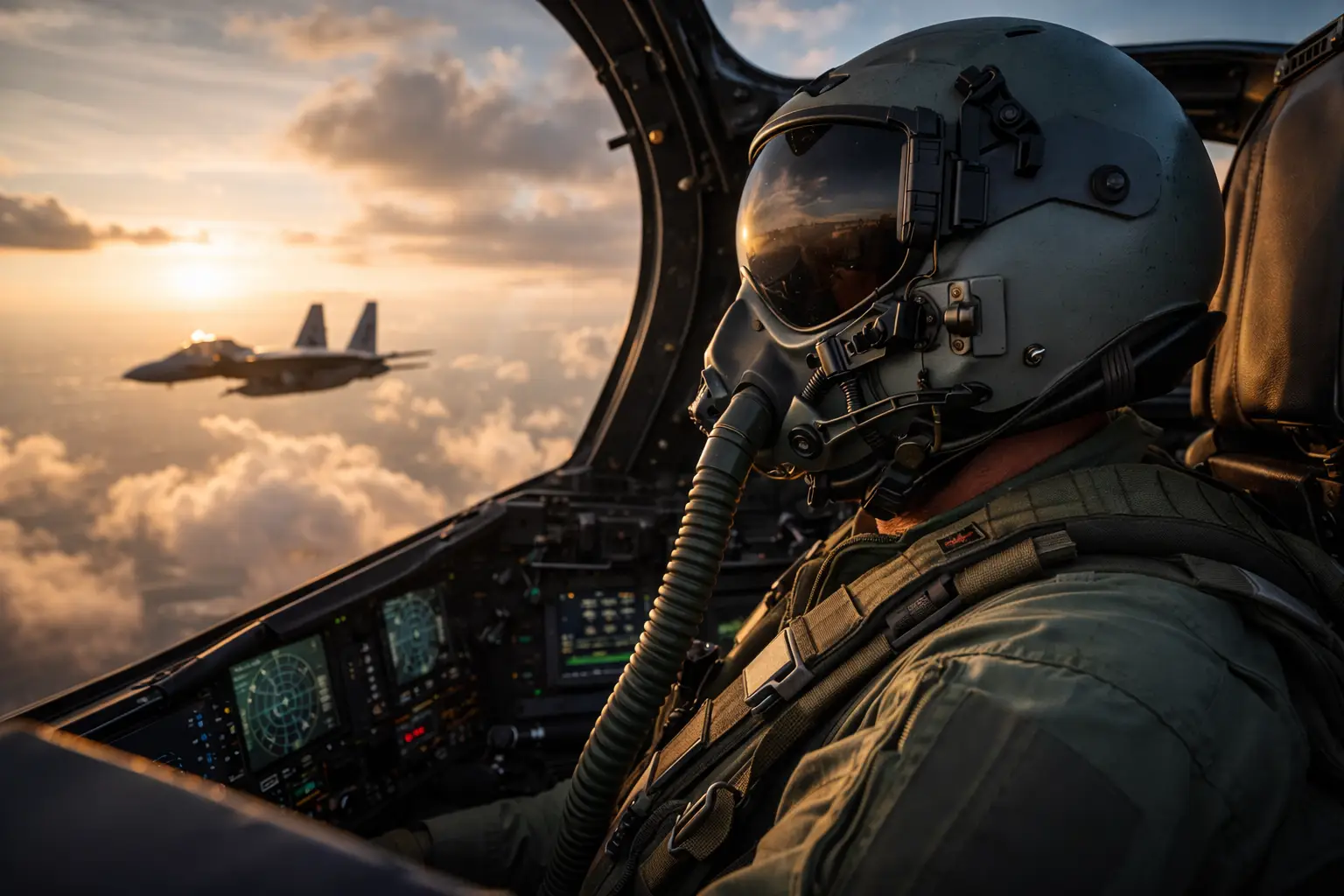
Modafinil is a drug that promotes wakefulness, and Western air forces use it on extreme missions. As a physician and also a civilian pilot, I find this question especially interesting. How do you keep a sharp mind and a fast reaction time after many hours without sleep? During the Israeli Air Force’s long missions against Iran in 2026, this question made headlines again.
In air operations, fatigue is not just a matter of comfort. It affects safety and decision-making under pressure. A fighter pilot operates complex systems at high speed. Therefore, the pilot must stay focused, even when the body is already signaling exhaustion.
Medication is only one tool. I describe the wider approach in how the Air Force manages pilot fatigue.
Fatigue: the silent enemy of pilots
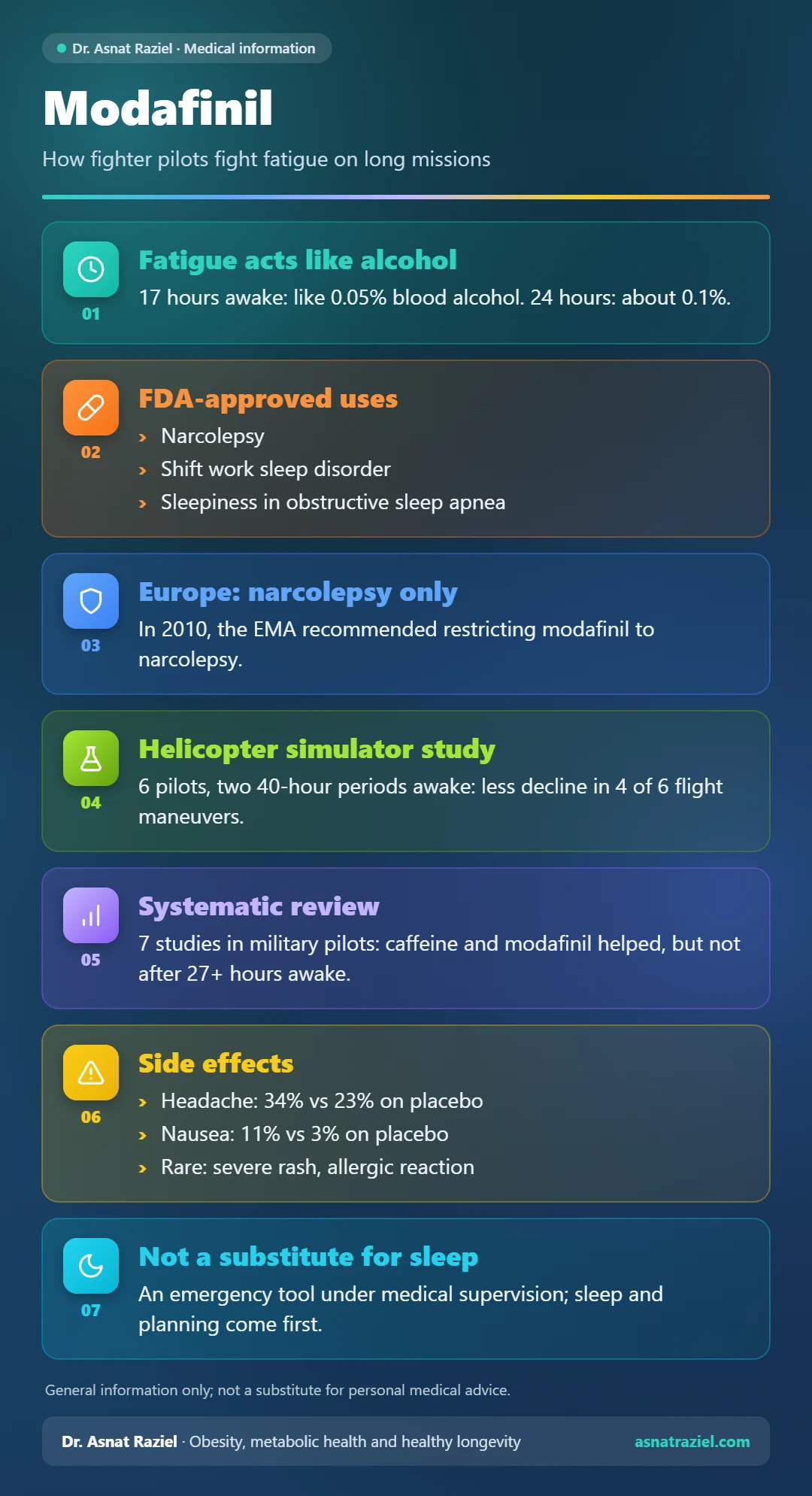
Prolonged wakefulness impairs concentration, reaction time, working memory and decision-making. In a classic study published in the journal Nature, researchers compared fatigue with alcohol. After 17 hours awake, performance dropped to the level seen with a blood alcohol concentration of 0.05%. After 24 hours, the decline reached a level of about 0.1%.
For a pilot running weapons, navigation and intelligence systems in real time, this is a real risk. For that reason, military aviation has also developed drug-based tools for long night flights and distant missions. Even so, the foundation remains mission planning and rest.
What is modafinil and what is it approved for?
Researchers developed modafinil to treat sleep disorders. According to the FDA prescribing information (the US Food and Drug Administration), it is approved to improve wakefulness in adults with excessive sleepiness in three conditions. The first is narcolepsy, a neurological disorder that causes sleep attacks. The second is shift work sleep disorder. The third is obstructive sleep apnea, but here the drug treats only the sleepiness, not the airway blockage itself.
In Europe, the picture is much narrower. In 2010, the European Medicines Agency recommended restricting the drug to narcolepsy only. The reason was that in the other conditions, the risk of skin reactions, hypersensitivity and psychiatric effects outweighed the benefit. In the United States, it is classified as a controlled substance, and in any case it is a prescription drug.
How modafinil works in the brain
The exact mechanism is still unknown, according to the official label. We do know that the drug binds to the dopamine transporter, the protein that carries dopamine back into nerve cells. As a result, more dopamine is available in the brain. However, its profile is not the same as that of stimulants such as amphetamine or methylphenidate, which are also used to treat ADHD.
This difference matters. According to a US Congressional report on fatigue in military aviation, the FDA describes dextroamphetamine as having a “high potential for abuse.” For modafinil, the FDA states that its effects “may lead to abuse or dependence.” In other words, the risk exists with both drugs, but at a different level.
From Go Pills to modafinil
In the past, air forces used amphetamine-type pills known as Go Pills, that is, alertness pills for the mission. In recent decades, many have switched to modafinil. According to the same report, as of 2025, dextroamphetamine is approved for all US military branches, while modafinil is approved for the Air Force only.
The pilot chooses whether to take the pill. In addition, taking it requires the commander’s approval and a prescription from a flight surgeon. The main advantage of modafinil is its lower potential for abuse compared with amphetamines, as its classification reflects. Still, it is not a harmless drug either.
What studies in pilots have shown
In a study by the US Army Aeromedical Research Laboratory from 2000, six pilots went through two 40-hour periods without sleep. In a helicopter simulator, modafinil reduced the drop in performance in four of six flight maneuvers compared with placebo. The clearest benefit appeared between 03:30 and 11:30, when sleep loss and the low point of the body clock add up. However, the pilots reported dizziness and nausea, and the researchers recommended further study before use in pilots.
A recent 2025 study added an interesting point. In a Belgian trial, 11 student pilots received modafinil or placebo during 24 hours awake. The drug improved alertness and reduced sleepiness at 2:00 and 4:00 a.m. Moreover, the differences between the students in how strongly they responded to the drug were very stable. The researchers also raised concerns about overconfidence and about sleepiness returning once the effect wears off.
Finally, a systematic review of seven studies in military pilots summed up the picture. Caffeine and modafinil were the most effective short-term options. Even so, neither of them restored performance to normal after more than 27 hours awake.
Side effects of modafinil
In controlled studies, the most common side effect was headache: 34% compared with 23% on placebo. Nausea occurred in 11%, compared with 3% on placebo. In addition, patients reported nervousness, anxiety and insomnia.
There are also rare but serious risks. The label warns of severe rash, including Stevens-Johnson syndrome, a life-threatening skin reaction. It also warns of psychiatric symptoms and of a severe allergic reaction. Beyond that, the drug weakens the effectiveness of birth control pills. For this reason, the label recommends an alternative or additional method of contraception during treatment and for one month afterward.
Modafinil is not a substitute for sleep
The FDA label says so explicitly: the drug “is not a replacement for sleep.” Even in the most advanced militaries, it is an emergency measure only. The basis of flight safety remains mission planning, rest before long sorties and decision-support systems. That is why it is used under close medical supervision and within clear protocols.
And what about civilians? Many people look for a “magic pill” for fatigue. In most cases, though, fatigue is a sign of insufficient sleep, stress or a medical problem that needs to be checked. Modafinil is not a “performance enhancer,” and it should not be taken without a prescription and medical follow-up. I wrote about natural ways to improve sleep in my articles on sleep and metabolic health and on tiredness and night-time eating.
Looking ahead
Research on alertness is moving fast. Researchers are testing combinations of sleep monitoring, eye-movement tracking and personalized treatment. In the future, systems in the aircraft may detect a drop in the pilot’s alertness in real time and suggest a solution. Meanwhile, the reviews agree: sleep and planning come before any pill.
The bottom line on modafinil
Modafinil is a small tool within a much larger system, and its goal is to keep the person at the controls sharp and focused. It works in the short term, but the effect varies from person to person, and it has side effects. Ultimately, both in the air force and in civilian life, there is no substitute for good sleep.
The information in this article is general and does not replace personal medical advice.
References
Fatigue, alcohol and performance impairment
PROVIGIL (modafinil) tablets – Prescribing Information
European Medicines Agency recommends restricting the use of modafinil
Management of Sleep and Fatigue in Military Aviation
Stable interindividual differences in modafinil’s effect on vigilance during sleep deprivation