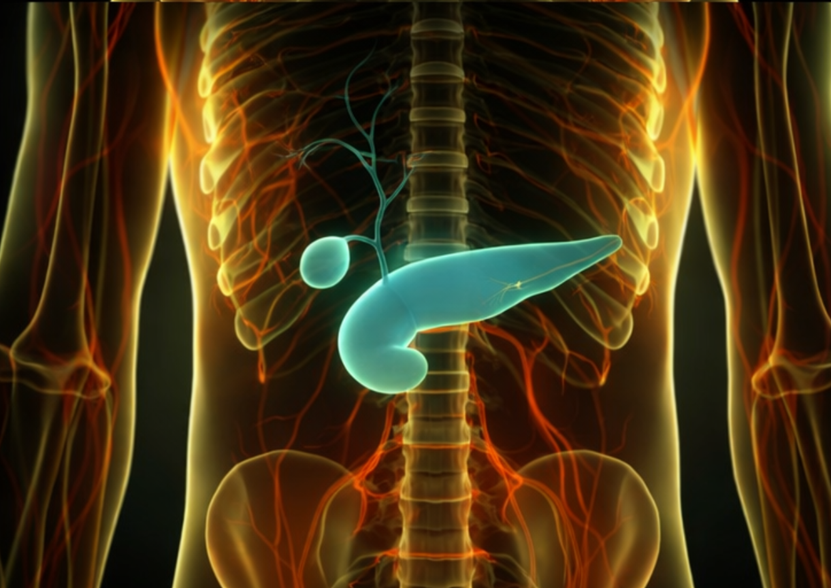
By Dr. Asnat Raziel, bariatric surgeon specializing in obesity treatment, metabolic health and healthy longevity; Director of the Multidisciplinary Center for Obesity Treatment, Assia Medical, Assuta Ramat HaChayal, Tel Aviv
The GLP-1 pancreatitis myth: where the fear came from
The GLP-1 pancreatitis myth is a good example of how a medical fear can outgrow the evidence. Pancreatitis, an acute inflammation of the pancreas, is one of the most sensitive questions in obesity medicine. So in this article I do not just ask whether the risk exists. Instead, I show how to read the evidence, from spontaneous reports to large trials and blood tests. For a shorter overview of the risk with Wegovy and Mounjaro and of the new warnings, see my article on weight loss drugs and pancreatitis.
Over the past decade, GLP-1 drugs have changed the treatment of type 2 diabetes and obesity. They lower weight, reduce heart risk and slow kidney disease. Yet precisely because of this success, a worrying question came up: do they cause pancreatitis?
The concern appeared in the very first years. Adverse event reporting databases, led by FAERS, the database of the US Food and Drug Administration (FDA), showed many reports of pancreatitis. In a raw analysis, the reporting ratios looked high. In addition, researchers proposed biological explanations that seemed reasonable. So the concern in the medical community was understandable.
Why spontaneous reports mislead
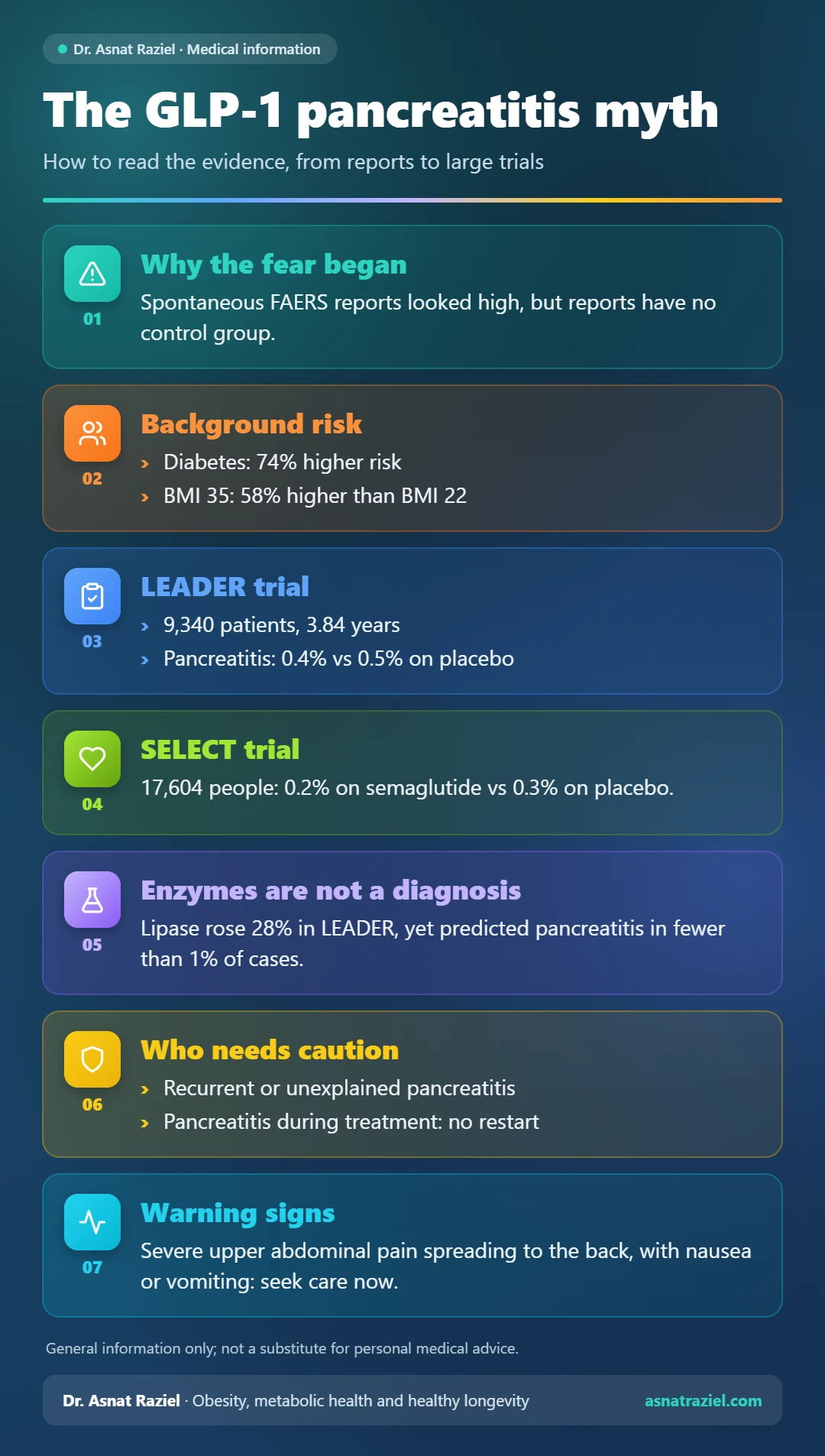
A spontaneous report does not prove that the drug caused the event. First, there is reporting bias: when everyone knows about a concern, doctors and patients report that specific drug more often. Second, these drugs are given to people with diabetes and obesity, and both conditions raise the risk on their own. A meta-analysis of 5.7 million participants found that people with diabetes have a 74% higher risk of acute pancreatitis. In addition, another meta-analysis found that at a BMI of 35, the risk is 58% higher than at a BMI of 22. In other words, it is easy to blame the drug for an event that would have happened anyway.
The possible mechanism runs through the gallbladder
The most convincing biological explanation is not direct damage to the pancreas. Rapid weight loss and a slower-moving gallbladder may lead to bile sludge and stones. Such a stone may block the bile duct and trigger pancreatitis. Indeed, a meta-analysis of 21 trials and 99,599 patients found a 26% increase in gallbladder problems. In the same meta-analysis, however, there was no difference in the rate of pancreatitis. A direct effect of the drugs on the pancreas remains mostly a hypothesis. I wrote about this link in detail in my article on gallstones with Wegovy and Mounjaro.
What the large trials show about the GLP-1 pancreatitis myth
In the LEADER trial, 9,340 patients with diabetes received liraglutide or placebo for a median of 3.84 years. A blinded committee reviewed every suspected case. Acute pancreatitis was diagnosed in 18 patients on the drug (0.4%) and 23 on placebo (0.5%). Likewise, the SELECT trial included 17,604 people with obesity and heart disease, without diabetes. Acute pancreatitis occurred in 0.2% of patients on semaglutide, compared with 0.3% on placebo. More on that trial in my article on how Wegovy protects the heart.
The broad reviews point in the same direction. A meta-analysis of 85 trials and 90,977 people with overweight or obesity looked at incretin-based drugs. The risk ratio for pancreatitis was 0.84 (95% confidence interval: 0.61 to 1.15). Put simply, there is no evidence of a significant increase in risk.
Enzymes go up, inflammation does not
One point that confuses doctors and patients alike is pancreatic enzyme levels. In LEADER, lipase rose by 28% and amylase by 7%. However, the rise did not predict pancreatitis: the positive predictive value was below 1%. With tirzepatide, too, a rise in enzymes has been described without an increase in clinical cases. So higher enzymes without symptoms are not a diagnosis of inflammation. Symptoms decide, not a number in a blood test.
Three common mistakes behind the GLP-1 pancreatitis myth
When patients bring me a worrying headline, I usually find one of three mistakes behind it:
- Counting reports instead of comparing groups: a pile of spontaneous reports has no control group. Trials such as LEADER and SELECT do, and they found similar rates on drug and placebo.
- Forgetting the background risk: diabetes alone raises the risk by 74%, and a BMI of 35 raises it by 58%.
- Treating a lab value as a disease: lipase rose by 28% in LEADER, yet it predicted pancreatitis in fewer than 1% of cases.
Therefore, the right question is always: compared with whom, and in which patients?
Real-world data on the GLP-1 pancreatitis myth
Observational studies reinforce the message. A meta-analysis of 1,324,515 patients from nine studies found no link between incretin-based drugs and pancreatitis (OR 1.03). When controlled trials and routine-care data point the same way, the cumulative weight of the evidence is hard to ignore.
Even so, vigilance continues. In January 2026, the UK medicines regulator (MHRA) strengthened the warning in the drug leaflets, following reports of rare and severe cases. For a summary of what other regulators decided, see my article on safety warnings and rare side effects.
Who needs to be careful
The real challenge is patients with a history of pancreatitis. Most trials did not include them, so our knowledge is limited. In LEADER, 147 patients with such a history received liraglutide, and 120 received placebo. In this group, the risk was not higher with the drug. The takeaway is caution, not a blanket ban:
- Past pancreatitis whose cause was treated: for example, gallstones removed by surgery. In that case, treatment can be considered, with follow-up and a full explanation.
- Recurrent pancreatitis or pancreatitis with no known cause: it is usually better to choose a different treatment.
- Pancreatitis diagnosed during treatment: according to the regulators’ guidance, the drug should not be restarted.
- Active risk factors: known gallstones, very high triglycerides or heavy drinking. These need assessment, and sometimes getting blood fats under control before starting.
The real clinical tools
Our job as doctors is not to act out of fear, but to manage risk wisely. First, a precise medical history, meaning detailed questions about past illnesses. Second, identifying known risk factors. In addition, teaching patients to recognize warning signs and act quickly. Severe, persistent pain in the upper abdomen that spreads to the back, with nausea or vomiting, calls for immediate medical attention. In that case, the drug is stopped until the cause is clear.
The bottom line on the GLP-1 pancreatitis myth
The risk of pancreatitis with GLP-1 drugs, if it exists, is very low. Part of it is indirect, through the gallbladder, and part comes from obesity and diabetes themselves. The benefit, by contrast, is high, proven and life-changing. These drugs are not perfect, but they are among the most effective tools we have. Ultimately, the evidence lets us move forward with cautious confidence and keep unfounded fear out of the clinic. For the bigger picture, read my article is obesity medication safe?
This article is general information and does not replace personal medical advice.
References
Semaglutide and Cardiovascular Outcomes in Obesity without Diabetes
Effect of incretin-based therapies on blood pressure: a systematic review and meta-analysis