By Dr. Asnat Raziel, bariatric surgeon specializing in obesity treatment, metabolic health and healthy longevity; Director of the Multidisciplinary Center for Obesity Treatment, Assia Medical, Assuta Ramat HaChayal, Tel Aviv
Weight loss for fatty liver: why it is the most important step
Weight loss is the foundation of every fatty liver treatment, and studies show that it works. Losing 5% of your body weight already reduces liver fat. A loss of 10% or more can even reduce inflammation and scarring in the liver. In this article, I explain how much weight you need to lose, how to do it right and what medications and surgery add.
What is fatty liver, and why does it matter?
Fatty liver is a condition in which fat builds up in the liver cells. Its professional name today is MASLD, metabolic dysfunction-associated steatotic liver disease. The disease usually appears together with obesity, type 2 diabetes, high blood pressure or high blood lipids. You will find broader information on diagnosis in my complete guide to fatty liver.
In most people, fatty liver is silent and causes no symptoms. In some patients, however, liver inflammation develops, which is called MASH. Over time, the inflammation can lead to fibrosis, meaning scarring of the liver tissue. At an advanced stage, the scarring can progress to cirrhosis. That is why it is important to treat it early, while the liver can still recover.
How much weight do you need to lose to improve the liver?
The clearest data come from a study that examined liver biopsies before and after lifestyle change. The study included 293 patients with fatty liver inflammation who completed a 52-week program. The researchers found a direct link between the amount of weight lost and the improvement in the liver.
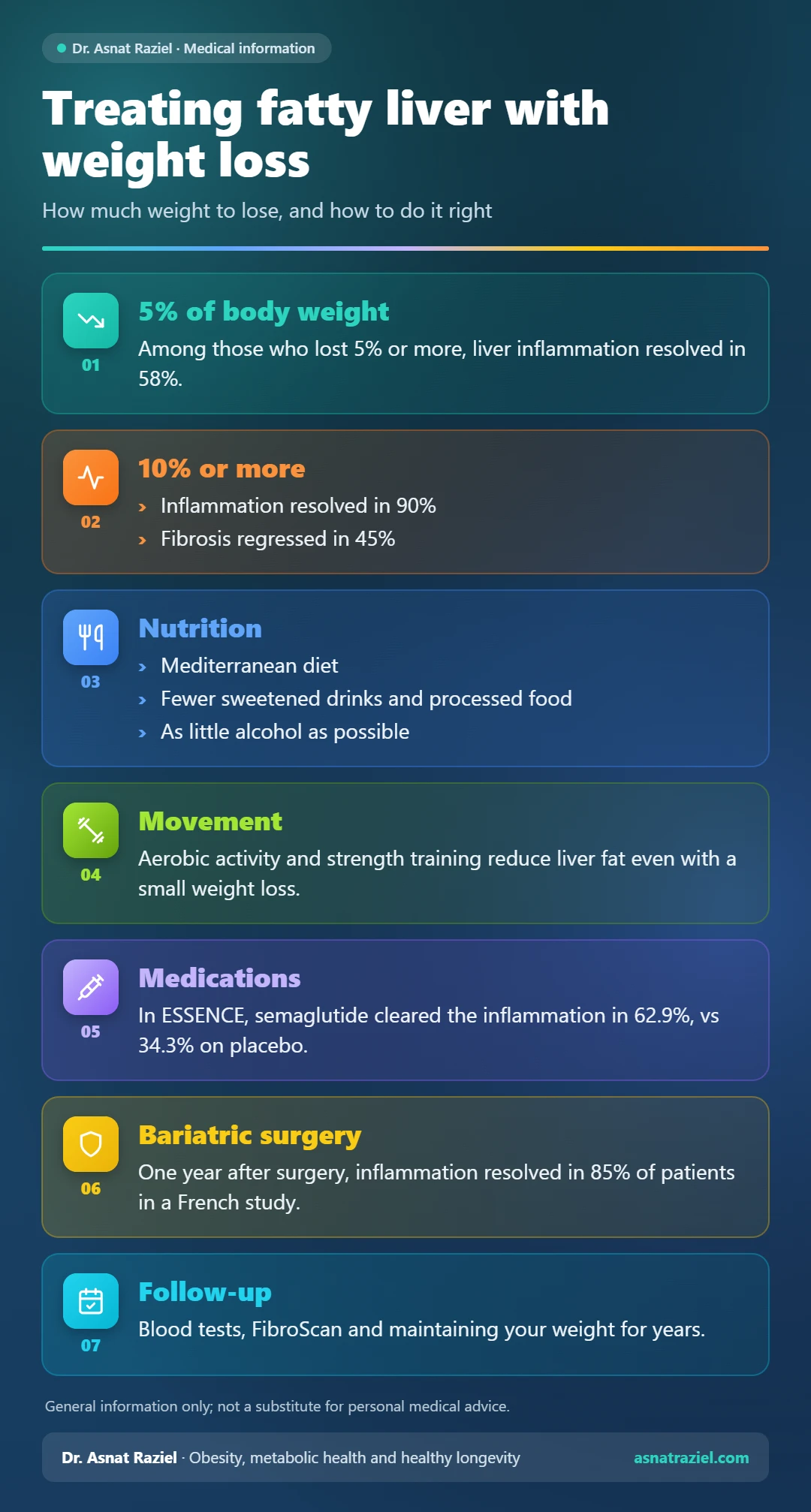
- Among those who lost 5% or more, the inflammation resolved in 58%.
- Among those who lost 10% or more, the inflammation resolved in 90%.
- In the same group, fibrosis also regressed in 45%.
However, only 30% of the participants managed to lose 5% or more within a year. In other words, the target is clear, but it is hard to reach on your own. Likewise, the European guidelines for treating fatty liver place weight loss, dietary change and physical activity at the core of treatment.
Weight loss for fatty liver: nutrition
No single diet suits everyone. However, the Mediterranean diet has the broadest research base in fatty liver. It includes vegetables, legumes, whole grains, fish, nuts and olive oil. At the same time, it is worth cutting back on sweetened drinks and juices, which are high in fructose. In addition, it is important to limit processed food and processed meat. Alcohol also harms the liver, so it is best to reduce it as much as possible.
The pace matters just as much as the direction. Gradual, steady weight loss is better than extreme diets. In practice, losing half a kilogram to one kilogram a week is a reasonable pace for most patients. Very rapid weight loss raises the risk of gallstones, so it is better not to rush. Also, try to include protein at every meal to preserve muscle. Working with a clinical dietitian helps turn the recommendations into a daily menu that suits you.
Weight loss for fatty liver and physical activity
Physical activity reduces liver fat even when you lose only a little weight. It improves insulin sensitivity and helps preserve muscle mass. For example, you can choose brisk walking, swimming or cycling, together with strength training twice a week. That is why I recommend choosing an activity you enjoy and can stick with over time.
Weight loss for fatty liver with medication
When lifestyle change is not enough, medication can help you reach the target. In the ESSENCE trial, patients with liver inflammation and moderate to advanced fibrosis received semaglutide 2.4 mg or a placebo injection. After 72 weeks, the inflammation resolved in 62.9% of patients on semaglutide, compared with 34.3% in the placebo group. In addition, fibrosis improved in 36.8%, compared with 22.4%. The average weight loss was 10.5%.
Ynetnews also reported on the ESSENCE results, noting that the trial included 1,195 people at 253 sites in 37 countries.
Following the trial, the FDA approved Wegovy in August 2025 for adults with MASH and moderate to advanced fibrosis, without cirrhosis. Tirzepatide is also being studied in fatty liver, and I wrote about it in my article on tirzepatide and fatty liver. Other drugs are in development, such as survodutide for fatty liver. On the other hand, supplements such as berberine have been studied less, and I covered them separately in my article on berberine and fatty liver in obesity. You will find a broad overview of the options on my page on drug treatment for obesity.
When is bariatric surgery an option?
In patients with severe obesity, bariatric surgery leads to the greatest weight loss. In a French study, one year after bariatric surgery, liver inflammation resolved in 85% of 109 patients. Fibrosis also decreased in 33.8% of them. A multidisciplinary team makes the decision about surgery after a full evaluation.
Weight loss for fatty liver: long-term follow-up
Treatment does not end when the weight comes off. First, we check the state of the liver with blood tests and imaging tests such as FibroScan. Second, we also treat blood sugar, blood pressure and blood lipids. Finally, it is important to maintain the new weight for years, because regaining weight also brings the fat back to the liver. If you would like to learn about our approach, you can read about Dr. Asnat Raziel and about the fatty liver workup.
The bottom line
The liver is an organ that can heal. A 5% weight loss reduces liver fat, and a loss of 10% or more can clear inflammation and reduce scarring. Nutrition, physical activity and, when needed, medication or surgery are complementary tools for reaching the target. So if you have been diagnosed with fatty liver, now is the time to build a personal plan with a doctor.
The information in this article is general and does not replace personal medical advice.
Questions and answers
How long does it take for the liver to improve?
Liver fat drops within the first months of weight loss. Improvement in inflammation and scarring usually takes a year or more.
Can fatty liver be cured completely?
In the early stages, yes. Significant weight loss can clear the fat and the inflammation. Fibrosis can also regress, especially with a loss of 10% or more.
Is there a special diet for fatty liver?
There is no single diet. A Mediterranean diet, less sugar and processed food, and less alcohol are the recommended foundation.
Can thin people have fatty liver?
Yes. People of normal weight who have abdominal fat, diabetes or high blood lipids can also develop fatty liver. For them, too, moderate weight loss helps.
Sources
Phase 3 Trial of Semaglutide in Metabolic Dysfunction-Associated Steatohepatitis
FDA Approves Wegovy for Certain Adults With Noncirrhotic MASH
Bariatric Surgery Reduces Features of Nonalcoholic Steatohepatitis in Morbidly Obese Patients