By Dr. Asnat Raziel, bariatric surgeon specializing in obesity treatment, metabolic health and healthy longevity; Director of the Multidisciplinary Center for Obesity Treatment, Assia Medical, Assuta Ramat HaChayal, Tel Aviv
Combined obesity treatment: the modern way to treat obesity
Combined obesity treatment, which pairs medication with a holistic approach, leads to the best and most stable results in obesity today. On the one hand, innovative drugs calm hunger and change the biology. On the other hand, real lifestyle change keeps the results in place for years. In this article, I answer the questions I hear most often in my clinic. I also presented the main points of this approach in my YouTube video on treating obesity with medication and lifestyle together.
Why is obesity now defined as a chronic disease?
In the past, obesity was seen as a cosmetic problem or a matter of willpower. Today, it is clear that it has a biological basis: genetic predisposition, hormonal changes, chronic inflammation and involvement of the central nervous system. In addition, it harms the body’s systems and raises the risk of related diseases.
In January 2025, an international commission of the journal Lancet Diabetes & Endocrinology published a new definition. According to this definition, “clinical obesity” is a chronic, systemic disease caused by the effect of excess fat on how organs function. In all, 76 organizations worldwide have endorsed it. This recognition reduces stigma, shame and guilt. Moreover, it opens the door to professional medical care. You can read more in my articles on obesity as a chronic disease and on obesity treatment options.
When should you consider medication?
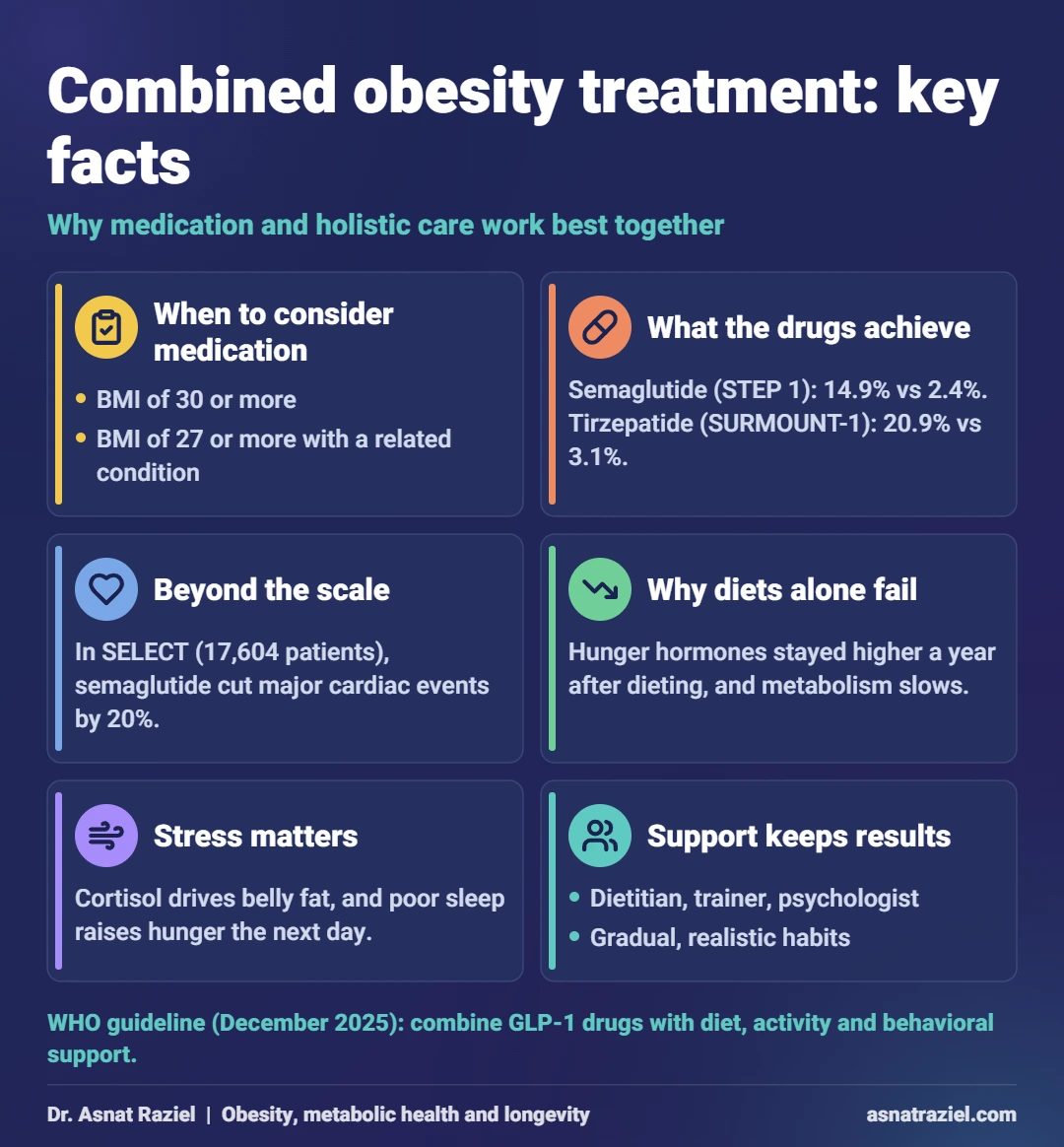
The decision is personal and depends on each patient’s situation. As a rule, we consider medication when a healthy lifestyle alone is not enough to lose weight or to keep it off. The accepted threshold is a BMI (body mass index) of 30 or more. Alternatively, it is a BMI of 27 or more together with a related condition, such as type 2 diabetes, high blood pressure or heart disease.
Medication is not a substitute for changing habits. Rather, it helps the body overcome the mechanisms that make weight loss hard: increased hunger, a strong appetite and a slower metabolism. That is why you should choose the drug together with a specialist, based on your medical history, your preferences and how well you tolerate side effects.
What is new in medications for combined obesity treatment?
The new drugs act on the hunger and fullness centers in the brain. They mimic a natural gut hormone, GLP-1, which sends a signal of fullness to the brain. In the STEP 1 trial, patients on semaglutide (Wegovy) lost an average of 14.9% of their body weight, compared with 2.4% on placebo. Saxenda, an older daily injection, leads to much more modest weight loss.
The next generation is already here. Tirzepatide (Mounjaro) acts on two hormones: GLP-1 and GIP. In the SURMOUNT-1 trial, the highest dose led to a 20.9% weight loss, compared with 3.1% on placebo. In addition, since late 2025 there have also been daily pills for obesity, such as the Wegovy pill and Foundayo (orforglipron).
The benefits go beyond weight. These drugs improve blood pressure, blood sugar control and blood fats. For example, the SELECT trial included 17,604 patients with heart disease and obesity but without diabetes. In that trial, semaglutide cut the risk of a major cardiac event by 20%.
Why don’t diets alone usually last?
The body responds to rapid weight loss with hormonal changes that aim to bring the weight back. A study published in NEJM showed that after a diet, hunger hormones rise and fullness hormones fall. These changes persisted even a year after the diet. At the same time, the basal metabolic rate slows down. The result is constant hunger and great difficulty keeping the weight off.
Moreover, extreme diets cost you muscle mass, which slows the metabolism even further. Gradual change is therefore better, with strength training and sometimes medication as well. I wrote about this in my guide to treating obesity without extreme diets.
What is the link between stress and obesity?
Under chronic stress, the body releases high levels of cortisol. This hormone affects metabolism and encourages fat to build up around the belly. This is the dangerous kind of fat, linked to heart disease and type 2 diabetes.
In addition, stress leads to emotional eating. Many people turn to sweet and fatty foods, which offer momentary comfort through a rise in dopamine in the brain. Stress also disrupts sleep, and poor sleep increases hunger and appetite the next day. This creates a cycle of fatigue, less movement, frustration and further weight gain. That is why breathing exercises, meditation, mindfulness, yoga and walks in nature are part of the plan. There is more on this in my article on stress and obesity.
What does combined obesity treatment add?
The holistic approach looks at the whole person, not just the weight. It includes balanced nutrition, personalized physical activity, good sleep, stress management and care for emotional factors. Its great advantage is that it treats the root of the problem. Emotional eating, anxiety or a sense of low self-worth push many people to overeat. Without addressing them, the drug helps for a while, but the difficulty comes back.
Ultimately, medication and holistic care complement each other. The drug calms hunger and shortens the road at the start. Meanwhile, holistic care builds habits that last for years. The World Health Organization, too, recommends combining these drugs with healthy eating, physical activity and behavioral support. It did so in its first guideline on GLP-1 medicines, from December 2025. You can read more about the approach in my guide to holistic obesity treatment.
Professional societies have also updated their advice, and I summarize the new obesity drug guidelines separately.
How do you build combined obesity treatment the right way?
Medication alone is not enough, so we pair it with lifestyle change. The key is gradual change. Your new habits need to be realistic and comfortable over time: a short daily walk, balanced meals at regular times and a regular sleep schedule. At the same time, ongoing professional support helps the change last. The team includes a dietitian, a fitness trainer and sometimes a psychologist. The people who keep their weight off are usually those who receive continuous support.
Are there risks in combined obesity treatment?
The holistic side is safe, as long as you avoid extreme diets. Medications, on the other hand, do have side effects. The most common are nausea, diarrhea, constipation and sometimes headache or fatigue. In most cases they are mild and fade after a few weeks. In rare cases, serious effects appear, such as pancreatitis or gallstones.
That is why medical follow-up is essential, especially in the first months. It allows us to adjust the dose, spot problems early and improve results. When treatment is closely supervised, the benefit usually outweighs the risk.
What is the most common mistake when trying to lose weight?
The most common mistake is an extreme diet, driven by the wish for quick results. In the short term, the weight goes down. After that, however, come ongoing hunger, frustration and a slower metabolism. The body strives for internal balance, known as homeostasis, so it fights rapid weight loss. Another mistake is counting calories alone, without paying attention to protein, healthy fats, vitamins and minerals. The result is muscle loss, weakness and fatigue.
My message to people living with obesity
Obesity is not a personal failure. It is a real disease that can and should be treated. Guilt and shame only keep people away from the solution. Today, there are effective, proven options. A combined approach pairs new drugs with care that also addresses emotions and behavior. In addition, this is a long-term journey, so it takes patience and persistence.
Finally, I encourage you to believe in yourselves and to open the door to help. Professional knowledge, a positive attitude, determination and support will together lead to real change, good health and a high quality of life. You can do it!
The information in this article is general and does not replace personal medical advice.
References
Definition and diagnostic criteria of clinical obesity
Once-Weekly Semaglutide in Adults with Overweight or Obesity
Tirzepatide Once Weekly for the Treatment of Obesity
Semaglutide and Cardiovascular Outcomes in Obesity without Diabetes
Long-Term Persistence of Hormonal Adaptations to Weight Loss
WHO issues global guideline on the use of GLP-1 medicines in treating obesity
Medication and lifestyle together for obesity – Dr. Asnat Raziel (YouTube)