By Dr. Asnat Raziel, bariatric surgeon specializing in obesity treatment, metabolic health and healthy longevity; Director of the Multidisciplinary Center for Obesity Treatment, Assia Medical, Assuta Ramat HaChayal, Tel Aviv
Holistic obesity treatment: treating the person, not just the weight
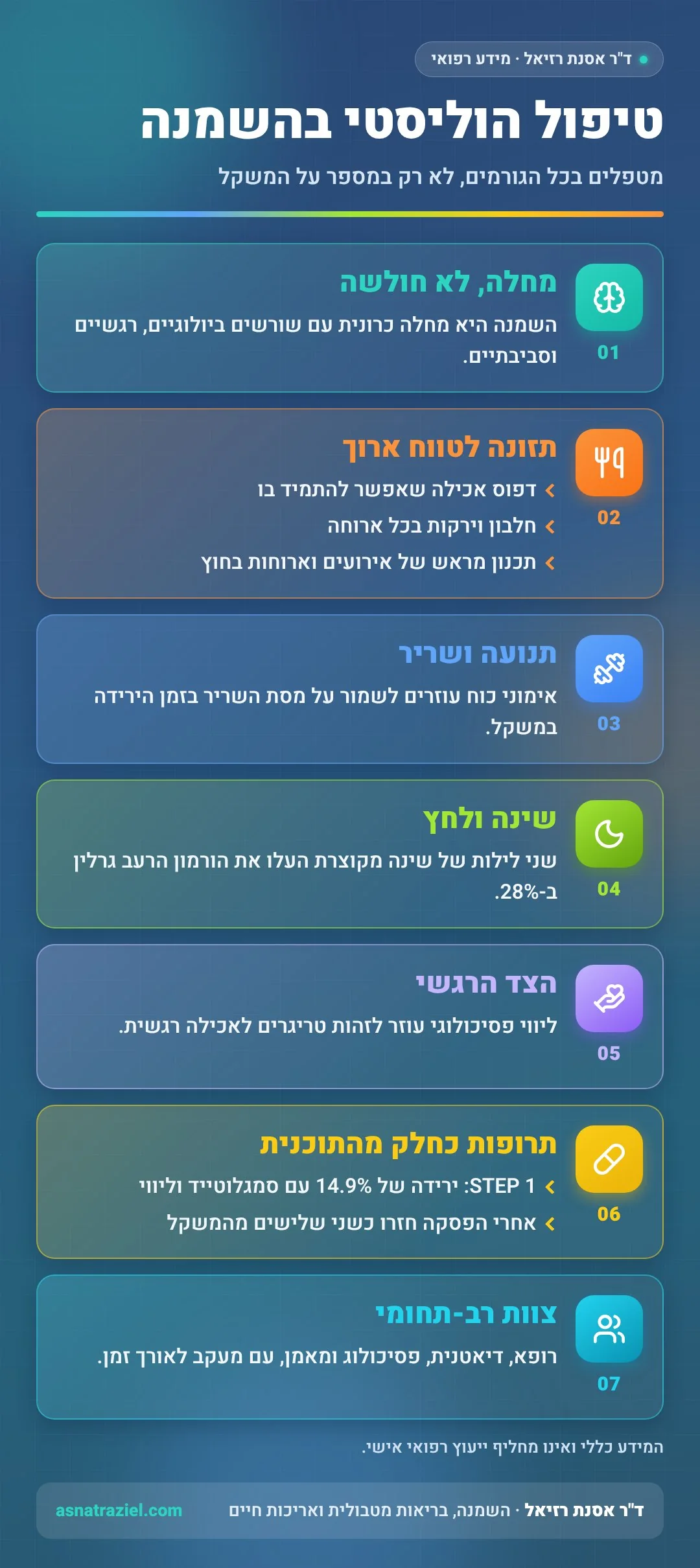
Holistic obesity treatment means addressing every factor that affects body weight: biology, nutrition, physical activity, sleep, emotional well-being and environment. This is not alternative medicine. Quite the opposite: it is the approach modern medicine recommends, because obesity has several roots at once.
In this article I’ll explain what this kind of treatment involves, what the research shows, and how medications or surgery fit in when they are needed.
Why obesity is a disease, not a lack of willpower
Obesity results from a combination of genetics, hormones, habits, environment and psychological stress. That’s why the “just eat less” explanation misses most of the picture. The brain regulates hunger and satiety, and when weight goes down, the body ramps up hunger and slows energy expenditure.
An international commission of 58 experts recently published a new definition of clinical obesity. Under this definition, it is a chronic, systemic disease in which excess fat tissue impairs the function of organs or daily functioning. The commission also recommended not relying on BMI (body mass index) alone, but adding a measurement such as waist circumference. It further stated that weight stigma is a major barrier to treatment.
The practical implication is clear. Treating the root causes of obesity means looking at every factor, and a diet on its own addresses only one of them.
What holistic obesity treatment includes
A good program is built from several components that work together. Each one reinforces the others, so the connections between them matter just as much as each component on its own.
Nutrition you can live with
The goal is not an extreme diet for a month, but an eating pattern you can stick with for years. In practice, that means plenty of vegetables, legumes, whole grains and protein at every meal. It’s also worth planning ahead for eating out, Friday-night family dinners and social events, because that’s where it’s easy to lose your way. A clinical dietitian builds the plan around each patient’s habits, culture and medical conditions.
Physical activity and preserving muscle
Exercise alone produces only modest weight loss, but it is critical for keeping the weight off. Strength training also helps preserve muscle mass while you lose weight. This is especially important during medical treatment, because part of the weight lost is lean tissue.
Sleep and stress
Short sleep disrupts the appetite hormones. For example, in a small study of 12 young men, two nights of restricted sleep lowered the satiety hormone leptin by 18%, raised the hunger hormone ghrelin by 28%, and increased feelings of hunger by 24%. That’s why improving sleep is part of the treatment, not an add-on. Chronic stress also drives many people to eat, so it’s worth learning a few simple stress-relief tools.
The emotional side of eating
For many people, food is a way to calm down, find comfort or escape boredom. In that case, a new menu won’t solve the problem. Working with a psychologist or a skilled therapist, on the other hand, helps identify the triggers and build different responses. I have described practical tools in my article on overcoming emotional eating.
Holistic obesity treatment and medication: no contradiction
Some patients worry that taking a medication “cancels out” the holistic approach. In fact, the opposite is true. Medical treatment addresses the biological component, namely the regulation of hunger and satiety in the brain. That makes it easier to put changes in diet and activity into practice.
The data are striking. In the STEP 1 trial, semaglutide 2.4 mg once a week led to an average weight loss of 14.9% after 68 weeks, compared with 2.4% on placebo. However, all participants also received lifestyle support. What’s more, follow-up after stopping treatment showed that, on average, about two-thirds of the lost weight returned within a year. So the medication works best as part of a broader program, not as a stand-alone solution.
When bariatric surgery is part of the plan
In severe obesity, especially with diabetes or other related conditions, bariatric surgery remains the most effective long-term treatment. Here too, surgery is a tool, not the end of the road. Success over the years depends on nutrition, activity, follow-up and emotional support. In a separate article I described my own journey from surgery to holistic medicine, which grew out of exactly this insight.
Holistic obesity treatment in practice: what the process looks like
First, we start with a full medical assessment: blood tests, blood pressure, body composition, sleep, regular medications and the history of previous attempts. Then we set health goals together, not just a number on the scale. For example, lower blood sugar, better fitness, or an end to snoring.
Next, we build a personal plan. Our clinic has a dietitian, and when needed I refer patients to a multidisciplinary body-and-mind team: dietitians, psychologists, holistic coaches, naturopaths and complementary medicine practitioners, as well as Pilates and yoga instructors and experts in stress-reduction techniques. In my article on multidisciplinary obesity medicine, I explained why it’s so hard to succeed alone. The Look AHEAD trial supports this too. It included 5,145 people with type 2 diabetes, and the intensive lifestyle program led to an 8.6% weight loss in the first year, compared with 0.7% in the control group. Physical fitness also improved, and many participants were able to reduce their medications for diabetes, blood pressure and blood fats.
Finally, follow-up continues over the long term. Obesity is a chronic disease, so its treatment is ongoing as well. You’ll find more information about a holistic approach to obesity treatment and about obesity treatment in general in other articles on the site.
The bottom line
Holistic obesity treatment brings together biology, nutrition, movement, sleep and the mind. It doesn’t replace medication or surgery; it gives them a solid foundation. When all the components work together, the chances of keeping the results for years improve dramatically. If you’re unsure where to start, a conversation with a doctor who specializes in obesity medicine is a good first step.
The information in this article is general and does not replace personal medical advice.
Frequently asked questions
Is holistic obesity treatment alternative medicine?
No. It is an evidence-based medical approach that combines nutrition, physical activity, sleep, emotional support and, when needed, medication or surgery.
Who is holistic obesity treatment suitable for?
Almost anyone living with excess weight. The intensity of treatment varies according to health status, related conditions and personal goals.
How long does treatment last?
Obesity is a chronic disease, so support continues over the long term. At first the sessions are frequent, and later follow-up becomes less frequent.
What happens if I stop an obesity medication?
Usually a large part of the weight comes back. That’s why it’s important to build supportive habits while you are still on treatment, and to plan any stop together with your doctor.
About the author: Dr. Asnat Raziel, bariatric surgeon and obesity medicine specialist.
Sources
Definition and diagnostic criteria of clinical obesity
Once-Weekly Semaglutide in Adults with Overweight or Obesity




