By Dr. Asnat Raziel, bariatric surgeon specializing in obesity treatment, metabolic health and healthy longevity; Director of the Multidisciplinary Center for Obesity Treatment, Assia Medical, Assuta Ramat HaChayal, Tel Aviv
GLP-1 drugs and addiction: what the new study showed
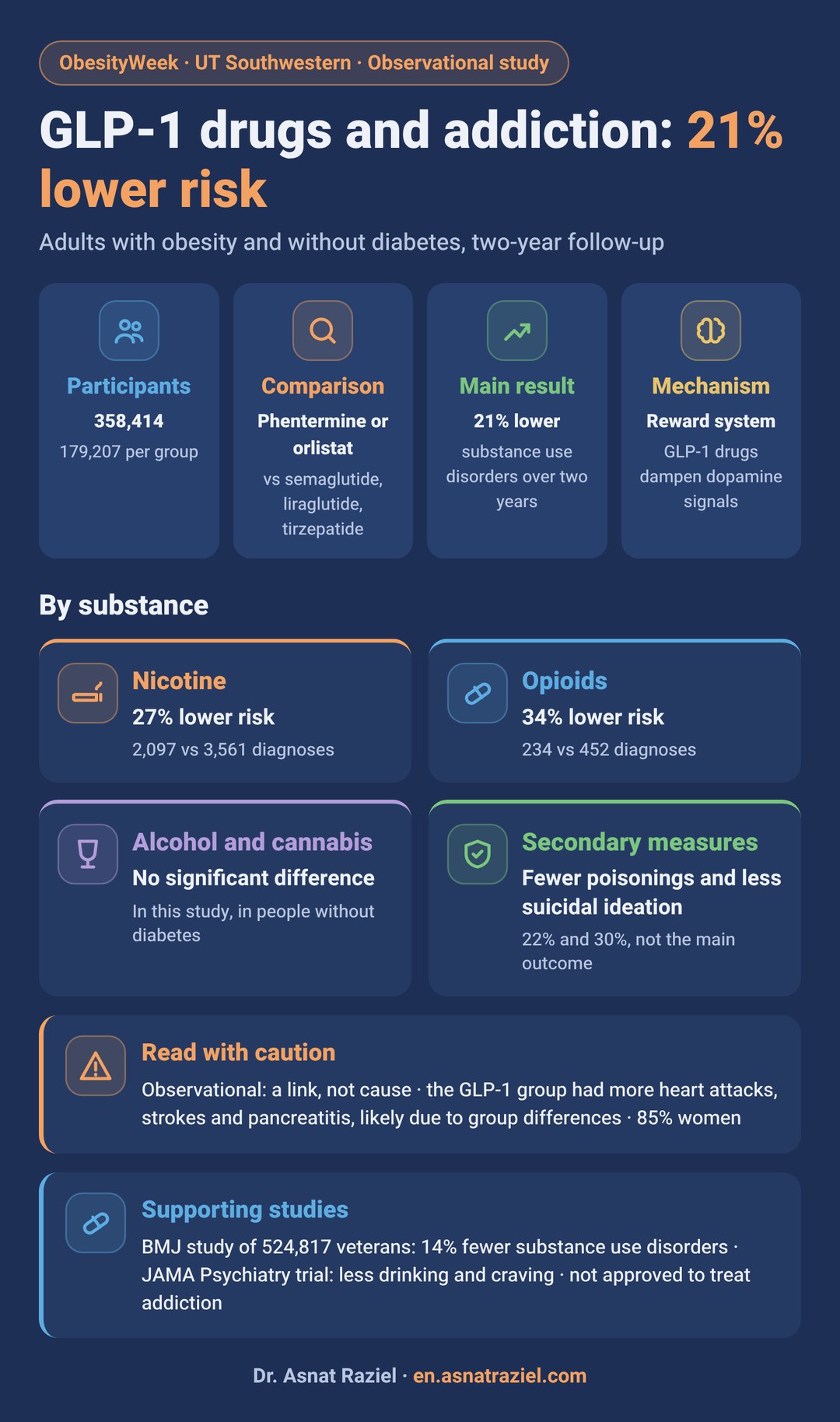
GLP-1 drugs and addiction is a question many doctors are now asking. At ObesityWeek in Washington, a team from UT Southwestern Medical Center in Texas presented a large study. The researchers looked at 358,414 adults with obesity and without diabetes. In people who started a GLP-1 drug, the risk of a new substance use disorder diagnosis was 21% lower over two years.
Substance use disorder is the medical term for addiction. It covers alcohol, nicotine, opioids, cannabis, cocaine and other substances. This was not a controlled trial, so it shows a link, not cause and effect. Still, it joins a growing body of research that points the same way.
Why would GLP-1 drugs and addiction be connected?
GLP-1 receptors are also found in the brain’s reward system. In animal studies, these drugs dampened the dopamine surge that addictive substances trigger. Rodents also consumed less alcohol, nicotine, cocaine and opioids. The same mechanism probably explains the drop in food noise that patients describe.
According to the talk, about 12% of US adults now take a GLP-1 drug, and about 6% took one in the past. Meanwhile, about 15% of people aged 12 and older had a substance use disorder in the past year. Only one in six who needed treatment received it. So any sign of an added benefit draws real interest.
How the study was built
The researchers, Asim Mohamed and Dr. Tonya Vinton, used the TriNetX database. It holds records on about 114.7 million patients from 67 US health systems. They included adults aged 18 to 70 with a diagnosis of obesity. They excluded people with diabetes, a substance use disorder in the previous two years, or prior bariatric surgery.
One group started semaglutide, liraglutide or tirzepatide. The comparison group started phentermine or orlistat. These were chosen because they are not thought to affect addiction, unlike naltrexone, bupropion and topiramate. After matching on 19 factors, such as age, mental health and other conditions, each group had 179,207 people. The average age was 41, and 85% were women.
GLP-1 drugs and addiction: the results
At one year, the risk of a new substance use disorder diagnosis was 21% lower in the GLP-1 group. The result held at two years: 3,294 diagnoses versus 5,178 in the comparison group. In other words, the hazard ratio was 0.79.
The link was strongest and most consistent for two substances:
- Nicotine: 27% lower risk (2,097 versus 3,561 diagnoses).
- Opioids: 34% lower risk (234 versus 452).
- Cocaine: 49% lower risk, but based on few cases, so the estimate is less precise.
By contrast, there was no significant difference for alcohol or cannabis. Results for other stimulants, sedatives and inhalants were also unclear.
Other measures
The GLP-1 group also had fewer drug poisonings (22%), less suicidal ideation (30%) and lower death from any cause (23%). However, the researchers note that these were secondary measures, not the main question.
The worrying findings, and how to read them
This part matters. The GLP-1 group had more heart attacks (38%), more strokes (29%) and more pancreatitis (34%). The absolute numbers were small, for example 232 versus 215 heart attacks.
According to the researchers, the main reason is likely differences between the groups. Before matching, the GLP-1 group had more heart and metabolic disease. Doctors also avoid phentermine in people with heart disease. Pancreatitis is a known label warning for these drugs. So these findings do not contradict the SELECT trial, in which semaglutide reduced heart events. Even so, they show how carefully observational studies must be read.
What other studies show
This conference study does not stand alone. A study in the BMJ followed 524,817 US veterans with type 2 diabetes. Compared with SGLT2 inhibitors, GLP-1 drugs were linked to a 14% lower risk of any substance use disorder. Here, the risk also fell for alcohol (18%), cannabis (14%) and opioids (25%). Among veterans who already had an addiction, there were fewer overdoses and fewer hospital stays.
A study in Addiction looked at more than a million patients with opioid or alcohol use disorder. Those prescribed a GLP-1 or GIP/GLP-1 drug had fewer opioid overdoses (40%) and fewer alcohol poisonings (50%).
The first controlled trial
The most important piece is a randomized trial in JAMA Psychiatry. It enrolled 48 adults with alcohol use disorder, who received low-dose semaglutide or placebo for nine weeks. Semaglutide cut the amount of alcohol participants drank in a lab session. It also reduced drinks per drinking day and alcohol craving. It did not change the number of drinking days. Among smokers, it also reduced the number of cigarettes.
More trials are under way. For example, the SEMALCO trial in Denmark is testing semaglutide in 108 people with alcohol use disorder and obesity, alongside cognitive behavioral therapy.
Limits of the conference study
The researchers list several limits themselves. First, health records miss most addictions. Second, they did not know the dose, adherence or income of the patients. In addition, there was no matching for smoking, BMI or disease severity. Finally, 85% of participants were women, which makes it hard to generalize to men.
There are also biases in both directions. On one hand, the phentermine label warns against use with a history of drug abuse, so higher-risk patients were more likely to get a GLP-1. On the other hand, people who start a GLP-1 may be more engaged in their care. In the end, the researchers call this an area for research, not a proven benefit.
What this means for patients
- Not a reason to start a drug: GLP-1 drugs are not approved to treat addiction. The decision to treat rests on obesity and related conditions.
- Routine questions: The researchers suggest asking every patient with obesity about alcohol, smoking and drugs. Short tools such as AUDIT-C can help.
- After bariatric surgery: The risk of alcohol problems is known to rise after Roux-en-Y gastric bypass. So follow-up matters there too.
- If you live with addiction: Tell your doctor. Proven treatments exist, and GLP-1 research may add to them in the future.
I have also written about mental health after weight loss, Wegovy and binge eating and long-term phentermine.
Bottom line on GLP-1 drugs and addiction
The conference study found a 21% lower risk of new addiction in GLP-1 users, mainly for nicotine and opioids. It adds to the large BMJ study and to a first controlled trial in alcohol use disorder. Only large controlled trials will tell whether these drugs truly prevent addiction. Until then, it is a promising question, not a recommendation.
This article is general information and does not replace personal medical advice.
References
Once-Weekly Semaglutide in Adults With Alcohol Use Disorder: A Randomized Clinical Trial
The conference study received no outside funding.