By Dr. Asnat Raziel, bariatric surgeon specializing in obesity treatment, metabolic health and healthy longevity; Director of the Multidisciplinary Center for Obesity Treatment, Assia Medical, Assuta Ramat HaChayal, Tel Aviv
Satiety hormones save lives, and the research already shows it
Satiety hormones save lives, and this is no longer a slogan but the result of large studies. Israel is facing a serious health crisis. According to data from the Israel National Institute for Health Policy Research, almost 60% of adults in Israel live with overweight or obesity. The consequences are familiar to every doctor: type 2 diabetes, cardiovascular disease, fatty liver, kidney disease and sleep apnea.
Around the world, countries are already adopting innovative treatments based on the body’s own natural hormones. In Israel, however, most adults still pay for them out of pocket. In this article I explain why it is time for the national health basket, Israel’s list of state-funded treatments, to recognize this, and what is on the table for the 2027 basket.
Not “weight loss shots” but treatment for a disease
We are talking about GLP-1 agonists, such as semaglutide in Wegovy. In addition, there is a dual GLP-1 and GIP agonist, tirzepatide, in Mounjaro. All of them belong to the incretin family of drugs. In the medical literature they are called NuSH, Nutrient-Stimulated Hormone therapies, meaning treatments based on hormones the body releases in response to food. In Hebrew, the most accurate and catchy name is “satiety hormones”.
These drugs are not “appetite suppressants”. Instead, they restore the body’s ability to regulate hunger, satiety and metabolism, an ability that is damaged in chronic obesity. That is why this is treatment for a metabolic disease, as I wrote in my article on obesity as a chronic disease.
Far beyond weight loss
The claim that these are just weight loss drugs is no longer true. They are systemic treatments, with strong evidence that they reduce serious illness. Satiety hormones act on receptors in the digestive system and the brain. They increase insulin secretion only when blood sugar is high, suppress glucagon secretion and slow stomach emptying. As a result, they have become a key line of treatment for type 2 diabetes.
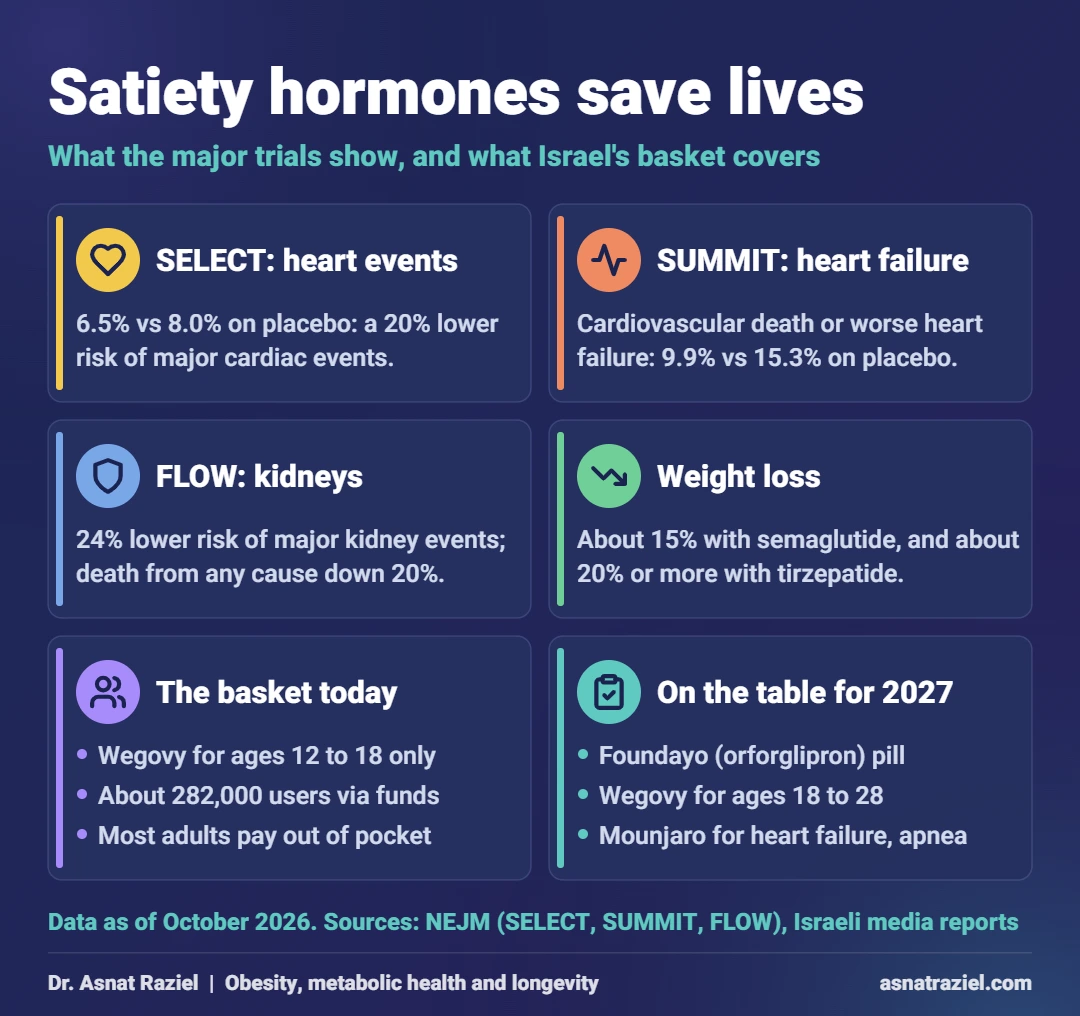
The weight loss is also significant. In the large studies, patients lost about 15% of their body weight on average with semaglutide, and about 20% or more with tirzepatide. However, weight is not the goal in itself. A loss of 10% to 15% is linked to a sharp improvement in blood pressure, blood lipids and blood sugar control.
How satiety hormones save lives: the heart
The most impressive finding is the effect on the heart. The SELECT trial included 17,604 people with obesity and heart disease, without diabetes. A major cardiac event (cardiovascular death, heart attack or stroke) occurred in 6.5% of patients on semaglutide, compared with 8.0% on placebo. That is a 20% reduction in risk.
In addition, the SUMMIT trial included 731 patients with obesity and heart failure with preserved ejection fraction. In this condition the heart muscle contracts well but has trouble filling. Cardiovascular death or worsening heart failure occurred in 9.9% of patients on tirzepatide, compared with 15.3% on placebo.
Satiety hormones save lives in the kidneys and liver too
There has also been a breakthrough in kidney disease. The FLOW trial included 3,533 patients with type 2 diabetes and chronic kidney disease. Semaglutide reduced the risk of a major kidney event, or death from kidney or cardiovascular causes, by 24%. Moreover, the risk of death from any cause fell by 20%. This is exactly what the phrase “satiety hormones save lives” means.
In the liver, significant weight loss reduces liver fat and improves liver enzymes. In 2025, the FDA approved Wegovy for the treatment of MASH, an inflammatory form of fatty liver disease, without cirrhosis. You will find the full picture of the links between these organs in my article on the heart, the kidneys and metabolism.
The liver is just one example. Read more about the health benefits of GLP-1 drugs beyond the scale.
Additional benefits and safety
The effect goes beyond metabolism: improvement in sleep apnea, relief of knee pain in osteoarthritis and reduced inflammation. On the other hand, it is important to be precise. Data on cancer come mainly from observational studies. In addition, large Alzheimer’s studies did not show a slowing of the disease.
The most common side effects involve the digestive system, and they are usually mild and pass as the dose is raised gradually. Pancreatitis is a rare but real risk, so severe abdominal pain requires medical evaluation. As with other chronic treatments, this is long-term treatment that requires medical supervision, not a “temporary course”. When people stop, the weight tends to return, as I explained in my article on keeping weight off after stopping treatment.
What is happening in the health basket today
In February 2026, the basket committee approved an obesity drug for the first time: Wegovy injections, but only for adolescents aged 12 to 18. Adults were left out, mainly because of the cost. At the same time, Israel’s health funds (HMOs) sell these drugs at a discount through their supplemental insurance plans. As a result, in the first half of 2026 about 282,000 Israelis used Wegovy and Mounjaro through the health funds. You will find a breakdown by health fund in my article on Mounjaro in Israel’s health funds.
But people who have no supplemental insurance or spare money are left without treatment. This creates two-speed medicine. In its first guideline on GLP-1 drugs, from December 2025, the World Health Organization also estimated that by 2030 these drugs will reach fewer than 10% of the people who could benefit from them. You will find the prices in my guide to the cost of drug treatment for obesity.
The 2027 basket: what is on the table
The battle over the next basket has already begun. In July 2026, the list of requests was published, and obesity stands out in it. First, the weight loss pill orforglipron, sold as Foundayo. Second, expanding Wegovy to young adults aged 18 to 28. Finally, expanding Mounjaro to patients with obesity and heart failure or sleep apnea.
On the other hand, the budget is expected to remain 650 million shekels, the same as last year. Therefore, the committee will have to choose between many needs. Read more about the process in my article on weight loss drugs and the health basket.
In summary: satiety hormones save lives
Satiety hormones are not a trend, and they are not weight loss shots. They are an advanced biological treatment that corrects a damaged mechanism, reduces serious illness and changes the course of the disease. The studies show that satiety hormones save lives: fewer cardiac events, less worsening of heart failure and fewer deaths among kidney patients.
Including them in the 2027 basket for adults as well, with graded and controlled indications, is the right medical, moral and social step. We could start with the highest-risk groups, for example people with obesity and heart disease, heart failure or sleep apnea. This is a test of our health system’s ability to keep pace with science and truly protect public health.
The information in this article is general and does not replace personal medical advice. The data are correct as of October 2026.
References
Semaglutide and Cardiovascular Outcomes in Obesity without Diabetes
Tirzepatide for Heart Failure with Preserved Ejection Fraction and Obesity
Effects of Semaglutide on Chronic Kidney Disease in Patients with Type 2 Diabetes
A nation with obesity: about a quarter of a million Israelis are injecting (Israel Hayom, in Hebrew)
WHO issues global guideline on the use of GLP-1 medicines in treating obesity