By Dr. Asnat Raziel, bariatric surgeon specializing in obesity treatment, metabolic health and healthy longevity; Director of the Multidisciplinary Center for Obesity Treatment, Assia Medical, Assuta Ramat HaChayal, Tel Aviv
World Cup and sleep: a soccer party in the small hours
The World Cup and sleep are a tough combination for every soccer fan in Israel. The 2026 tournament took place last summer in the United States, Canada and Mexico. Because of the time difference, many games aired here late at night or even toward dawn. So many fans faced a familiar dilemma: how do you enjoy the world’s biggest event without paying a price in health?
The World Cup is over, but the question comes back with every sports event broadcast at night. A Champions League final, NBA games and an Olympics in a distant time zone pose the same challenge. The tips here fit every such night.
Why is watching sports good for us?
Despite worries about sleep, watching sports also has benefits. Big games create a sense of belonging, excitement and social connection. In addition, they bring moments of shared joy and strengthen ties between family members and friends. They also offer a welcome break from routine and from hard news. Shared positive experiences may improve mood and reduce loneliness.
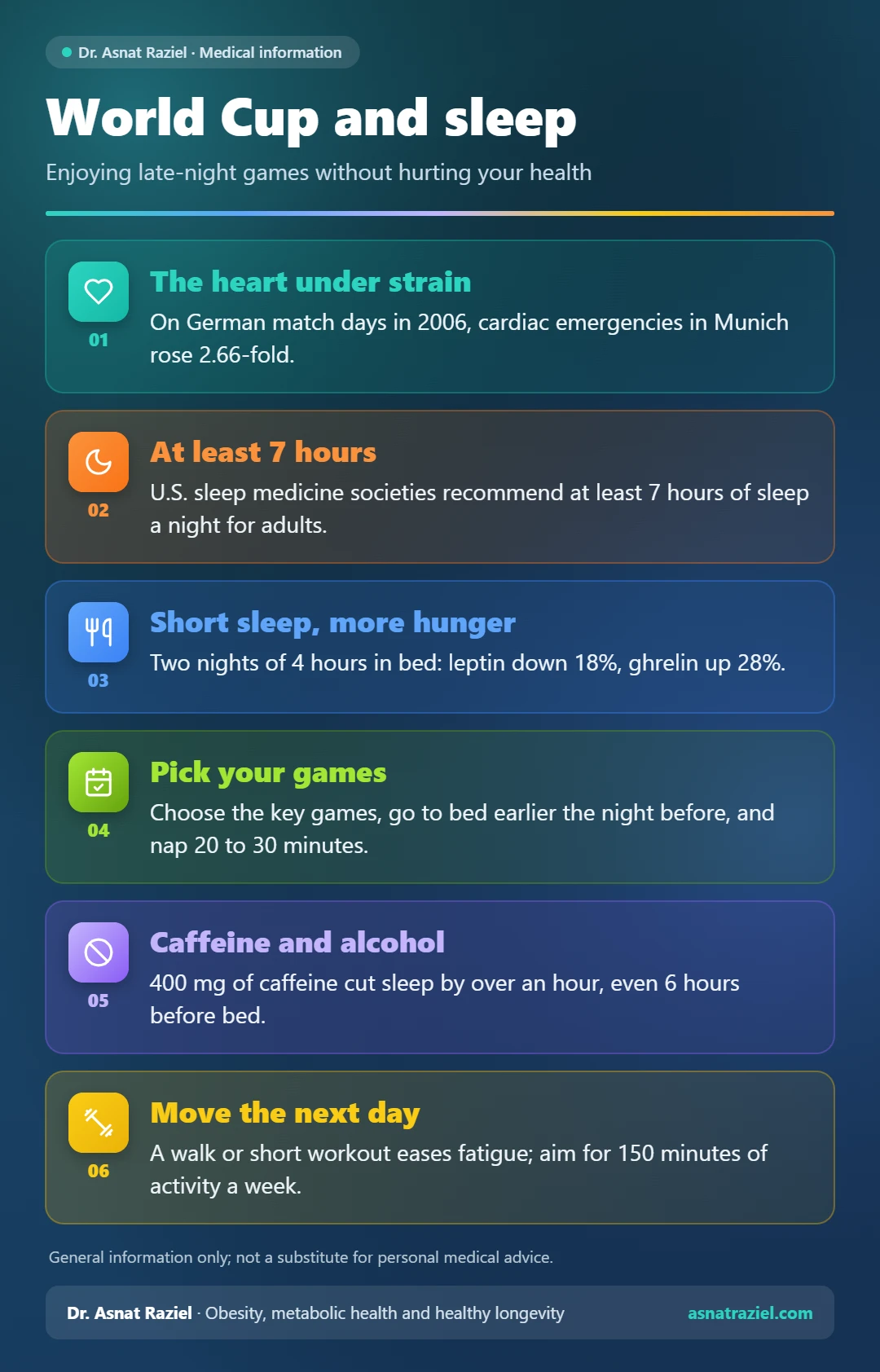
However, the excitement can put a strain on the heart. A study published in the NEJM looked at the 2006 World Cup in Germany. On days when the German team played, cardiac emergencies in Munich rose 2.66-fold compared with the control period. So people with heart disease should stick to their medications and keep their routine as calm as possible.
Sleep: the most important player on the field
Good sleep is one of the most important parts of health. During sleep, the body repairs tissue, balances hormones and strengthens the immune system. Sleep also protects memory and concentration. The recommendation of the U.S. sleep medicine societies for adults is at least 7 hours of sleep a night.
When we cut sleep short over time, fatigue, poor concentration and more stress follow. Moreover, hunger grows. In a classic study, two nights of 4 hours in bed lowered the fullness hormone leptin by 18%. At the same time, the hunger hormone ghrelin rose by 28%, and cravings for carbohydrate-rich foods increased. I wrote more about this in my article on the effects of sleep deprivation. So the key is not to give up the games, but to manage your routine wisely.
World Cup and sleep: you don’t have to watch every game
The healthy way to enjoy the tournament is to choose the truly important games in advance. There is no need to watch every game. If you are planning a long night, it helps to go to bed a little earlier the evening before. Another option is a short nap the next day.
Even an extra 20 to 30 minutes of sleep can improve alertness and function. However, it is best not to stretch the nap beyond that, and not to sleep in the late evening. That way, you protect the next night’s sleep.
What should you eat during the game?
Another issue is eating at night. Many people use the viewing hours for snacks, pizza and sugary drinks. Yet fatigue itself increases the tendency to eat without control. If you recognize this pattern, you will find help in my article on sleep and night eating.
Choosing light food can bring fullness without weighing you down. For example:
- Protein-rich yogurt.
- Cut fruit and vegetables.
- Homemade popcorn.
- A handful of nuts.
In addition, drink water. Coffee, energy drinks and alcohol harm sleep quality even more. A caffeine study found that 400 mg of caffeine, about two to three cups of coffee, cut sleep by more than an hour even when taken six hours before bedtime. As for alcohol, a broad review showed that it does shorten the time it takes to fall asleep, but it disrupts the second half of the night.
World Cup and sleep: how to fall asleep fast after a tense game
After the final whistle, the body is still excited and the heart rate is high. So give it a few minutes to calm down before sleep. First, dim the lights and put your phone aside. Second, avoid rewatching highlights and arguing on social media. In addition, a dark, quiet and cool room helps you fall asleep fast.
Beyond that, try to get up at a fixed time the next morning. A stable body clock makes it easier to get back to routine. If you suffer from insomnia even without soccer, you can find more tools in my article on improving sleep for metabolic health. Also, the link between obesity, sleep and appetite explains why short nights make it harder to keep weight in check.
Getting back to moving after a sleepless night
The day after the game, it is worth getting back to routine quickly. A walk, light activity or a short workout reduces fatigue and improves mood. They also help balance the effects of a short night. If you work out in the evening, read about the link between evening workouts and sleep.
In fact, the sport on the screen can become an inspiration. The players stand for persistence, discipline, physical activity and teamwork. The World Health Organization recommends at least 150 minutes a week of moderate-intensity activity for adults.
World Cup and sleep as a chance to build healthy habits
Beyond the fun, a big tournament reminds us of the power of sports to improve health. Many people find the motivation to start walking, exercising or eating better during exactly such periods. If you are already moved by the players on the field, you can take inspiration from them for daily life too. For example, a simple goal of 8,500 steps a day is an excellent start.
The bottom line: winning on the field and in your health
The World Cup is a global celebration that comes only once every four years. There is no reason to give up the excitement, the drama and the magic moments. When you keep a balance, catch up on sleep, eat well and keep moving, you can enjoy the games and still wake up with energy. In the end, handling late-night games and sleep wisely is the real win. It belongs to everyone who enjoys the experience without giving up their health.
This article is general information and does not replace personal medical advice.
References
Cardiovascular Events during World Cup Soccer
Caffeine Effects on Sleep Taken 0, 3, or 6 Hours before Going to Bed