By Dr. Asnat Raziel, bariatric surgeon specializing in obesity treatment, metabolic health and healthy longevity; Director of the Multidisciplinary Center for Obesity Treatment, Assia Medical, Assuta Ramat HaChayal, Tel Aviv
Weight loss in older adults: treat it, but differently
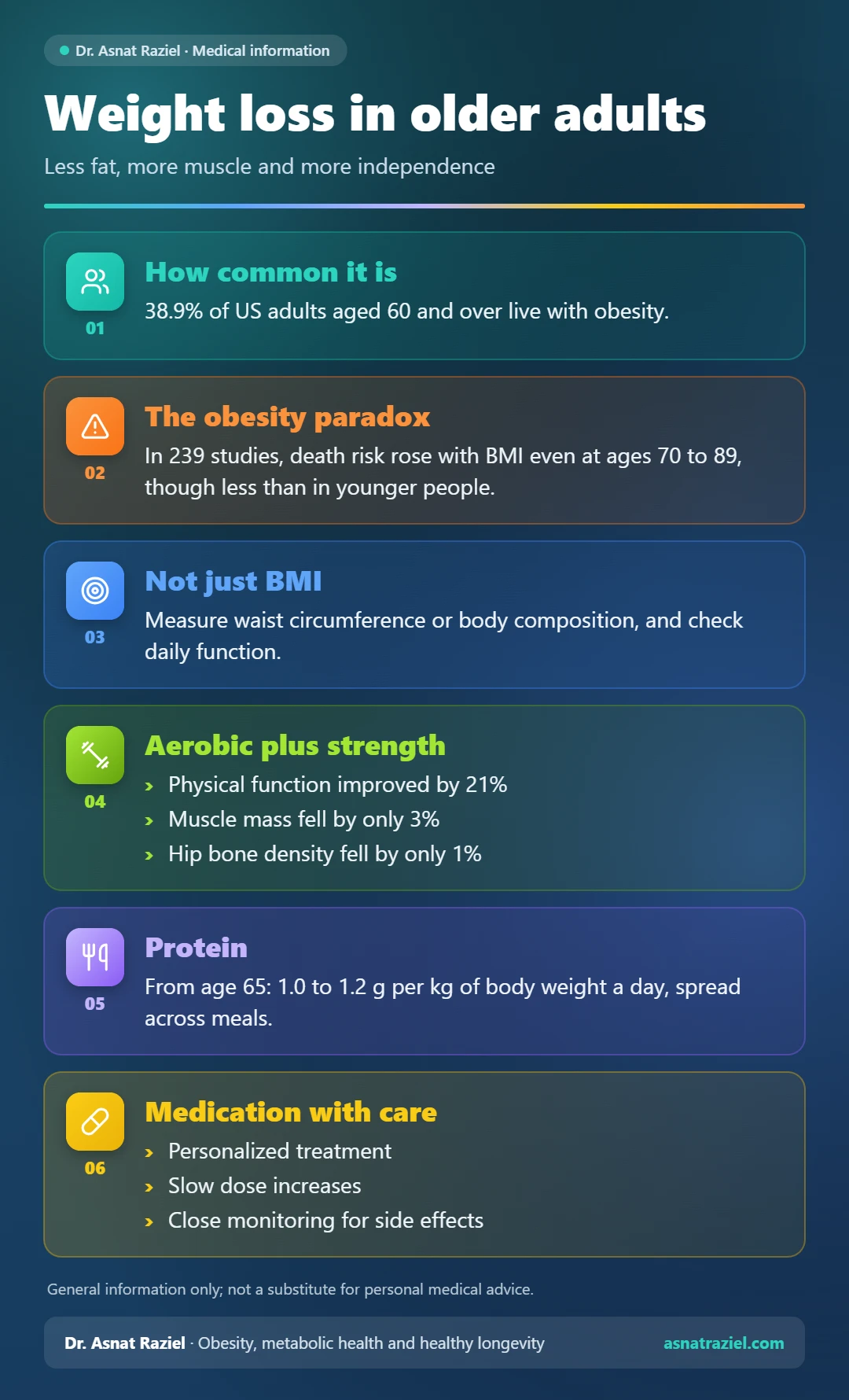
Weight loss in older adults raises quite a bit of confusion and concern. Obesity at this age is much more common than people tend to think. For example, according to data from the US Centers for Disease Control and Prevention, 38.9% of Americans aged 60 and over live with obesity. So the question arises: is it even right to treat obesity in older age, or might losing weight do harm?
Modern medicine gives a complex but clear answer. Yes, it is important to treat it, but differently. In older age, obesity looks different, behaves differently and requires precise thinking. Treatment needs to balance weight loss, muscle preservation and overall health.
Why does obesity behave differently in older age?
With age, the body goes through significant physiological changes. Muscle mass declines, metabolism slows, hormones change and physical activity decreases. Even when weight is stable, body composition changes: less muscle and more fat, especially visceral fat, meaning deep abdominal fat that wraps around the organs.
Because of these changes, obesity in older age is especially dangerous in terms of function. It is linked to lower fitness, impaired balance and falls. In addition, it worsens diabetes and heart failure and undermines independence. I wrote about abdominal fat and its dangers in detail in my article on visceral fat.
The “obesity paradox”: myth or reality?
The “obesity paradox” comes up again and again: the claim that in older age, slight excess weight protects your health. Today, however, it is clear that the picture is complex. A meta-analysis of 239 studies included more than 10 million participants. In this analysis, the risk of death rose with BMI even at ages 70 to 89, although less than in younger people.
That said, the real problem is not the number on the scale but body composition. An older adult with little muscle and a lot of abdominal fat is at high risk, even when their BMI is “reasonable.” That is why the Lancet Commission on clinical obesity recommends not relying on BMI alone for an individual. Instead, it suggests also measuring waist circumference or body composition, and assessing daily function in a way that takes age into account.
Weight loss in older adults and the risk of muscle loss
The central challenge is preventing sarcopenia, meaning the loss of muscle mass and strength. When sarcopenia and excess fat appear together, doctors call the condition sarcopenic obesity. The ESPEN and EASO consensus statement, from the European societies for clinical nutrition and for the study of obesity, defines it as a combination of excess fat and low muscle mass or muscle function. Their recommendation is to check muscle function first, and only then body composition.
Uncontrolled weight loss can worsen weakness and impair stability. In addition, it increases the risk of falls and fractures. Therefore, the goal is not rapid weight loss but better body composition: less fat, while preserving and even building muscle. You can read more about this in my article on why body composition matters more than weight.
What research teaches us about weight loss in older adults
One of the most important studies in this field was published in the New England Journal of Medicine. It included 160 older adults with obesity. All of the exercise groups lost about 9% of their body weight over six months, combined with a nutrition program. However, the functional results differed greatly between the groups.
Combining aerobic and strength training improved the physical performance test by 21%. By contrast, each type of training alone improved it by 14%. What’s more, muscle mass fell by only 3% in the combined group, compared with 5% with aerobic training alone. Hip bone density was also less affected: a 1% decline in the combined group versus 3% with aerobic training. In other words, the way you lose weight determines the outcome.
Medication: with caution, but without fear
In the past, doctors were wary of prescribing obesity medication in older age. Today, with growing experience and data, it is clear that treatment can be safe and effective at this age too. The condition is personalized treatment and proper management. Possible benefits include much better blood sugar control, less strain on the heart, better mobility and relief from joint pain.
On the other hand, it is important to pay close attention to doses, to increase them slowly and to ensure adequate nutrition. In addition, close monitoring for side effects is needed. You can read more about the available options in my overview of anti-obesity medications.
Nutrition and activity: the building blocks
In older age, a diet rich in high-quality protein is critical. Low protein intake is a major cause of muscle loss. That is why the PROT-AGE expert group recommends 1.0 to 1.2 grams of protein per kilogram of body weight per day for people aged 65 and over. It is best to spread the protein across your meals. You’ll find a practical guide in my protein intake guide.
At the same time, tailored strength training is the most effective tool for preserving function and independence. Moderate aerobic activity is also important. Without muscle strengthening, however, weight loss can do harm. You’ll find a comparison of the types of training in my article on aerobic vs. strength training.
Frailty, mental health and quality of life
Obesity in older age also affects mental and social health. Reduced mobility, pain and a sense of dependence harm quality of life. They can also lead to depression and social withdrawal. Conversely, the right treatment improves more than medical markers. It also improves self-confidence, daily function and social connection.
The bottom line: weight loss in older adults
Treating obesity in older age is not too “small” or too “big.” It is simply different. Weight loss in older adults calls for a gentle, multidisciplinary approach that respects age but does not give up on health. When the goal is function, independence and quality of life, not just a number on the scale, meaningful and safe results are possible. Ultimately, this is part of healthy aging.
The information in this article is general and does not replace personal medical advice.
References
Obesity and Severe Obesity Prevalence in Adults: United States, August 2021–August 2023
Definition and diagnostic criteria of clinical obesity
Definition and diagnostic criteria for sarcopenic obesity: ESPEN and EASO consensus statement
Aerobic or Resistance Exercise, or Both, in Dieting Obese Older Adults




