By Dr. Asnat Raziel, bariatric surgeon specializing in obesity treatment, metabolic health and healthy longevity; Director of the Multidisciplinary Center for Obesity Treatment, Assia Medical, Assuta Ramat HaChayal, Tel Aviv
Weight loss for women starts with a few questions worth asking before the first step. Are you planning a pregnancy? Are you breastfeeding? Which birth control do you use, and could you have PCOS? In this article, I focus on these practical decisions and on the treatments that have been proven in studies. For a look at how weight changes at each stage of life, see my overview of obesity in women across the life cycle.
Weight loss for women: why one size does not fit all
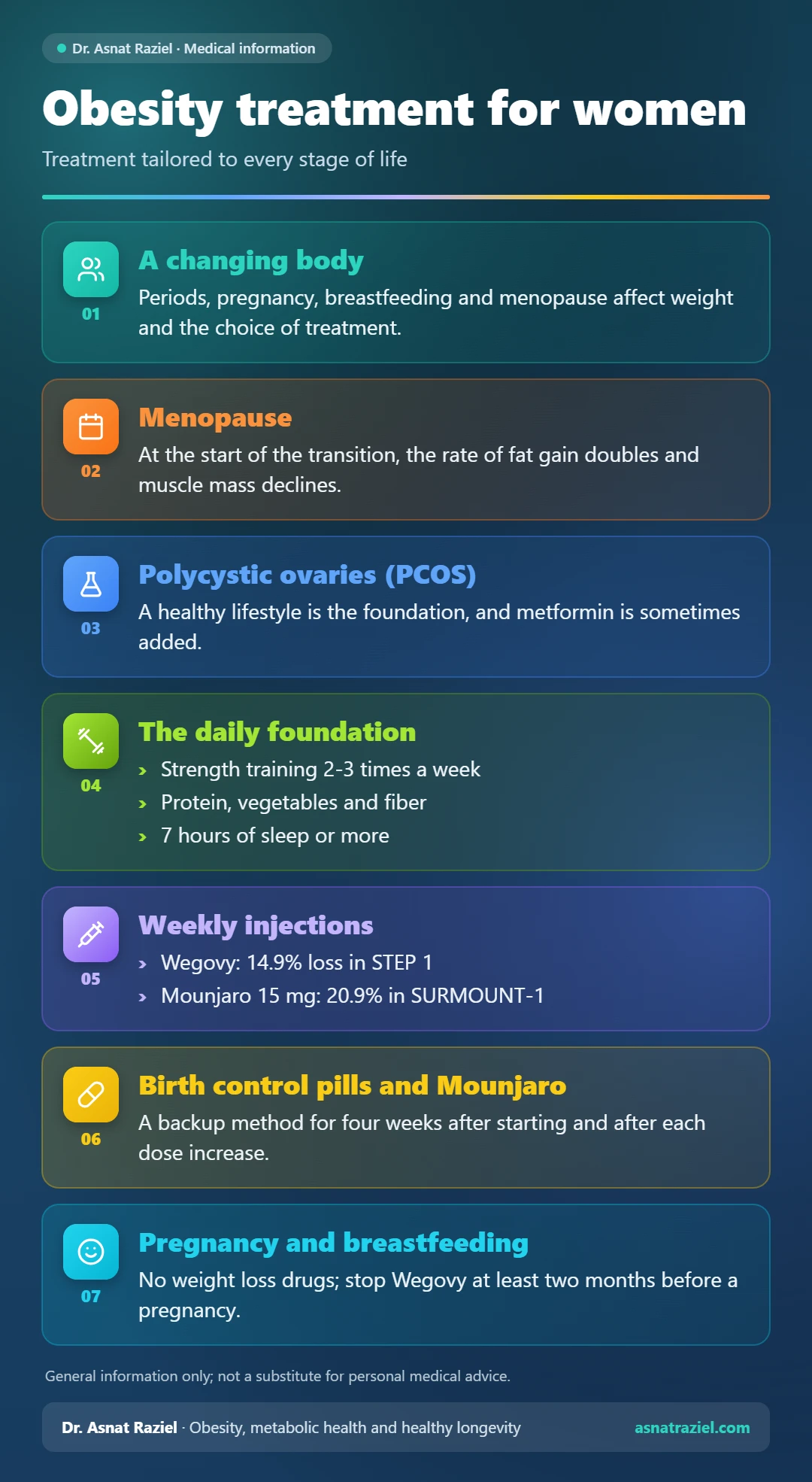
Obesity treatment for women needs to account for a body that changes throughout life: periods, pregnancy, breastfeeding and menopause. Hormones, family planning and birth control all affect the choice of treatment. That is why the same treatment can suit one woman and be wrong for another. Below, I explain what is unique about obesity in women, which treatments have been proven in studies, and what to check before you start.
Weight loss for women: what to know about your body first
In women, weight is closely tied to the hormonal system. First, polycystic ovary syndrome (PCOS) is very common and often comes with insulin resistance and weight gain. Second, pregnancy and breastfeeding change the body, and sometimes some of the weight stays. In addition, the way fat is distributed in the body changes during menopause. I covered all of these in more detail in my article on obesity in women across the life cycle.
Menopause: more fat, less muscle
The SWAN study followed women through menopause for years and measured their body composition. The researchers found that at the start of the transition, the rate of fat gain doubled, while muscle mass began to decline. The trend continued until about two years after the last period. In contrast, weight itself did not rise any faster. In other words, even when your weight is stable, your body is changing its composition. I wrote about this in my guide to obesity in menopause.
A woman’s heart
Heart disease is a leading cause of death in women too, but doctors often diagnose it late in women. Obesity, diabetes and high blood pressure increase the risk. That is why part of treatment is also checking blood pressure, blood sugar and blood lipids. You can read more in my article on heart disease in women and obesity.
Weight loss for women with PCOS
The international PCOS guideline highlights the metabolic side of the syndrome and the higher risk of pregnancy complications. In addition, it recommends a healthy lifestyle as the foundation of treatment and warns against weight stigma. Even moderate weight loss may improve cycle regularity and blood sugar control. In many cases, the doctor may also add a drug such as metformin. You will find the full details in my complete guide to PCOS.
Weight loss for women starts with habits: food, movement and sleep
Every treatment starts with habits. However, there is no single “diet for women” that suits everyone. The goal is a menu you can stick with, with enough protein, vegetables and fiber, and little processed food and few sugary drinks.
- Strength training two to three times a week: preserves muscle, especially in menopause.
- Walking and daily movement: burns more energy and improves insulin sensitivity.
- Seven hours of sleep or more: short sleep increases hunger and cravings for sweets.
- Dealing with stress and emotional eating: sometimes with the help of a psychologist or dietitian.
A good routine also includes time for yourself, such as a regular hobby or meeting friends. Some women are also interested in complementary medicine. In that case, it is important to tell your doctor about every herb or supplement, because some of them affect medications.
Obesity medications: what studies have shown
According to the US National Institute of Diabetes and Digestive and Kidney Diseases (NIDDK), medications are suitable for adults with a BMI of 30 or more. They are also suitable for a BMI of 27 or more with a weight-related medical problem, such as high blood pressure or type 2 diabetes. Today, the leading drugs are weekly injections:
- Wegovy (semaglutide): in the STEP 1 trial, participants lost an average of 14.9% of their body weight within 68 weeks, compared with 2.4% on placebo.
- Mounjaro (tirzepatide): in the SURMOUNT-1 trial, participants on the 15 mg dose lost an average of 20.9% of their body weight within 72 weeks.
There are also older drugs, and you can find an overview in the encyclopedia entry on anti-obesity medications. I have gathered all the options on my page about drug treatment for obesity. For people with severe obesity, bariatric surgery is still the most effective long-term treatment.
Weight loss for women: birth control, pregnancy and breastfeeding
This is a point every woman should know well. Mounjaro slows stomach emptying, so it may make birth control pills less effective. The manufacturer recommends adding a barrier method, or switching to a non-pill method, for four weeks after starting and after each dose increase.
In addition, women should not take weight loss drugs during pregnancy or while breastfeeding. According to the FDA label for Wegovy, women who are planning a pregnancy should stop the drug at least two months in advance. So it makes sense to plan treatment together with family planning. I covered this in detail in my guide to stopping weight loss drugs before pregnancy.
Weight loss for women: questions to ask your doctor first
Before you begin, it helps to come to your appointment with a few questions. Each one is based on the points above:
- Am I planning a pregnancy? If so, you should stop Wegovy at least two months in advance.
- Am I breastfeeding? Doctors do not recommend weight loss drugs while breastfeeding.
- Do I take birth control pills? With Mounjaro, you need a backup method for four weeks after starting and after each dose increase.
- Could I have PCOS? Treatment may include lifestyle changes and sometimes metformin.
- Do I meet the criteria for medication? A BMI of 30 or more, or 27 or more with a weight-related condition.
Clear answers to these questions make it much easier to choose the right path to weight loss for women at your stage of life.
How we build a personal treatment plan
At our clinic, we start with the full picture: weight history, menstrual cycle, pregnancies, medications and blood tests. Then we build a plan that combines a physician, a dietitian, and sometimes a psychologist and a physiotherapist. The approach is similar for men, but the emphasis is different, as I described in my article on obesity in men. Ultimately, the goal is health, function and quality of life, not just a number on the scale. I also wrote about this side of things for International Women’s Day, in my article on the five metabolic numbers every woman should know.
Bottom line
Weight loss for women works best when treatment is tailored to the stage of life: PCOS, pregnancy planning, breastfeeding or menopause. The foundation is nutrition, strength training, sleep and emotional support. Beyond that, the new drugs lead to significant weight loss, but they require attention to birth control and pregnancy planning. If you are unsure, it is worth consulting a doctor who specializes in obesity and building a personal plan.
The information in this article is general and does not replace personal medical advice.
Frequently asked questions
Can I take weight loss injections while breastfeeding?
No. NIDDK advises against using weight loss drugs while breastfeeding, so it is better to wait until you have finished.
How long before pregnancy should I stop Wegovy?
According to the FDA label, at least two months before the planned pregnancy. Coordinate the timing with your doctor.
Why does my weight change in menopause even if I am not eating more?
The SWAN study showed that at the start of the transition, the rate of fat gain doubled and muscle mass declined. That is why strength training and protein are especially important at this stage.
Does weight loss help with PCOS?
Yes. The international guideline sees a healthy lifestyle as the foundation of treatment, and moderate weight loss may improve your cycle and blood sugar control.
Sources
Changes in body composition and weight during the menopause transition
Prescription Medications to Treat Overweight & Obesity – NIDDK
Once-Weekly Semaglutide in Adults with Overweight or Obesity
Tirzepatide Once Weekly for the Treatment of Obesity
Can Zepbound (tirzepatide) be used with oral contraceptives or hormone replacement therapy?