By Dr. Asnat Raziel, bariatric surgeon specializing in obesity treatment, metabolic health and healthy longevity; Director of the Multidisciplinary Center for Obesity Treatment, Assia Medical, Assuta Ramat HaChayal, Tel Aviv
Your obesity specialist visit: what makes it different
At an obesity specialist visit, the specialist treats obesity as a chronic disease, not a problem of discipline. The specialist’s job is to understand why your body gains weight and what keeps it from losing it. Only then do they build a plan. That plan combines nutrition, activity, sleep, medication and, sometimes, surgery.
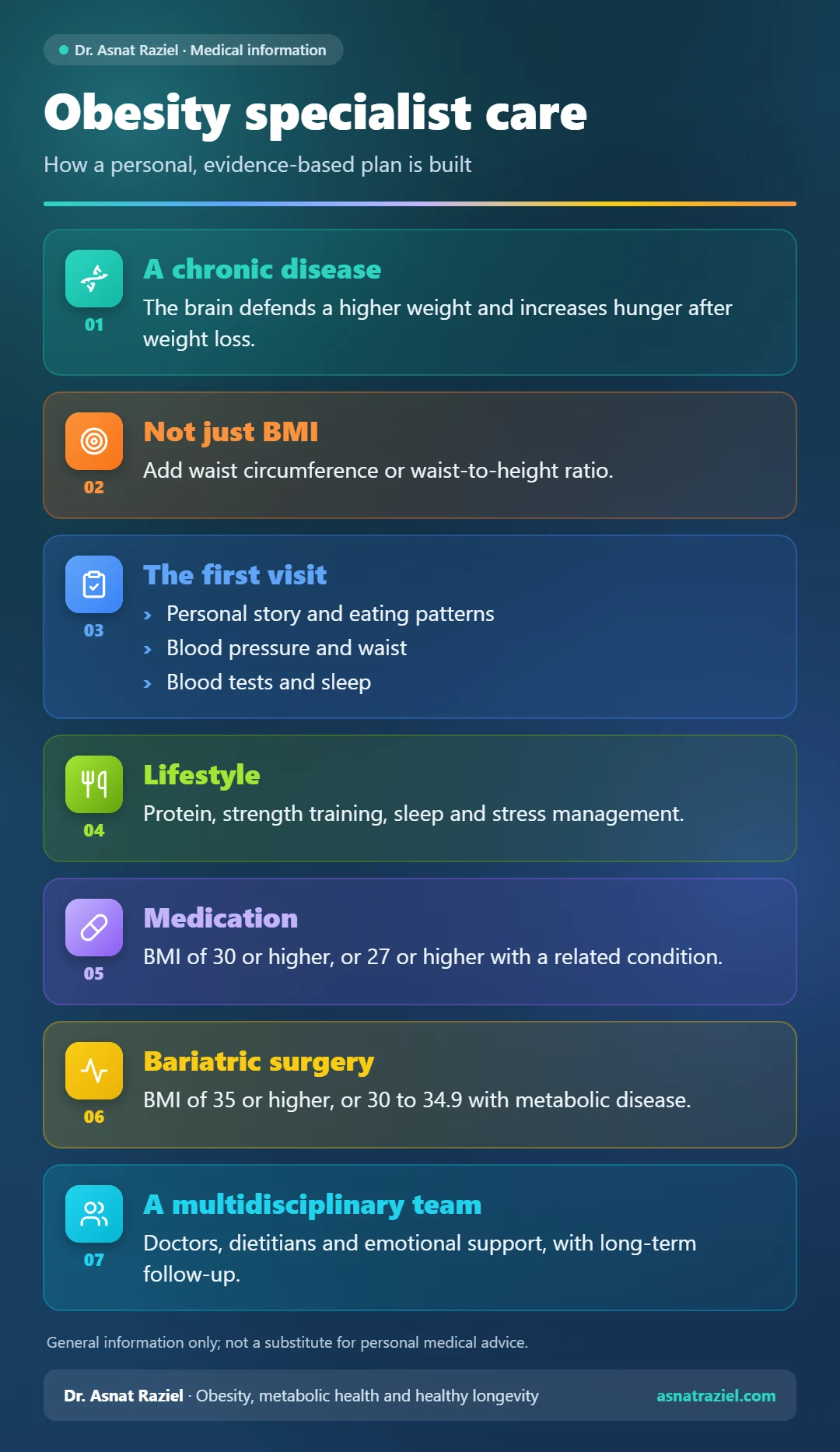
Most patients who come to me have already tried everything. They have dieted, lost weight and regained it. That is not a personal failure. It is the biology of obesity, in which the brain defends a higher weight and increases hunger after every loss.
This article walks you through the visit itself, step by step: what happens at the first meeting, which tests we do, how we build the plan and how to prepare. If you are still deciding whom to see, my article on how to choose an obesity doctor offers a practical list of questions.
If you would like to know who you will be meeting, you can read more about my work as an obesity specialist.
Obesity is a disease, not just a number
An international commission of 58 experts published a new definition of clinical obesity in The Lancet Diabetes & Endocrinology. According to the commission, BMI alone is not enough to diagnose disease in a specific person. That is why it recommends adding another measure, such as waist circumference or waist-to-height ratio.
The commission distinguishes between two conditions. In preclinical obesity, there is excess fat, but the organs still function well. In clinical obesity, by contrast, the excess already impairs function, for example in the liver, heart, joints or breathing during sleep. This distinction helps decide when to treat and how intensively.
The commission also highlights a sensitive point. Stigma and judgment toward people with higher weight are a major barrier to care. Therefore, health professionals need training on this issue as well. In practice, many patients put off seeing a doctor for years because of past experiences of criticism. A good clinic starts with respect.
The first obesity specialist visit
The first meeting is mostly about listening. I want to know the whole story, not just today’s weight.
Your personal story
We ask when the weight gain started and what was happening around that time, for example pregnancy, menopause, quitting smoking, trauma or a new medication. We also look at eating patterns, emotional eating, sleep, stress levels and family history.
Tests and measurements at an obesity specialist visit
We measure weight, waist circumference and blood pressure. Blood tests usually include glucose, HbA1c (average blood sugar over the past three months), blood lipids, and liver and thyroid function. Sometimes we add a sleep study or a body composition test. I have written about the tests that guide personalized treatment in my article on precision obesity medicine.
How the treatment plan is built
After the diagnosis, we build a plan together. It rests on research evidence, but we tailor it to the patient’s real life.
Lifestyle
A diet rich in protein, vegetables and fiber is the foundation. In addition, strength training helps preserve muscle mass during weight loss. Getting enough sleep and managing stress directly affect hunger. That is why they are part of the treatment, not an add-on.
Medication
According to the NIDDK, medications are generally suitable for adults with a BMI of 30 or higher, or 27 or higher with a weight-related condition. The new medications act on the hunger and fullness centers in the brain. However, choosing among them requires a good understanding of your medical conditions and your other medications.
Bariatric surgery
According to the guidelines of the international bariatric surgery societies, surgery is recommended at a BMI of 35 or higher, even without related conditions. Doctors can also consider it at a BMI of 30 to 34.9 when metabolic disease is present. Today, deciding between medication and surgery calls for careful judgment. I wrote about this in my article on bariatric surgery in the age of obesity drugs.
How success is measured
Success is not just the number on the scale. According to the NIDDK, losing 5% to 10% of body weight already improves blood sugar, blood pressure and triglycerides. So we also track waist circumference, blood tests, sleep quality and daily functioning. In addition, it is important to preserve muscle mass during weight loss. I wrote about these measures in detail in my article on measures of success in obesity treatment.
Why a multidisciplinary team
No single professional can handle every aspect of obesity alone. At our clinic, doctors, dietitians and mental health professionals work together. This way, every patient gets support for body, nutrition and behavior.
You can read more about this team approach on the page of the Assia Medical obesity treatment center (in Hebrew), which offers medical, nutritional and psychosocial support before and after treatment.
What is more, treatment does not end with weight loss. In the maintenance phase, follow-up continues, we adjust doses and we address early weight regain. I described these stages in my article on managing obesity treatment over the long term.
How to prepare for your obesity specialist visit
A little preparation makes the first meeting far more useful. First, bring recent blood tests and a list of the medications you take regularly. Next, write down your previous attempts to lose weight and what happened afterward. Then, think about when your weight gain started and what was going on in your life at the time, such as a pregnancy, menopause, quitting smoking or a new medication. It also helps to note your sleep, stress levels and any family history. Finally, come ready to talk openly, because the first obesity specialist visit is mostly about listening.
When to see an obesity specialist
It is worth seeking help when your weight affects your health or daily functioning, for example when you have diabetes or prediabetes, high blood pressure, fatty liver, sleep apnea or joint pain. People who have lost weight and regained it again and again will also benefit from a professional assessment.
How to choose an obesity specialist
It is important to check the doctor’s training and experience in the field. It is also worth asking whether they are familiar with all the options: lifestyle, medication, endoscopic treatments and surgery. A good specialist does not “sell” a single treatment. Instead, they explain the pros and cons of each path and share the decision with you.
The bottom line
An obesity specialist visit starts with an in-depth diagnosis, not with a diet. The specialist looks at your personal story, your measurements and your medical conditions, then builds an evidence-based plan. Treatment usually combines habits, medication and sometimes surgery, along with long-term follow-up.
The information in this article is general and does not replace personal medical advice.
Frequently asked questions
What is the difference between a dietitian and an obesity medicine doctor?
A dietitian specializes in nutrition. The doctor diagnoses disease, prescribes medication and refers for surgery. In good care, the two work together.
Do I have to start with medication?
No. Treatment is personalized. Some patients start by changing habits, while others combine medication from the start.
How long does treatment last?
Obesity is a chronic disease. That is why follow-up usually continues over time, even after you reach your goal.
What should I bring to an obesity specialist visit?
Recent blood tests, a list of your regular medications and a description of previous attempts to lose weight.
Sources
Definition and diagnostic criteria of clinical obesity
Prescription Medications to Treat Overweight & Obesity – NIDDK