By Dr. Asnat Raziel, bariatric surgeon specializing in obesity treatment, metabolic health and healthy longevity; Director of the Multidisciplinary Center for Obesity Treatment, Assia Medical, Assuta Ramat HaChayal, Tel Aviv
NAION and GLP-1 drugs: what’s the concern?
In recent years, the possible link between NAION and GLP-1 drugs has entered both medical and public conversation. NAION is a type of optic nerve damage, and its full name is non-arteritic anterior ischemic optic neuropathy. In plain terms, it is non-inflammatory, ischemic damage to the optic nerve. Ischemic means that the blood supply falls short. The event can cause sudden vision loss, so any mention of it next to a medication understandably causes anxiety.
Eye problems are not the only rare concern. I explain another one, vitamin B1 deficiency on GLP-1 drugs, in a separate article.
Still, as with many things in medicine, the challenge lies in interpreting the risk. In this article, I explain what we know as of October 2026. I also describe how to manage the risk without giving up effective treatment.
What is NAION?
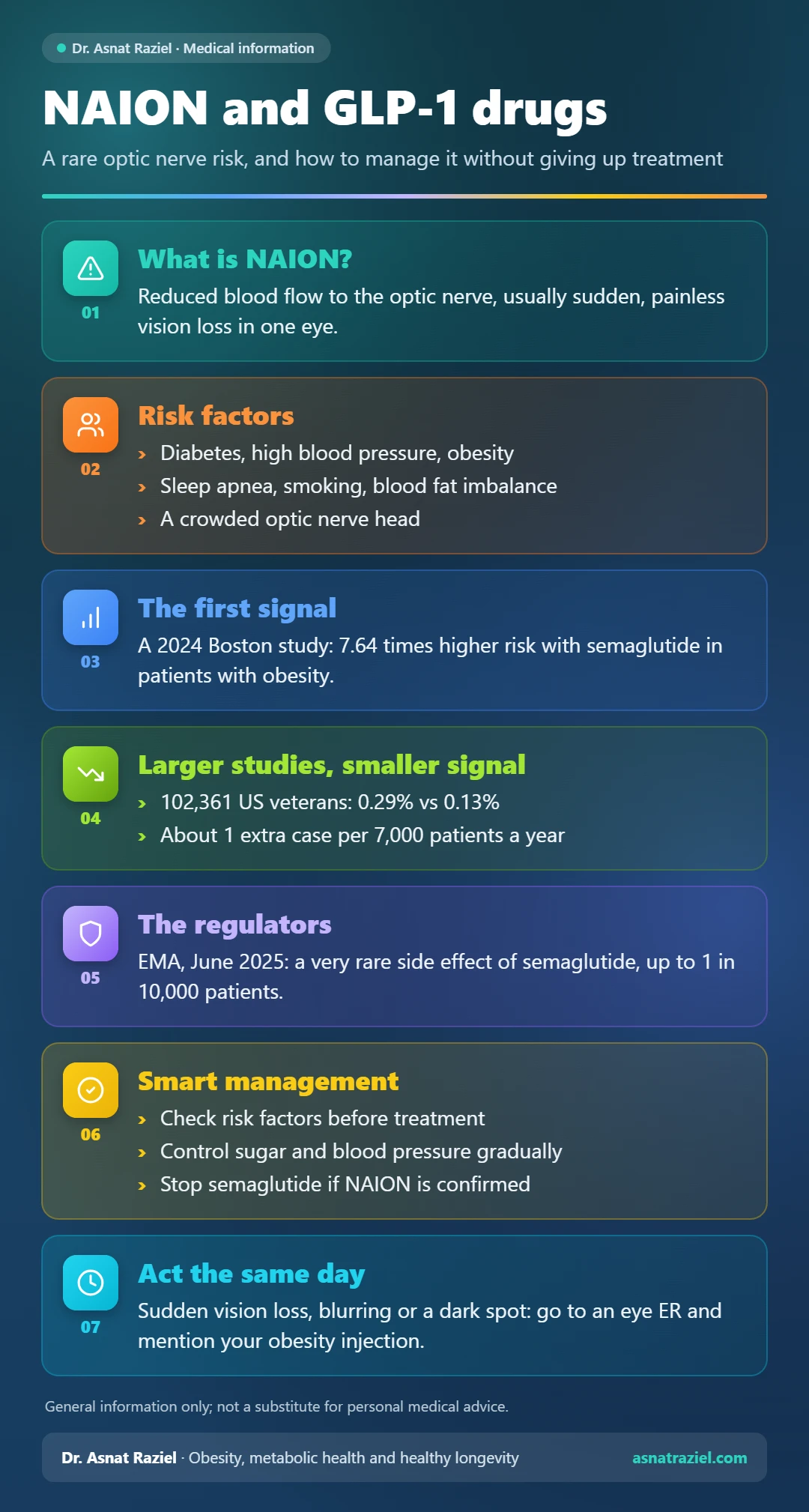
NAION is a disruption of the blood supply to the head of the optic nerve. It usually shows up as sudden, painless vision loss in one eye. People often notice it in the morning, after sleep. The cause is not inflammation or hardening of the large arteries, but a problem with blood flow in small vessels.
The condition is relatively rare, but doctors have known it well for decades. For example, a large multicenter study found a rate of 14.5 cases per 100,000 person-years among people with diabetes who took semaglutide.
Who is at risk of optic nerve damage?
NAION has clear, well-established risk factors. The main ones are:
- Diabetes
- High blood pressure
- Dyslipidemia, an imbalance of blood fats
- Obstructive sleep apnea
- Obesity
- Smoking
- A crowded structure of the optic nerve head
Each of these factors raises the risk on its own. When they add up, the risk grows. It is important to stress one point: people who take medications for obesity and diabetes already have high rates of these risk factors to begin with.
What the data on NAION and GLP-1 drugs show today
The link to these medications first came up in 2024. A study from Boston looked at 16,827 patients at a single eye clinic. Among patients with obesity, the risk of NAION was 7.64 times higher with semaglutide. However, the study was relatively small and looked at people who had been referred to eye specialists.
Even the authors were cautious. In the Mass General Brigham press release on that study, they stressed that it does not prove causality and called for larger, more diverse studies.
Since then, larger studies have accumulated, and the picture has softened. A study of 102,361 US veterans with diabetes found a 2.33 times higher risk with semaglutide compared with another medication. Even so, the absolute risk remained low: 0.29% versus 0.13%. In addition, a 2026 meta-analysis estimated one additional case for roughly every 7,000 patients per year.
Based on these data, the safety committee of the European Medicines Agency concluded in June 2025 that NAION is a very rare side effect of semaglutide. That category means up to one case in every 10,000 patients. The decision applies to Ozempic, Rybelsus and Wegovy. In other words, we can no longer say there is no link at all. On the other hand, the risk remains very rare.
Most of the data concern semaglutide. For other drugs in the same family, such as tirzepatide (Mounjaro), there is much less information. For this reason, I recommend the same precautions with them as well.
Why cause and effect is hard to establish
Most of the data come from observational studies and side effect reports. Studies like these are important for spotting safety signals. However, they do not prove causation. The population at risk of NAION overlaps heavily with the population living with obesity and diabetes. That makes it very hard to separate the effect of the drug from the effect of the disease itself.
One hypothesis involves sharp metabolic changes. Rapid control of blood sugar or a steep drop in blood pressure may temporarily affect blood flow in small blood vessels. Doctors know of a similar phenomenon with other treatments for diabetes and high blood pressure. You can read about gradually controlling blood pressure in my article on weight loss for high blood pressure.
Managing the risk of NAION on GLP-1 drugs
The right approach is not blanket avoidance, but smart, informed management. In my clinic, I follow a few principles:
- Ask in advance about eye symptoms and past vision problems.
- Identify risk factors for NAION before treatment begins.
- Bring diabetes and blood pressure under control gradually.
- Pay special attention to patients with sleep apnea.
- Refer immediately for an eye exam when vision drops suddenly.
In February 2026, the UK medicines regulator, the MHRA, issued similar guidance. According to the MHRA, anyone who experiences sudden vision loss needs an urgent referral to an ophthalmologist. If the diagnosis is confirmed, semaglutide should be stopped. Patients who have already had NAION in one eye need an especially careful assessment together with their ophthalmologist. Sometimes a different option is the better choice.
What to do if your vision changes suddenly
Sudden vision loss, new blurring or a dark spot in your field of vision call for medical attention the same day. Don’t wait for a routine appointment. Go to an eye emergency room and tell the staff that you take an injection for obesity. You and your doctor will then decide together whether to continue the medication, based on the diagnosis.
What patients need to hear
One of a doctor’s most important roles is to explain a rare risk in a calm, responsible way. These are the messages I share with my patients:
- The event is very rare.
- The baseline risk exists even without medication.
- The metabolic benefits of treatment are significant.
- Any sudden change in vision requires immediate attention.
Transparency builds trust. By contrast, unfounded fear leads people to avoid treatment that could save their lives. A broad overview of Wegovy side effects can help you see the full picture.
Weighing risks and benefits
When we look at NAION in a broader context, it is important to remember the other side of the scale. Untreated obesity clearly raises the risk of heart disease, stroke, advanced diabetes, fatty liver and several types of cancer. NAION, by contrast, is very rare, and careful monitoring can keep the risk in check.
The bottom line: NAION and GLP-1 drugs without fear
NAION reminds us that good medicine is built on balance, not fear. When it comes to NAION and GLP-1 drugs, the latest data point to a very rare risk, mainly with semaglutide. So we identify patients at risk, adjust treatment gradually and respond quickly to any change in vision. Ultimately, when we make decisions in the right context, we can protect both your eyesight and your overall health.
This article provides general information and is not a substitute for personal medical advice.
References
Risk of Nonarteritic Anterior Ischemic Optic Neuropathy in Patients Prescribed Semaglutide
Semaglutide and Nonarteritic Anterior Ischemic Optic Neuropathy