By Dr. Asnat Raziel, bariatric surgeon specializing in obesity treatment, metabolic health and healthy longevity; Director of the Multidisciplinary Center for Obesity Treatment, Assia Medical, Assuta Ramat HaChayal, Tel Aviv
Thiamine deficiency on GLP-1 drugs: why is it in the news?
Thiamine deficiency on GLP-1 drugs, meaning a lack of vitamin B1, made headlines after doctors from Sheba Medical Center in Israel published a report. They described patients who were taking obesity medications and developed severe neurological symptoms. The report caused public concern. Still, it is important to keep things in proportion. In this article, I explain what was actually published, who is at risk and how to prevent the problem.
What exactly did the Sheba team publish?
The Sheba research team reviewed the reporting database of the FDA, the US Food and Drug Administration, and also surveyed the medical literature. The researchers identified 15 cases of Wernicke encephalopathy. This is acute brain damage caused by severe thiamine deficiency. Of these cases, 13 came from the reporting database, one from the literature and one from the hospital itself.
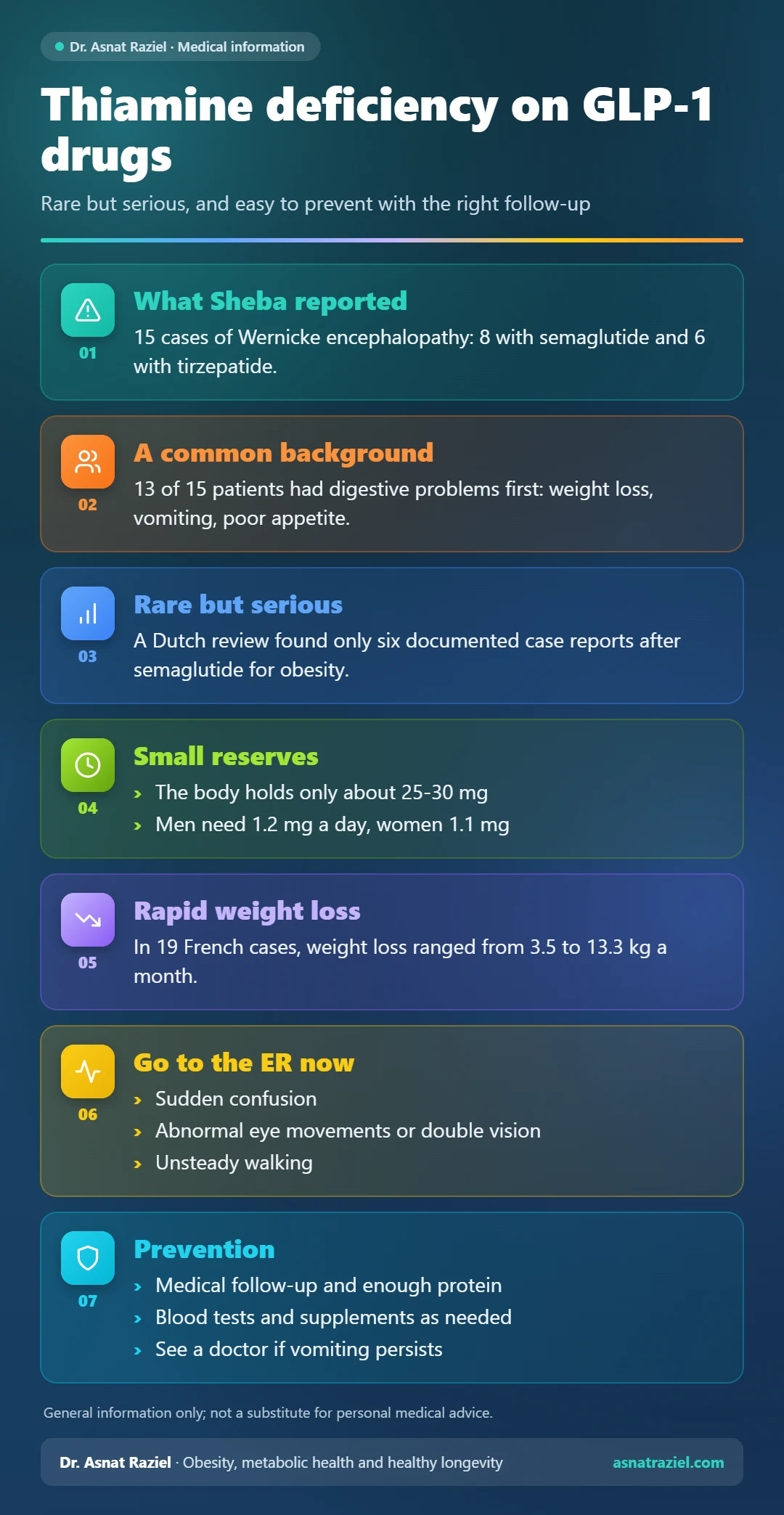
Most cases involved semaglutide, the active ingredient in Ozempic and Wegovy, which appeared in 8 of the 15 cases. In six cases, patients were taking tirzepatide, the active ingredient in Mounjaro. In addition, 13 of the 15 patients had digestive problems beforehand: weight loss, vomiting, loss of appetite or malnutrition. Sadly, 7 of the 11 patients with long-term follow-up were left with lasting neurological damage. That is why the researchers urge doctors to stay alert, especially when patients have severe digestive symptoms.
How rare is it?
The numbers are very small compared with the huge number of people using these medications. For example, a systematic review from the Netherlands, published in July 2026 in the journal Obesity, found only six documented case reports after semaglutide treatment for obesity. In all six cases, prolonged digestive symptoms and significant weight loss came first. In other words, this is a rare but serious complication. So it is worth knowing about, without panicking.
What is vitamin B1 and why is it essential?
Thiamine is a water-soluble vitamin. It helps the body produce energy from food and supports the brain, nerves and heart. According to the US National Institutes of Health, the body holds only about 25-30 mg of thiamine. Its half-life is also short. As a result, you need a steady supply from food. The recommended intake for adults is 1.2 mg a day for men and 1.1 mg a day for women. Good sources include whole grains, meat, fish and fortified bread or breakfast cereals.
How does thiamine deficiency develop on GLP-1 treatment?
Thiamine deficiency is not a direct result of the medication itself. It usually stems from a combination of circumstances:
- A sharp drop in food intake over a long period.
- Prolonged vomiting or nausea.
- A monotonous, poor diet.
- Poor absorption in the digestive tract, for example after bariatric surgery.
- Heavy drinking.
In the published cases, the same picture kept repeating: rapid weight loss and very little food over a long time, without nutritional support. In a French analysis of 19 cases, for example, weight loss ranged from 3.5 to 13.3 kg a month over three to six months. Moreover, 68% of the cases involved nausea, vomiting or reduced eating.
Do weight loss drugs cause the deficiency?
GLP-1 medications don’t “drain” vitamins from the body. However, they reduce appetite and slow stomach emptying. When you eat very little, and especially when you are vomiting, your small thiamine stores run out quickly. A 2026 clinical review reached a similar conclusion: the risk of nutritional deficiencies during treatment comes from several factors together, and it varies from person to person. Most deficiencies reported so far have been mild. On the other hand, in vulnerable patients they can be significant, for example after bariatric surgery, in older age or with prolonged nausea and vomiting.
Who should pay special attention?
Most patients are not at real risk. Even so, some groups deserve closer monitoring. First, people who have had bariatric surgery, because their absorption has changed. Second, people who have had nausea or vomiting for weeks. Older adults, people who drink alcohol regularly and those on a very limited diet also belong on this list. According to the US institute, people with diabetes are at risk too. For these patients, it is wise to plan blood tests and a suitable supplement in advance.
Warning signs of thiamine deficiency
In most cases, the deficiency develops gradually. Possible early signs include:
- Unexplained fatigue and weakness.
- Dizziness.
- Numbness or weakness in the arms and legs.
- Confusion, forgetfulness or poor concentration.
By contrast, some signs require an immediate trip to the emergency room: sudden confusion, abnormal eye movements or double vision, and unsteady walking. These are the signs of Wernicke encephalopathy. The Dutch review stressed that early intravenous thiamine is essential to prevent permanent damage. When doctors catch the problem in time, diagnosis is simple and treatment works quickly and well.
How to prevent thiamine deficiency on GLP-1 drugs
Prevention is simple, and it is part of any responsible treatment:
- Regular medical follow-up throughout drug treatment for obesity.
- Eating enough, with plenty of protein, even when your appetite is low.
- Periodic blood tests, as your doctor recommends.
- A vitamin supplement when needed, especially during periods of reduced eating.
- Seeing a doctor when vomiting or nausea lasts more than a few days.
A review in clinical nutrition recommends checking thiamine levels in high-risk patients, along with vitamin D, vitamin B12, iron and folic acid. At our clinic, a dietitian supports patients throughout the process. You’ll find a practical guide in my article on nutrition for weight loss injections. It is also important to get enough protein.
The bottom line: thiamine deficiency and GLP-1 treatment
The published cases are rare and unusual. When drug treatment for obesity is done responsibly, with professional support, follow-up and attention to nutrition, it is safe and effective. Ultimately, thiamine deficiency on GLP-1 drugs is preventable, and when caught early, it is easy to treat. The key message for the public is not fear but understanding: weight loss is a medical process that needs supervision, not a “magic treatment” you do on your own.
This article provides general information and is not a substitute for personal medical advice.
References
Semaglutide-induced Wernicke encephalopathy: a comprehensive analysis




