By Dr. Asnat Raziel, bariatric surgeon specializing in obesity treatment, metabolic health and healthy longevity; Director of the Multidisciplinary Center for Obesity Treatment, Assia Medical, Assuta Ramat HaChayal, Tel Aviv
Mounjaro tips: why side effects happen
These Mounjaro tips start with one simple idea: the same mechanism that lowers your weight also causes the discomfort. Mounjaro contains tirzepatide and works on two hormone pathways: GLP-1 and GIP. As a result, it reduces appetite, slows stomach emptying, improves pancreatic function and increases insulin sensitivity.
These changes lead to impressive weight loss. However, they are also the main source of side effects, especially in the first weeks and when the dose goes up. In this article, I focus on the practical side: dose adjustments, a missed dose, helpful medications and the situations that need a doctor. For relief of nausea and other digestive symptoms through food, read my guide on easing Mounjaro nausea. For a full review of all side effects, see the complete guide to Mounjaro side effects.
A slower stomach: the key to understanding side effects
The main effect is slower stomach emptying. Thanks to it, fullness lasts longer. On the other hand, it also puts a load on the digestive system. In some patients the gut is especially sensitive to the change, mainly at the start. In most cases the body adapts gradually, and the side effects fade.
How common are the side effects?
According to the FDA prescribing information, these are the rates in the obesity trials at doses of 5 to 15 mg:
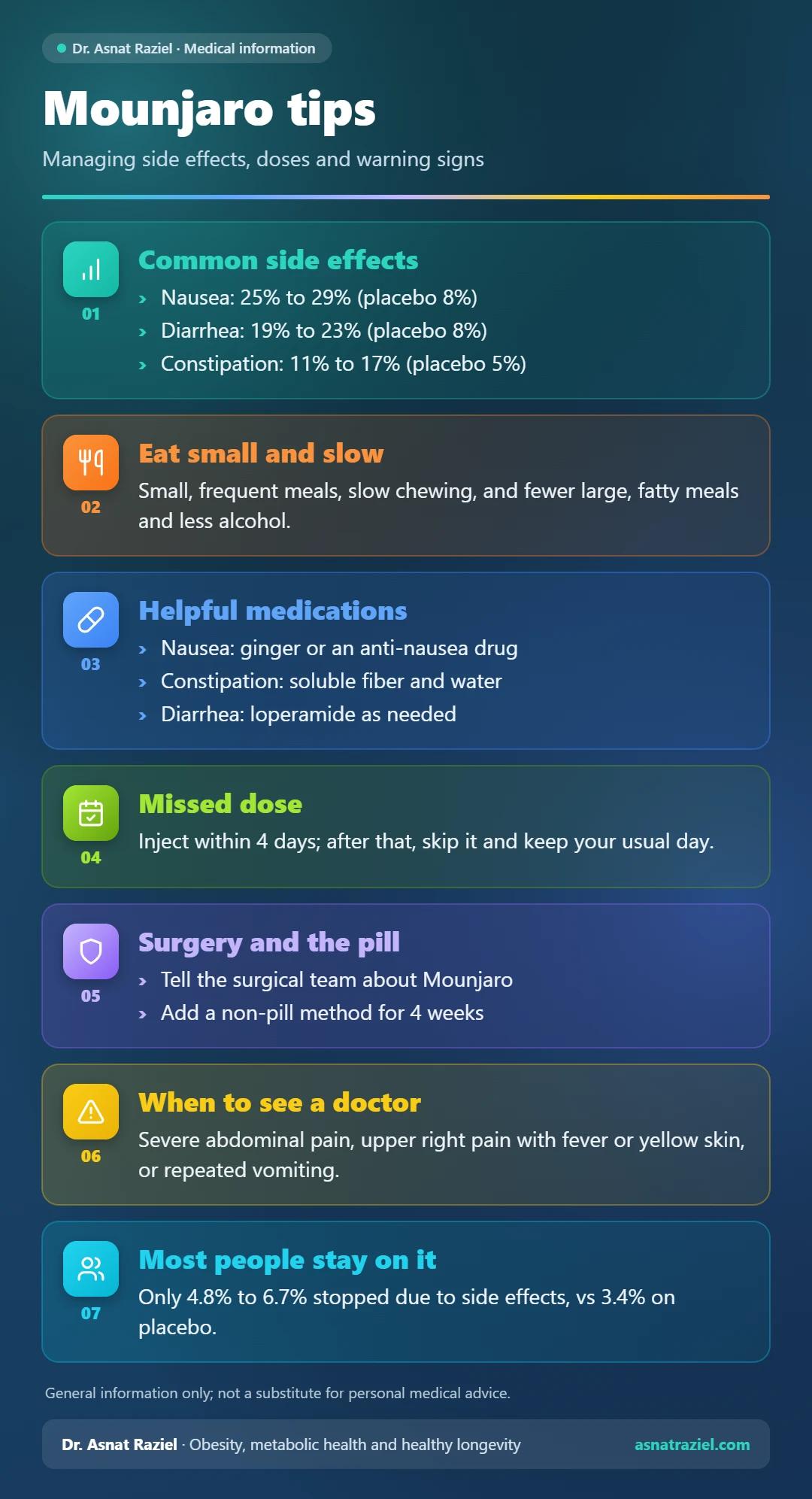
- Nausea: 25% to 29%, compared with 8% on placebo.
- Diarrhea: 19% to 23%, compared with 8%.
- Constipation: 11% to 17%, compared with 5%.
- Vomiting: 8% to 13%, compared with 2%.
- Heartburn and indigestion: 9% to 10%, compared with 4%.
Most side effects are mild to moderate. In addition, there are less common ones such as gas, bloating, fatigue and hair loss.
Nausea and fullness: what makes them worse
Nausea is the most common side effect. Some patients feel full early even after a light meal, and sometimes they go off food. In some cases, vomiting or abdominal pain appears. The main trigger is eating too fast, or too much for the “new” stomach. In addition, eating under stress, fizzy drinks and fatty foods all add to the discomfort. A fast dose increase also stretches out the adjustment period.
Diarrhea and constipation: two sides of the same effect
The drug also affects peristalsis, the movement of the bowel. That is why some patients report diarrhea in the days after the injection, while others report constipation. In most cases this is temporary and passes as the body adapts.
Practical Mounjaro tips for everyday side effects
First, small and frequent meals. Slow chewing and mindful eating take the load off the stomach. The joint advisory of four American societies recommends small meals at regular times and avoiding large, fatty meals. Moreover, it recommends cutting down on alcohol, because it may worsen nausea and heartburn.
- On days when the dose goes up, a soft or liquid diet for a short time may help.
- For nausea: measured sips through the day, ginger or herbal teas. In severe cases, an anti-nausea medication such as Travamin (dimenhydrinate, sold in Israel), after talking to your doctor.
- Some patients feel better when they inject in the evening.
- For constipation: a gradual increase in fiber, for example a soluble fiber supplement such as Benefiber, with plenty of water.
- For diarrhea: loperamide as needed, and probiotics to support the gut flora.
If diarrhea goes on, it is important to rule out nutritional deficiencies and check whether supplements are needed. For more menu ideas, see my guide to eating on weight loss injections.
Adjusting the dose: the most important tool
When a side effect is significant, it is better not to raise the dose. Sometimes it makes sense to go back to the previous dose for a while. Patients with a sensitive gut usually benefit from an especially slow climb between doses. And what if you forget an injection? According to the label, you inject as soon as possible if up to 4 days have passed. If more than 4 days have passed, you skip the dose and continue on your usual day.
Mounjaro tips for the first months: a checklist
Here is a short checklist I go over with my patients, based on the label and the guidance above:
- Do not rush: with a significant side effect, stay on the current dose instead of going up.
- Missed dose: inject within 4 days; after that, skip it and keep your usual day.
- Birth control pills: add a non-pill method for 4 weeks after starting and after every dose increase.
- Surgery: always tell the surgical team that you are on Mounjaro.
- Warning signs: know them in advance, as listed in the next section.
When to see a doctor
Most side effects are mild. Even so, managing them also means knowing the warning signs. These situations need prompt medical attention:
- Severe, persistent abdominal pain, sometimes spreading to the back: possible pancreatitis.
- Pain in the upper right abdomen, fever or yellowing of the skin: a possible gallbladder problem.
- Repeated vomiting or diarrhea with signs of dehydration. Such dehydration may harm the kidneys.
In addition, two practical situations need attention. Before surgery or anesthesia, it is important to tell the team about the treatment, because of the risk of inhaling stomach contents. To learn more, read about GLP-1 drugs before surgery. Also, Mounjaro may weaken birth control pills. That is why the label recommends an additional, non-pill method for 4 weeks after starting treatment and after every dose increase.
Most patients manage to stay on treatment
Side effects are common, but only a few people stop because of them. In the FDA label, 4.8% to 6.7% of patients stopped treatment because of side effects, compared with 3.4% on placebo. In addition, in the SURMOUNT-5 trial, 2.7% of patients on Mounjaro stopped because of digestive side effects, compared with 5.6% on Wegovy. The SURPASS program in people with diabetes, including SURPASS-1 and SURPASS-2, also showed that most digestive side effects were mild to moderate.
The key is close medical support: a gradual dose increase, tracking symptoms, nutrition guidance and spotting problem foods early. A patient who understands how the drug works will get a lot out of it and will be able to stick with it.
The bottom line on these Mounjaro tips
Mounjaro offers significant therapeutic power. When side effects are managed well, it becomes an effective, stable and safe tool. So handling side effects is part of the treatment, not an obstacle along the way. Ultimately, with thoughtful use and medical follow-up, temporary discomfort becomes a chance to get to know your body and build new habits.
This article is general information and does not replace personal medical advice.
References
Tirzepatide Once Weekly for the Treatment of Obesity
ZEPBOUND (tirzepatide) – Prescribing Information
Tirzepatide as Compared with Semaglutide for the Treatment of Obesity
Tirzepatide versus Semaglutide Once Weekly in Patients with Type 2 Diabetes