By Dr. Asnat Raziel, bariatric surgeon specializing in obesity treatment, metabolic health and healthy longevity; Director of the Multidisciplinary Center for Obesity Treatment, Assia Medical, Assuta Ramat HaChayal, Tel Aviv
GLP-1 before surgery: what did the new study find?
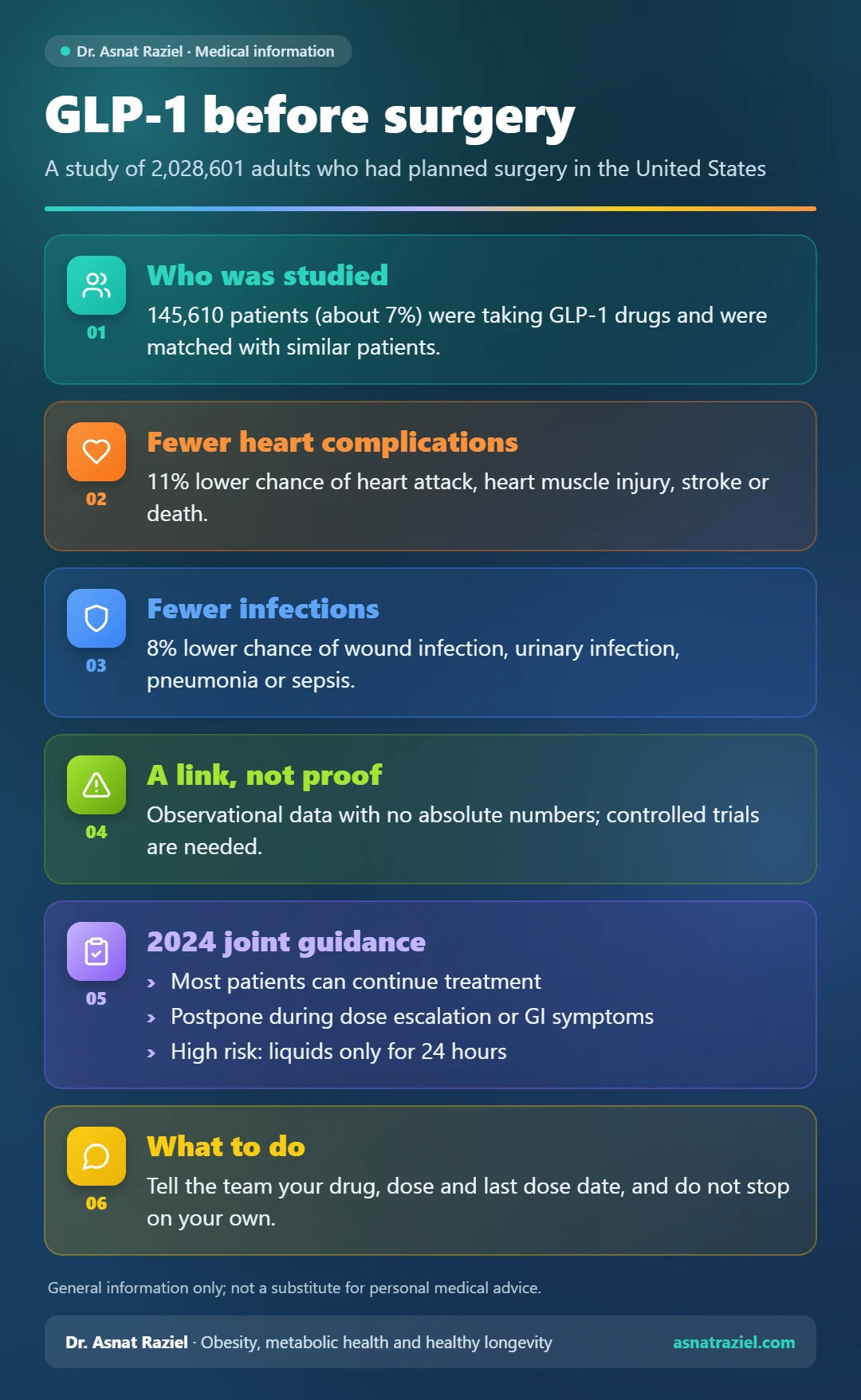
Patients who take GLP-1 before surgery ask me again and again: Can I keep taking it? And is the drug dangerous under anesthesia? A new American study adds an encouraging angle to this conversation. The researchers examined the medical records of more than two million adults who had planned surgery. In patients who took drugs from the GLP-1 family, the chance of serious heart complications was 11% lower. In addition, the chance of infections after surgery was 8% lower.
Why does surgery put a strain on the heart?
Surgery is a stressful event for the body. It triggers inflammation and changes blood pressure, blood sugar and blood flow. All of these changes can raise the risk of heart complications and infections. What’s more, obesity and diabetes raise this risk even before the patient enters the operating room.
GLP-1 drugs are used to treat type 2 diabetes and obesity. The family includes, for example, semaglutide, the active ingredient in Ozempic and Wegovy. Large studies have already looked at how semaglutide protects the heart, as well as real-world data on Mounjaro and the heart. However, the question of what happens around the surgery itself remained open.
How did the researchers study this?
Dr. Josephine Tolan, an anesthesiologist at McGovern Medical School at UTHealth Houston, presented the study. She presented it at ANESTHESIOLOGY 2026, the annual meeting of the American Society of Anesthesiologists (ASA), as described in the society’s official announcement.
The researchers used the Epic Cosmos database. This is a database of de-identified electronic medical records, and it covers more than 1,700 hospitals and 40,000 clinics in the United States. The study included 2,028,601 adults aged 18 and over. All of them had planned surgery that lasted more than 60 minutes, and they stayed in the hospital for at least 24 hours. The operations took place between January 2016 and December 2024.
Of these, 145,610 patients (about 7%) were taking GLP-1 drugs. Next, the researchers matched each of these patients with similar patients who were not taking the drugs, and compared the groups.
The results: GLP-1 before surgery and fewer complications
Serious heart complications
In patients who took GLP-1 drugs, the chance of serious cardiovascular complications was 11% lower. The definition included heart attack, heart muscle injury, stroke or death.
Infections after surgery
At the same time, the chance of infections after surgery was 8% lower. The definition included surgical wound infection, urinary tract infection, pneumonia and sepsis (a severe, body-wide response to infection).
It is important to know that the press release did not publish absolute numbers. In other words, it does not include figures such as “how many patients out of 100 had a complication” in each group. Therefore, it is hard for now to judge the size of the actual benefit for each patient.
Why might this happen?
The researchers suggest several possible explanations. First, the drugs help with weight loss, lower blood pressure and blood sugar control. Second, they reduce inflammation and may also protect the heart muscle under stress. As for infections, the main explanation is good blood sugar control. High blood sugar weakens the immune response, so good control may help protect against infection.
Study limitations: a link, not proof
This is an observational study. The researchers analyzed existing records and did not randomly assign patients to groups. Therefore, the study shows a link, but it does not prove that the drug itself reduced complications. Other factors may explain part of the difference.
Dr. Tolan stresses this point too: “These results are encouraging, but we need more research to determine if the medications themselves are driving these benefits and how best to manage them before and after surgery.” In addition, the announcement does not point to a full paper in a scientific journal, and conference data may change later.
Should you stop GLP-1 before surgery?
For years, the main concern was actually anesthesia. These drugs slow stomach emptying, so a full stomach may increase the risk of inhaling stomach contents into the lungs. In 2024, five professional societies published joint guidance on the safe use of these drugs around surgery.
According to the guidance, most patients can continue treatment before planned surgery. On the other hand, it is advisable to postpone planned surgery during the dose-escalation phase, or when there is nausea, vomiting, abdominal pain or constipation. For high-risk patients, for example those on high doses, the guidance recommends a liquid-only diet for the 24 hours before the procedure. Ultimately, the decision is personal and is made together with the anesthesiologist, the surgeon and your physician.
GLP-1 before surgery: practical steps
Tell the team. Before any surgery, give the name of the drug, the dose and the date of your last injection or pill.
Do not stop on your own. Stopping suddenly can disrupt blood sugar control. Instead, get instructions from your care team.
Report symptoms. Nausea, vomiting or constipation before surgery are important information for the anesthesiologist. It also helps to know the side effects of weight loss drugs and the ways to ease them.
Arrive strong for surgery. Protein, movement and preserving muscle mass during weight loss all support recovery. If you are just starting treatment, a guide to starting obesity medication can help you prepare.
The bottom line
This large study suggests that taking GLP-1 before surgery is linked to fewer heart complications and fewer infections. However, it does not prove cause and effect, and controlled trials are needed. Meanwhile, the practical message is simple: do not stop treatment on your own, and plan your surgery together with your care team.
This article provides general information and is not personal medical advice. Before making any change to your treatment, consult your physician.
References
GLP-1 Drugs Linked to Lower Risk of Serious Heart-Related Complications and Infections After Surgery
GLP-1 drugs linked to lower risk of serious heart-related complications and infections after surgery




