By Dr. Asnat Raziel, bariatric surgeon specializing in obesity treatment, metabolic health and healthy longevity; Director of the Multidisciplinary Center for Obesity Treatment, Assia Medical, Assuta Ramat HaChayal, Tel Aviv
Moroccan carrot salad: simple, colorful and nourishing
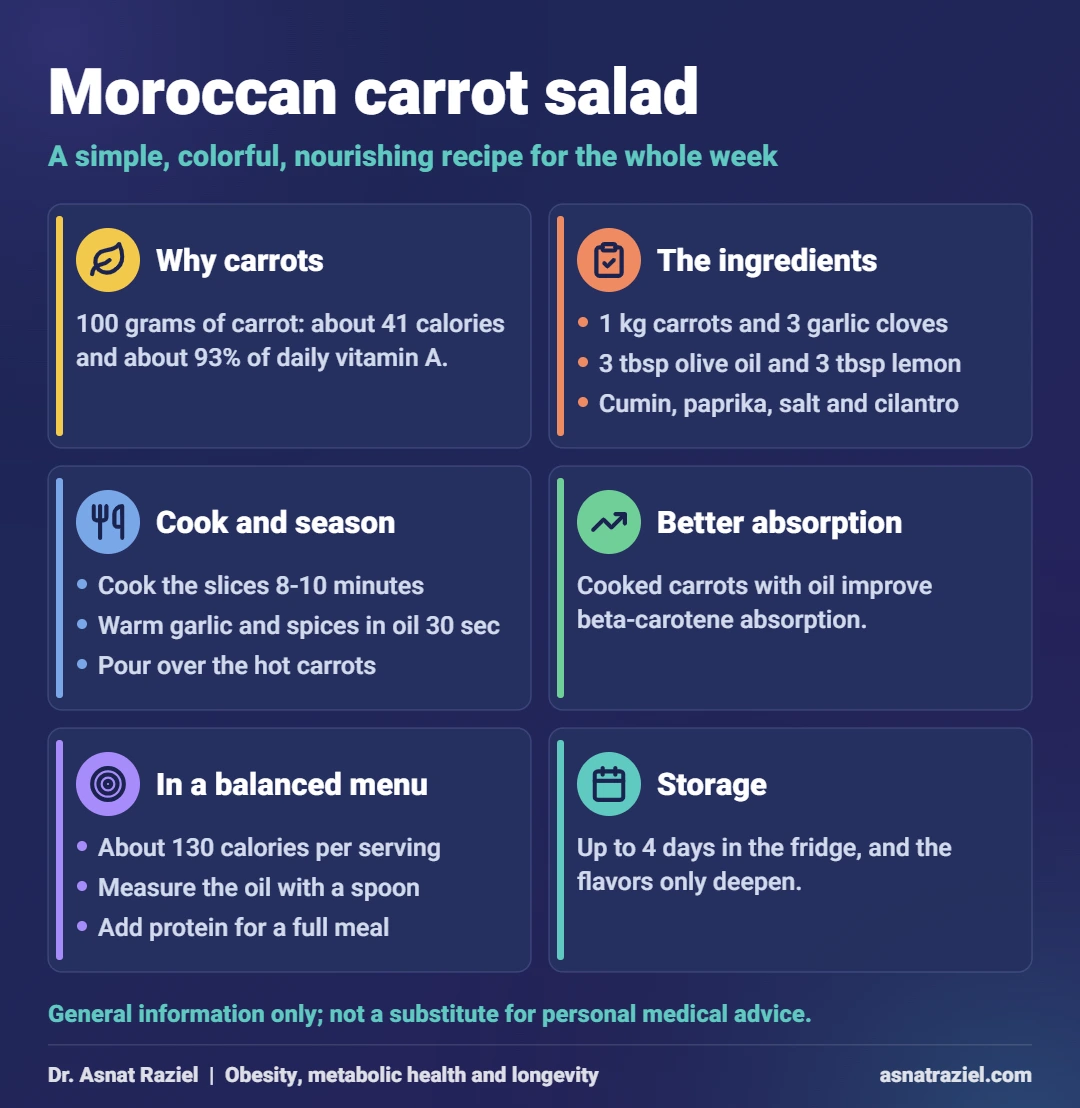
Moroccan carrot salad is one of the recipes I most love to recommend to my patients. It is based on a cheap, easy-to-find vegetable, it is low in calories, and it keeps well in the fridge for several days. In addition, cooking the carrots with olive oil helps the body absorb their beta-carotene. In this article you will find the full recipe, plus a short explanation of why it fits a balanced menu.
Why carrots?
The carrot is a root vegetable with high nutritional value relative to its calories. For example, 100 grams of raw carrot contain only about 41 calories. Yet the same amount provides about 93% of the recommended daily intake of vitamin A, mainly in the form of beta-carotene. The body converts beta-carotene into vitamin A as needed, so it matters for vision, skin and the immune system.
Carrots also contain other antioxidants. A review of the plant compounds in carrots describes four main groups: carotenoids, polyphenols, polyacetylenes and vitamin C. According to the review, these compounds have antioxidant and anti-inflammatory activity. Interestingly, color matters too: orange carrots are rich in beta-carotene, while purple carrots are rich in anthocyanins.
Carrots and weight loss
A medium carrot provides about 2.6 grams of dietary fiber, and most of it is water. Therefore, according to an article on carrots and weight loss, it lets you eat a large volume of food for fewer calories. A serving of vegetable salad at the start of a meal may also bring on fullness sooner. Of course, carrots alone will not make you lose weight, but they are a good tool within a balanced menu. I wrote about the importance of fiber for blood sugar balance in my article on dietary fiber and insulin sensitivity.
Moroccan carrot salad: cooked or raw?
In the Moroccan salad we cook the carrots, and that has a nutritional advantage. A trial by researchers at the Hebrew University of Jerusalem tested beta-carotene absorption from cooked versus raw carrots. The body absorbed about 65% of the beta-carotene from carrots that were cooked and pureed, compared with about 41% from raw, chopped carrots. In addition, a lab study of carrot digestion found that cooking oil raised the availability of beta-carotene from 27% to 39%.
In other words, the cooking and the olive oil in this salad work together. On the other hand, raw carrots are also an excellent choice, because they are crunchy, filling and convenient as a snack. So it is worth alternating between the two.
Moroccan carrot salad: the ingredients
These amounts make about 6 servings:
- 1 kilogram carrots, peeled and cut into half-centimeter slices
- Three garlic cloves, crushed or finely chopped
- 3 tablespoons olive oil
- 3 tablespoons fresh lemon juice (about one lemon)
- 1 teaspoon ground cumin
- 1 teaspoon sweet paprika
- Half a teaspoon hot paprika or 1 teaspoon harissa (to taste)
- Half a teaspoon salt and a little black pepper
- A handful of chopped cilantro or parsley
How to make Moroccan carrot salad
- First, bring water to a boil in a pot and cook the carrot slices for 8-10 minutes. The carrots should soften but still keep a little bite.
- Next, drain the carrots and transfer them to a bowl.
- Meanwhile, heat the olive oil in a pan over low heat. Add the garlic and the spices, and fry for only about half a minute, until fragrant.
- Pour the oil and spice mixture over the hot carrots, and add the lemon juice, salt and pepper.
- Mix well, and then let the salad cool in the fridge for at least an hour.
- Finally, sprinkle the chopped herbs on top before serving.
You can keep the salad in a closed container in the fridge for up to 4 days. In fact, the flavors only deepen after a day.
Tips for a healthier Moroccan carrot salad
By a rough calculation, one serving of this recipe contains about 130 calories. Most of the calories come from the olive oil, so measure it with a spoon rather than pouring from the bottle. If you want a more filling dish, add a cup of cooked chickpeas or cubes of salty cheese. That way the salad becomes a light meal with protein.
You can also vary the colors. For instance, replace some of the orange carrots with purple or yellow ones, if you find them at the market. Each color brings different antioxidants, and the plate looks especially inviting. Alternatively, add a pinch of cinnamon for a slightly sweet version in the style of a Moroccan home kitchen.
You can also serve it alongside chicken or fish. For example, it goes very well with oven-roasted chicken thighs. If you are looking for a fresh leafy salad, also try the salad for longevity I published on this site. The Moroccan salad also suits a holiday table, next to Passover recipes.
This salad also fits a festive table. You will find more ideas in my guide to healthy Passover recipes.
Moroccan carrot salad during medication treatment
Patients who receive medication for obesity usually eat small portions. That is why every portion needs to be nourishing. Cooked carrots are soft and easy to digest, so they also suit people with mild nausea. However, people with heartburn may want to reduce the hot spices. Beyond that, planning meals ahead helps quiet food noise, the constant thoughts about food.
Good to know
Eating very large amounts of carrots over a long time can tint the skin a yellow-orange shade. This is called carotenemia. It is not dangerous, and it fades when you cut back. Also, cooking increases the sweetness of carrots. So people with diabetes can enjoy them in a reasonable portion, alongside protein and other vegetables.
And what about pets? Many people give their dog a raw carrot as a treat. Before changing a pet’s diet, it is best to consult a vet.
The bottom line
Moroccan carrot salad is a tasty, inexpensive way to add vegetables, fiber and beta-carotene to your menu. Moreover, the cooking and olive oil even improve beta-carotene absorption. Ultimately, this salad is a small part of a healthy lifestyle that also includes movement, sleep and a varied diet.
The information in this article is general and does not replace personal medical advice.
Questions and answers
How long do you cook carrots for Moroccan carrot salad?
Usually 8-10 minutes in boiling water. The carrots should soften, but not fall apart.
Does cooking reduce the nutritional value of carrots?
No, and when it comes to beta-carotene, cooking actually helps. In the study, the body absorbed about 65% of the beta-carotene from cooked, pureed carrots, compared with about 41% from raw carrots.
Can I eat this salad on a diet?
Absolutely. A serving contains about 130 calories, and most of them come from the olive oil. It is worth measuring the oil and pairing the salad with a protein source.
How long does the salad keep?
Up to 4 days in the fridge, in a closed container.
References
Phytochemicals in Daucus carota and Their Health Benefits – Review Article
Beta-carotene bioavailability from differently processed carrot meals in human ileostomy volunteers
Estimation of carotenoid accessibility from carrots determined by an in vitro digestion method