By Dr. Asnat Raziel, bariatric surgeon specializing in obesity treatment, metabolic health and healthy longevity; Director of the Multidisciplinary Center for Obesity Treatment, Assia Medical, Assuta Ramat HaChayal, Tel Aviv
Dietary fiber and blood sugar: better control starts on your plate
When it comes to dietary fiber and blood sugar, fiber is one of the simplest and most powerful tools for improving insulin sensitivity. Over the past decade, insulin sensitivity has become a central topic in health conversations. That’s no coincidence. Reduced insulin sensitivity lies at the root of abdominal obesity, prediabetes, type 2 diabetes, fatty liver and heart disease. The good news is that diet has a deep, practical effect on how well your body handles sugar.
The research paints a clear picture. You don’t need extreme diets. Instead, consistently choosing fiber-rich foods teaches your body to work more efficiently.
What is insulin sensitivity and why does it matter?
Insulin is the hormone that moves glucose from the blood into the cells. When the cells “listen” to insulin, blood sugar levels stay stable. When sensitivity drops, the pancreas has to release more and more insulin. Over time, insulin resistance sets in, and with it come weight gain and metabolic decline.
Good insulin sensitivity means fewer sugar spikes and less fat storage. You also have more energy, and your risk of diabetes and heart disease goes down.
How dietary fiber works in the body
There are two main types of fiber. Soluble fiber absorbs water and forms a gel in the gut. This gel slows the digestion of carbohydrates and the rate at which sugar enters the blood. As a result, the pancreas needs to release less insulin after a meal. Insoluble fiber, on the other hand, adds bulk to the stool and supports regular bowel movements.
What’s more, some fibers serve as food for gut bacteria. The bacteria break them down and produce SCFAs, or short-chain fatty acids, which affect metabolism and inflammation. In a randomized study published in Science, a high-fiber diet boosted a group of SCFA-producing bacteria in people with type 2 diabetes. When these bacteria were diverse and abundant, the improvement in HbA1c, the average blood sugar over the past three months, was larger. The researchers explained this partly by a rise in the release of the hormone GLP-1.
What research says about dietary fiber and blood sugar
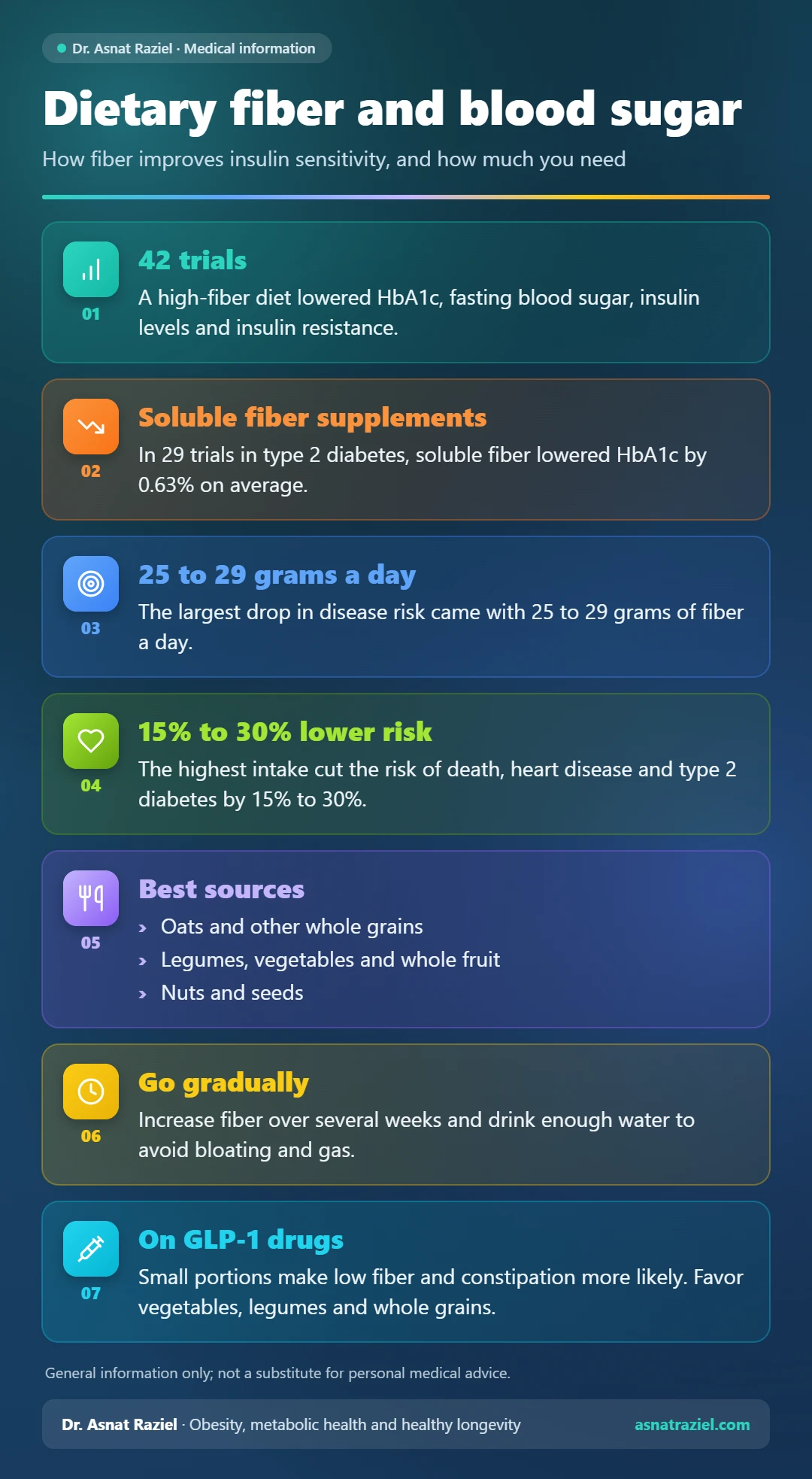
A meta-analysis of 42 trials looked at adults with prediabetes and diabetes. A high-fiber diet lowered HbA1c, fasting blood sugar, insulin levels and an index of insulin resistance. Blood lipids and inflammatory markers also fell. Weight loss was small, about half a kilogram on average. In other words, the benefit did not come from weight loss alone.
Researchers have also tested soluble fiber supplements. In a meta-analysis of 29 trials in people with type 2 diabetes, adding soluble fiber lowered HbA1c by 0.63% on average. The supplements also improved blood sugar after meals and the insulin resistance index. However, the researchers noted large differences between the studies. For that reason, they call for longer, high-quality trials.
Looking at the bigger picture, a 2024 review found a consistent link between high fiber intake and less heart disease, diabetes, obesity, colon cancer and inflammation. At the same time, the review notes its limits: most of the data rely on self-reporting, and the studies are relatively short.
How much dietary fiber do you need to balance blood sugar?
In a series of meta-analyses published in The Lancet, the largest drop in disease risk appeared with an intake of 25 to 29 grams of fiber a day. In people with the highest intake, the risk of death, heart disease and type 2 diabetes fell by 15% to 30%. For people with diabetes, the researchers suggested adding 15 grams a day or reaching 35 grams.
Most people eat far less than that. So it is best to increase your intake gradually, over several weeks. Meanwhile, make sure to drink enough water. A sharp increase all at once can cause bloating and gas.
Which foods provide dietary fiber for blood sugar control?
Whole grains
Oats, quinoa, brown rice and whole wheat bread cause a more moderate rise in blood sugar than refined grains. Oats are especially rich in beta-glucan, a well-known soluble fiber.
Legumes
Lentils, chickpeas, beans and fava beans combine fiber and protein. Together, they keep you full and help balance blood sugar. A serving of legumes a few times a week is an easy way to boost your intake.
Vegetables and fruit
Green vegetables, apples, pears and berries provide both soluble and insoluble fiber. Fearing fruit is not the answer. Instead, choose whole fruit, with the peel, rather than juice.
Nuts, seeds and healthy fats
Almonds, walnuts, flaxseeds and chia seeds add fiber and unsaturated fat. In addition, olive oil and nuts reduce inflammation and improve the body’s metabolic response to a meal.
What works less well?
Ultra-processed food, sweetened drinks, white-flour baked goods and sweet snacks contain little fiber. They put a sharp load on the insulin system and worsen insulin resistance over time. If you are looking for a menu based on whole foods, you can read about the new real food dietary guidelines.
Dietary fiber and blood sugar on obesity medication
Patients on GLP-1 medications usually eat small amounts. Because of this, it is easy to fall short on fiber, and constipation sometimes follows. Favoring vegetables, legumes and whole grains helps keep your bowels working normally. You’ll find practical guidance in my article on nutrition for weight loss injections.
Diet is the foundation, but not the whole story
Physical activity also affects insulin sensitivity, even a daily walk. Adequate sleep, lower stress and moderate weight loss, when needed, improve it as well. Together, a healthy diet and a balanced lifestyle create a cumulative effect. Evidence for this comes from a 21-year follow-up of people with prediabetes.
The bottom line: dietary fiber for blood sugar at every meal
Insulin sensitivity is not fate. It is a dynamic trait that you can improve, day after day, through simple choices on your plate. Fiber at every meal, real food and consistency will do the job. Ultimately, your body responds to what you feed it.
This article provides general information and is not a substitute for personal medical advice.
References
Dietary fibre and whole grains in diabetes management: Systematic review and meta-analyses
Carbohydrate quality and human health: a series of systematic reviews and meta-analyses
Gut bacteria selectively promoted by dietary fibers alleviate type 2 diabetes
The one food type endocrinologists say supports insulin sensitivity as you age




